


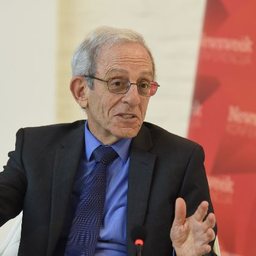
 Shkruar nga Daniel Serwer
Vucic is supporting Russia in Ukraine and moving ever closer to China, officially claiming to be "neutral" while dining and doing business with authoritarian leaders like Lukashenko, Aliyev and Orban.
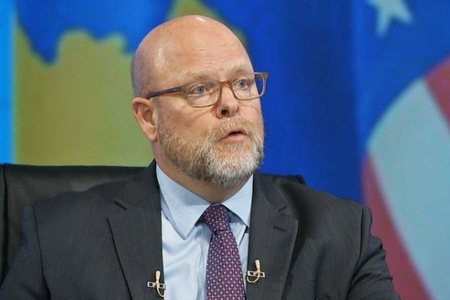
Jim O'Brien, the newly appointed Assistant Secretary of State for European Affairs, spoke last week at an event of the German Marshall Fund think tank. Focusing mainly on the war in Ukraine, he spoke little about the situation in the Balkans. And this is very significant.
It is another proof that the Balkan region is no longer a priority in Washington. When he stopped briefly at the Balkans, he emphasized economic issues. This detail is also very telling. O'Brien doubts the political issues can be resolved soon.
He was an official committed to the failed "Open Balkans" program, which proposed an economy-led approach to reforms desperately sought by the region's countries. But he was dominated by Serbia, so Kosovo boycotted him. This project has had little or nothing to brag about.
Heather Conley at one point asks the senior US official about the balance that should be struck between stability and reforms in relation to the Serbian elections of December 17 of last year. O'Brien tried to contest the elections in Belgrade in particular, since the OSCE did not officially observe them. But the facts are well known. The government bussed thousands of voters from Bosnia and Herzegovina to vote in Belgrade, fearing a possible defeat.
Even through this maneuver, he failed to win 50 percent of the seats in the municipal council. Who will govern there remains unclear. O'Brien treats the result as a sign of reform rather than manipulation. And this attitude is an even more disturbing example of the generally very tolerant approach of the US towards Serbian President Aleksandar Vučić.
He then reverted to his preferred approach to an economy-led policy, clearly based on Belgrade's performance in attracting foreign investment. He hopes other leaders in the region will emulate this approach. But foreign investment in Serbia has declined in recent years, as Belgrade has repeatedly avoided foreign policy alignment with the European Union and the US.
Vucic is supporting Russia in Ukraine and moving ever closer to China, officially claiming to be "neutral" while dining and doing business with authoritarian leaders like Lukashenko, Aliyev and Orban. Western European and American companies rightly wonder if they will be treated properly. And this while the index of respect for the rule of law in this country is deteriorating.
The right approach is reform through stability. Serbia's instability in recent years is linked to President Vučić's refusal to reform his country. This has fueled mass demonstrations against violence, corruption and against the government. Stability is unlikely until at least some of these opposition demands are met.
The notion that Vučić can end the protests and impose stability using increasingly autocratic measures is not convincing. And that is certainly not something the US should support. Nor her constant attacks on Kosovo.
Washington and Brussels must articulate and support a policy that requires real, political and economic reforms. Their parliamentarians are already doing this. Even their executive branches must follow their lead. Also, an important but long-neglected area of reform is military spending.
Serbia has significantly strengthened its military in recent years, including armed drones, air defense systems and armored vehicles to guarantee the tolerant behavior of the Americans: The only reason for such a rearmament is to put pressure on Kosovo and other neighbors.
None of them threaten Serbia, which is nevertheless anxious to control the Serbian population in Bosnia and Herzegovina, Montenegro and Kosovo. The attempt to do this is known as "Bota Serbe". In these Washington and Brussels must tell Belgrade that the Serbian world is cursed, and the military buildup must stop.
The Serbian opposition fared better than expected in the parliamentary elections. The electoral environment was formally free, but clearly unfair. However, the opposition won a quarter of the seats in parliament. It does not have enough strength to oppose the Serbian policy towards Kosovo. On the contrary, many of its supporters try to have more nationalist and irredentist positions than the current government.
But it is largely a pro-EU opposition and much more united than in the past. If she ever comes close to power, she will have to reevaluate her approach to Kosovo. The inescapable conclusion is that EU membership depends on serious good-neighborly relations and eventual formal recognition.
Anything less than that will not bring about Serbia's entry into the European Union. They know this, but for now they can't say or do anything. So what should be done? One of the issues O'Brien addressed in his speech was supporting responsible politicians who can bring benefits to citizens.
And this is not what President Vučić is doing. The latter has forced Brussels and Washington to buy "stability" in the region in exchange for modest reforms, which do not really benefit the citizens. The situation is even more serious in Bosnia and Herzegovina.
There, Washington and Brussels have made a mistake by supporting Croatian politicians, who are not ready to carry out any serious reforms or with benefits for the citizens.
If there is a politician who has shown serious commitment to reforms in the Balkans, he is today the Prime Minister of Kosovo, Kurti. Brussels has taken "measures" against him because he dared to keep the legitimately elected mayors in office in the north of Kosovo. It is true that he has hesitated even in the creation of the Association of Municipalities with a Serbian majority, as was agreed earlier.
But this is a price to be paid at the end of the dialogue process, with official diplomatic recognition, and not now. O'Brien is right when he says that the major political issues of sovereignty and territorial integrity cannot be resolved the way the US wants them to be today. I don't mind his "benefits for citizens" approach.
It is logical to focus on relatively technical issues and the full implementation of past agreements, such as those on license plates and state documents, between Kosovo and Serbia. But it makes no sense to imagine that Serbia under Vucic will want to do more than that.
Or that the Balkans will soon be part of the whole and free Europe. For now, the dividing line between East and West will run through the Balkans, with Serbia and Republika Srpska (the Serbian entity in Bosnia and Herzegovina) on its eastern side, along with Belarus. It is up to Serbia to choose. So she did, and we must accept and respect her choice. /Adapted "Pamphlet" from "Dtt.net"
Note: Daniel Serwer, professor of the practice of conflict management at the Johns Hopkins School of Advanced International Studies, USA.



Lini një Përgjigje