


 Shkruar nga Hikmet Karcic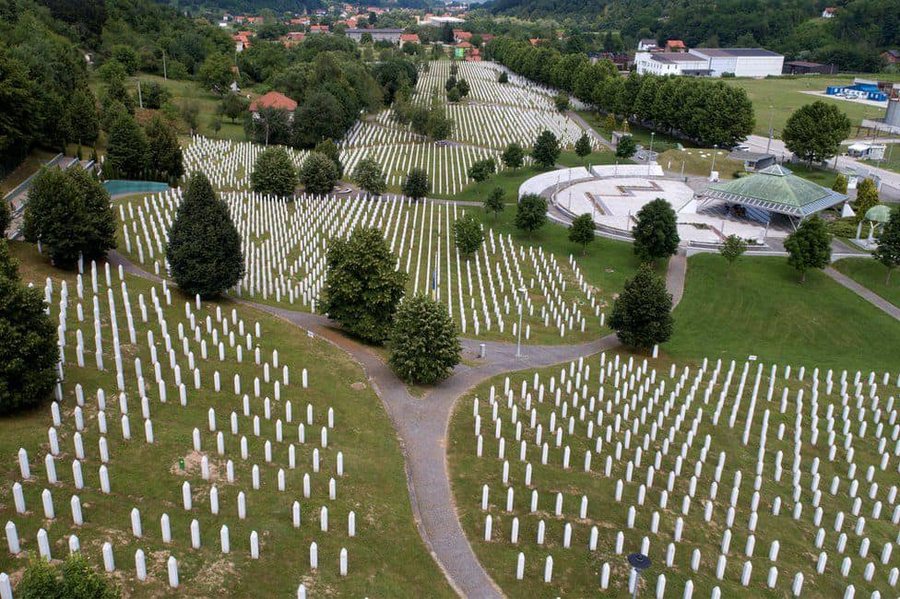
Recent efforts by the United Nations (UN) to pass a resolution commemorating the victims of the Srebrenica genocide have been met with fierce opposition from Serbian officials.
This behavior is not only a harsh display of genocide denial and historical revisionism.
But it is also a well-calculated geopolitical strategy aimed at maintaining regional hegemony and destabilizing reconciliation efforts within the Balkan region. This strategy is particularly alarming in light of recent events, such as the terrorist attack in Kosovo carried out by Serbian criminals (with alleged links to the Serbian state), which served to once again highlight the fragile state of peace and security in the region.
Nemanja Stevanović, the Serbian ambassador to the UN, issued an implicit threat, stating that the adoption of such a resolution could incite violence not only within Bosnia and Herzegovina, but throughout the Western Balkans. This insinuation operates on multiple levels.
First, it serves as a direct warning to the international community. Second, it positions Serbia as a custodian of regional and broader stability, and third, it simultaneously acts as a rhetorical tool to challenge the legitimacy and need for recognition of historical atrocities through international resolutions.
Letter from the Serbian ambassador, supported by a message from Željka Cvijanović, the Serbian member
in the tripartite presidency of Bosnia and Herzegovina, echoes this sentiment. Cvijanović claims that Serbia, as an "alleged guarantor of the Dayton Agreement", is tasked with preventing any action that could disrupt regional peace, security and stability.
But such claims are full of inaccuracies and reflect a wider agenda of using post-conflict peace-building mechanisms to thwart international efforts aimed at commemorating the Srebrenica genocide.
Such an attitude is strongly intertwined with the broader trends of revisionism and historical denial that aim to undermine the processes of reconciliation, essential for the peace and unity of the region. The reference to the initiative being supported by "only one ethnic party" in Bosnia and Herzegovina further underscores the intention to polarize and delegitimize the resolution, framing it as ethnically biased.
This narrative strategy not only misrepresents the constitutional and political realities within Bosnia and Herzegovina, but aims to sow division and hinder the country's efforts towards a unified stance on historical truths and reconciliation.
The connection of security threats in Bosnia and the region with the adoption of the UN resolution should be taken very seriously in light of the recent terrorist attack in Kosovo. That event has raised concerns about stability in the Western Balkans, giving Serbia - and potentially its ally Russia - the pretext to further polarize and destabilize the region under the guise of preventing similar incidents.
Russia's 2015 veto of a UN resolution on Srebrenica in support of Serbia best illustrates how international politics can significantly influence the recognition of historical truths and the administration of justice.
That veto reiterated the geopolitical dimensions of genocide recognition, but also showed how states can use their international influence to support narratives of denial and revisionism. The leadership in Serbia appears to be using the Srebrenica Resolution as a strategic diversion, focusing public discourse on the issue to draw attention away from pressing domestic concerns.
By deliberately exaggerating the importance of the UN resolution, which is essentially declarative rather than binding, the Serbs are aiming to stoke nationalist sentiment and rally support. This tactic electrifies their base, and obscures the true nature and purpose of the resolution.
By acting in this way, the Serbs redirect public and international attention away from the country's vital social, economic and political challenges, using the resolution as a central element of disagreement but also national unity. Therefore, the Serbian response to the proposed UN resolution should be understood not simply as an isolated act of opposition there, but as part of a broader strategy that uses historical revisionism and the politics of denial to maintain influence, controlling narratives and potentially destabilizing the region.
This approach shows Serbia's willingness to threaten violence in any case, which in turn endangers not only the process of reconciliation and peace building in the Balkans, but also the very possibility of international efforts to recognize and learn from the atrocities of the past.
To meet these challenges, the international community must operate under a delicate balance between honoring the victims of atrocities such as the Srebrenica genocide, and addressing the complex political realities that shape responses to them.
The basic task remains clear: to ensure that the truths of history are preserved and honored, not as a means of deepening divisions, but as a basis for building a fairer, more peaceful and more unified future for the Balkans West./ Adapted "Pamphlet", taken from "National Interest"




Lini një Përgjigje