


 Shkruar nga Pamfleti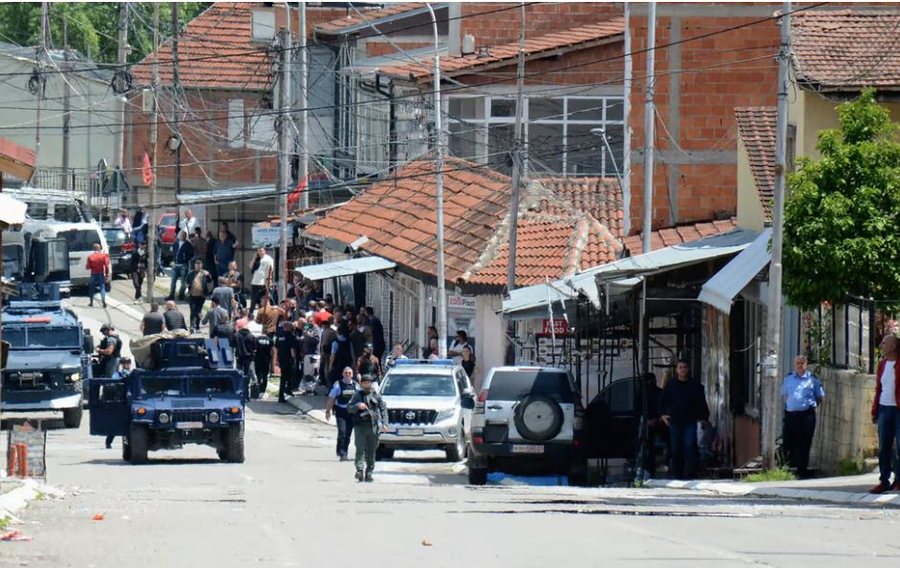
The incident is just the latest twist in a spiraling crisis that threatens to reignite a violent clash between the two sworn enemies, despite intense efforts by the US and Europe to restore calm.
The prestigious media "Politico" has dedicated an article to the tensions between Kosovo and Serbia, which flared up recently after the kidnapping of three officers.
" I don't feel safe. Nothing is right here, " says Vlado, the owner of the bar, as he looks from the yard towards some armed American soldiers who are standing behind a wire cordon across the street. This is how the "Politico" article begins.
Tensions flared again on Wednesday after Serbia arrested three Kosovar border police guards. Belgrade claimed they crossed the border (which Serbia does not recognize), but Kosovo Prime Minister Albin Kurti insisted they were kidnapped and sent to Serbia. The incident is just the latest twist in a spiraling crisis that threatens to reignite a violent clash between the two sworn enemies, despite intense efforts by the US and Europe to restore calm.
For the last two weeks, Americans and Italians from KFOR have been standing guard in front of Leposavic municipality. They have made sure nothing happens to Lulzim Hetem, an ethnic Kosovar Albanian who was elected mayor in April by just 100 votes after local Serbs, who make up more than 90 percent of the local population, boycotted the election.
Kosovar special police installed Hetem as mayor on May 26, breaking down the door of the municipality - and the decades-old wounds - to bring him inside under a cloud of tear gas. Hetemi has not left the building since then.
Similar scenes unfolded in three other Serb-dominated municipalities in the region, sparking one of the most serious crises the small republic has seen since independence in 2008. The question is whether the Kosovo Albanian mayors, who gathered less than 3.5 percent of the vote have the democratic legitimacy to serve. The central government of Kosovo insists that they do so, arguing that nothing less than the sanctity of the rule of law in Kosovo is at stake; if local Serbs decide not to vote, so be it.
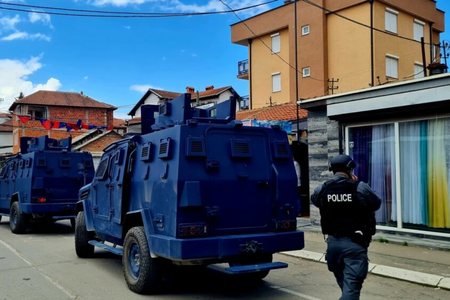
As for the local Serbs, the situation in northern Kosovo was calm until Prime Minister Albin Kurti started stoking the coals by sending "special police", a heavily armed paramilitary force, into their territory in 2021.
" This is starting to look like a permanent presence, " said Aleksandar Arsenijević, the leader of Citizen Initiative, a local political party. "People see it as a profession."
A self-described "moderate", Arsenijević sees himself not just as a Serb, but as a "Kosovo Serb" and believes his people have a future in the country with their Albanian neighbours.
However, after being beaten by special police at a recent protest, he says he was trying to mediate between protesters and police officers. He began to doubt whether Kurti's government was interested in compromise. "We cannot coexist this way," he said.
Special police
The sacking of the mayors came as tensions were rising between Pristina and Belgrade over license plates issued by Serbia for the northern region of Kosovo, a predominantly Serb area of four municipalities with a total population of about 50,000. Prishtina threatened to impose fines on everyone in the region who did not apply for Kosovar license plates.
Kosovo Serbs have been pushing for formal autonomy for years, a prospect they were offered in a 2013 deal with Pristina brokered by the EU. The agreement calls for talks on the creation of an "association of Serbian communities" within Kosovo.
Kurti, who inherited the agreement from a previous government, worries that the deal could lead to a de facto secession similar to what has happened to the Bosnian Serb region and put the brakes on. The EU has made the "normalization" of relations between Kosovo and Serbia a prerequisite for the membership of both countries in the bloc, a prospect that has kept both sides at the negotiating table.
While local Serbs accuse Kurt of reneging on a promise to give them more independence, the prime minister blames Serbia's strongman President Aleksandar Vucic for fueling unrest in the region, which is surrounded on three sides by southern Serbia.
In early November, Serbian public employees, including mayors of local municipalities and nearly 600 police officers, resigned on Vucic's orders in protest of Pristina's demand that everyone in the region apply for Kosovar license plates. A few weeks later, the EU brokered a compromise between Belgrade and Pristina, which smoothed the immediate dispute without solving the underlying problem.
What fueled tensions, local Serbs say, was the continued presence of special police, who signaled their intention to stay for the long haul by setting up permanent bases in the region near the Serbian border.
The force, made up only of Kosovo Albanians, most of whom do not speak Serbian, also set up roadblocks on key roads, further angering locals. Authorities argue that the checkpoints were necessary after Serbs blocked border crossings during protests in December.
Two shootings, one in January and another in April on the two-lane road to Leposavic, further exacerbated tensions. In both cases, the special police shot at the Serbs, injuring them. Four officers were arrested after the second incident for failing to report it.
The demands of the local Serbs for Pristina to withdraw the local police continue to fall on deaf ears. Indeed, the turmoil that followed Kurti's decision to install mayors by force seems to have hardened the prime minister's resolve to leave them in place. He and his supporters blame the recent violence on "organized gangs" sent by Vucic from Serbia to cause trouble.
A POLITICO reporter was detained last week at the same checkpoint where the latest shooting occurred. Three policemen in combat gear, assault rifles at the ready, stood guard as a fourth officer examined the journalist's ID before waving him over. Tensions flared again this week in Mitrovica, the region's urban center, after police arrested a Serb suspected of helping to organize a violent protest in a nearby town that left dozens of KFOR troops injured.
"Camp Nothing Hill"
In Leposavic, the administrative center of a district that includes 72 villages, the police are out of sight, but everyone knows they are still there.
Referring to the city's municipality, Zoran Todic, who resigned as mayor in November, says that about 30 special policemen are trapped with Hetem, his Albanian successor.
" It is a classic case of militarization. We don't have a problem with the Albanians, but with the people in the government ," said Todic, who is a member of Lista Serbe, a pro-Vucic party.
Asked how he would describe his current location in Leposavic, Kosovo or Serbia, Todic did not hesitate: "Always Serbia".
He is not alone. As in other cities in the north of Kosovo, Leposaviči is a sea of the national colors of Serbia, red, blue and white. Every street and village road is lined with seemingly endless rows of the Serbian national standard.
Leposavič is located at the foot of the Kopaonik Mountains, the highest in the region, and was a thriving mining center until Yugoslavia broke up.
Since Hetemi took power, former public workers have gathered every day during work hours to protest what they see as an illegal takeover of their administration by the Kosovo Albanian leadership.
Every morning they gather near the "Last Bastion" on chairs and benches borrowed from the neighboring Orthodox church.
US KFOR soldiers, who stood alongside several Humvees emblazoned with American flags, appeared unfazed by the barrage.
" We're just trying to keep things calm ," said the commander.
As tensions eased, KFOR decided last Thursday to remove most of the barbed wire surrounding the town hall. In the late afternoon, American soldiers were throwing soccer balls at the local children gathered in the square.
Exodus
Hetemi, who is from one of only three Albanian villages in the Leposavichi district, received only 100 of the 143 votes cast in the April vote, or about 1 percent of registered voters. A member of the left nationalist party of Kurti Vetëvendosje ("Vetëvendosje Movement"), Hetemi agreed to stay in the city hall. He declined an interview request.
But Izmir Zeqiri, the newly elected Albanian mayor in Zubin Potok, one of the other Serb-majority districts, said he and his colleagues were not surprised by the reaction to their installment.
" We knew we would face challenges from day one ," said Zeqiri, 59, sipping coffee outside his temporary office, a roadside cafe.
Unlike Hetemi, Zeqiri, who belongs to the center-right Democratic Party of Kosovo (PDK), agreed to the request of the American ambassador to Kosovo not to stay in the city hall. After the recent violence in Leposavic and neighboring Zvecan, where the most serious clashes between Serbs and KFOR soldiers took place last month, Zeqiri said he believed it was important to de-escalate tensions.
"We don't want to add fuel to the fire," Zeqiri said between puffs in a stroke of luck.
He hopes it will be temporary.
"I don't think we should contest," said Zeqiri, who received 197 votes. "We had the elections and I got more votes."
Since Kosovo is a multi-ethnic society, it shouldn't be a problem for an Albanian to serve as mayor in a Serbian area, he said with a smile, comparing his situation to that of UK Prime Minister Rishi Sunak and former US President Barack Obama.
He added that he would do "everything to find a solution".
Bajram Hasani, a 51-year-old Albanian who runs the village's small shop across from an imposing monument to Kosovo's Albanian war dead, said the most anyone could hope for here is that politicians can resolve the crisis without violence. Even if they do, he said from behind his small desk, the outlook for the region was bleak.
"Our Albanian minority has no future here. Young people are leaving," he said.
One of them is his daughter, Vesa, 18, who was carrying shelves as her father spoke. She plans to become a nurse and go to Germany.
"I will not stop him", said Hasani.
Returning to the "Last Bastion", Vlado is also dreaming of a life abroad.
Most of his friends left long ago, but so far he has stayed. His savings are tied up in the Last Bastion.
"I am condemned. On the other hand, it is my homeland", he said./ Adapted "Pamphlet"


Lini një Përgjigje