


 Shkruar nga Pamfleti
Coordinated local and international actions are urgent
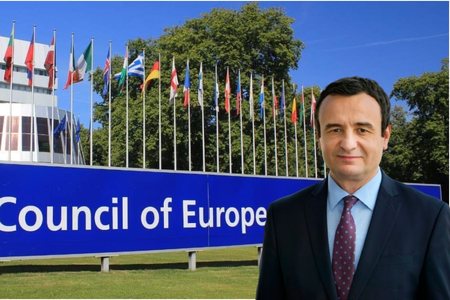
The Octopus Institute is actively engaged in monitoring the developing situation in the Western Balkans, especially the dynamics in Serbia in the context of Kosovo's accession to the Council of Europe. As this important diplomatic moment approaches, our analysis shows that Serbia is intensifying its efforts to prevent Kosovo's entry into the Council of Europe.
From the political point of view, Serbia is committed to stop the advancement of Kosovo in the Council of Europe by convincing NATO countries to vote against Kosovo.
Serbia managed to push Montenegro, a country that recognizes the Republic of Kosovo and is a member of NATO, to vote against Kosovo in the Council of Europe. Serbia, wanting to threaten Western countries, declared that they can withdraw from this institution if Kosovo becomes a member country.
With this action, Serbia is not adhering to the agreements reached between Kosovo and Serbia with the support of the European Union. According to these agreements, Kosovo and Serbia should not hinder each other in their way of advancement in international institutions. These violations of agreements by Serbia also contradict international conventions and customs.
Serbia's reaction to Kosovo's membership in the Council of Europe appears to be multifaceted, reaching beyond conventional diplomatic protests and into the realm of covert actions that may have profound implications for regional stability. Our analysis shows that Serbia, faced with the imminent reality of losing an important diplomatic battle, may be turning to measures that are as unconventional as they are alarming.
Recent information suggests the deployment of armed units by Serbian intelligence services under the guise of counter-terrorism efforts and operations. This move, which is ostensibly aimed at curbing the threat of radical Islamic terrorism, raises serious questions about its real intentions. The timing and nature of these deployments hint at an agenda with malign intent: the possible fabrication of terrorist incidents that can be falsely attributed to Islamic extremists.
This tactic, although brutal and shocking, is not without precedent. The global community is still reeling from the aftermath of the devastating attacks in Moscow attributed to ISIS, which claimed over 140 lives. Using this scenario, the possibility that Serbia could orchestrate similar attacks within its borders, or even in Kosovo, to portray itself as a victim of terrorism, cannot be dismissed. Such actions would serve multiple objectives for Serbia: gaining international sympathy, complicating Kosovo's request for membership in the Council of Europe and strengthening its stance against Kosovo's independence.
This strategy risks inflaming tensions in a region still recovering from the wounds of past conflicts. The fabrication of terrorist threats, especially when attributed to Islamic extremism, can fuel divisions and hinder the fragile process of reconciliation between different communities in the Balkans.
The Octopus Institute asks the international community to approach this situation with a critical eye and take into account the context of Serbia's actions. It is essential to distinguish between legitimate security concerns and manipulative tactics aimed at exploiting the specter of terrorism for political gain. As Kosovo is on the threshold of a new chapter in its international relations, the integrity of the process must be protected from any form of hybrid warfare that aims to undermine it.
In this context, the Octopus Institute recommends that the international and local security structures increase vigilance and security capacity, especially in the countries inhabited by Serb majority in Kosovo, and with ethnically mixed population, in which there is a risk of being instrumentalized by Serbia for motives destructive ways of undermining peace in the Western Balkans. The Octopus Institute, following Serbia's preparations to use certain moments to attack Kosovo, requests full attention from international and local institutions, in particular from the EU, NATO and the QUINT countries, so that they do not neglect their commitment military, observational, political and diplomatic in preventing Serbia's goals against Kosovo and the region.
Tolerating and not reacting to Serbia's security violations and threats is an incentive for the latter to violate the border lines with Kosovo and other countries in the region in hybrid, terrorist, paramilitary or conventional forms, accommodating Russia's interest in creating new hotbeds of war in the world.
A coordinated local and international response would contribute not only to peace and security in Kosovo, but also in the region and beyond. The Octopus Institute is continuously monitoring the situation and we will continue to provide analysis based on concrete data from the field./Pamphlet






Lini një Përgjigje