


 Shkruar nga Pamfleti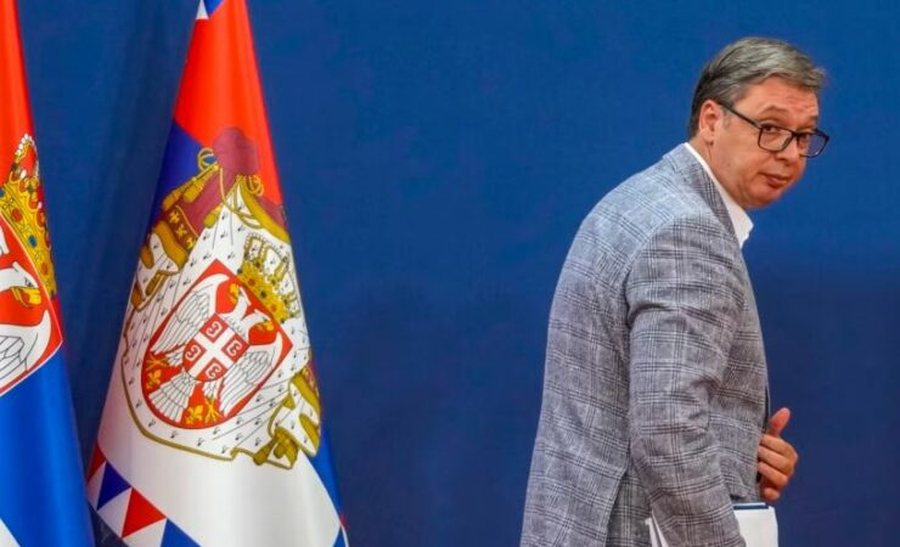
The European Union is not ready to impose punitive measures on Serbia, after the armed attack that took place in the village of Banjska, in the north of Kosovo, and the double standards of the European bloc do not constitute anything new - this is what they told Radio Free Europe diplomatic sources in Brussels and foreign experts.
According to them, appeals in procedural aspects, and in the absence of a final report from the Kosovo authorities, are only justifications for the delay of the case.
"The West has no appetite to take any action against [Serbian President Aleksandar Vucic and anyone involved... The West needs Serbia and does not want to damage this delicate relationship," says analyst Toby Vogel, associate of Council for Democratization Policies, in some answers to Radio Free Europe.
Kosovo, on the other hand, insists on imposing measures against Serbia, as it declares that a terrorist attack was committed against it.
What happened in Banjska?
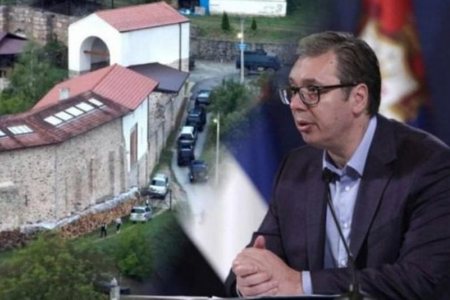
On September 24, 2023, an armed group of Serbs killed the sergeant of the Kosovo Police, Afrim Bunjaku, in Banjska, Zveçan municipality.
As a result of further clashes, three Serbian attackers were also killed.
Kosovo holds the state of Serbia responsible for this attack, while official Belgrade opposes this position.
The former vice-president of Lista Serbe - the largest party of Serbs in Kosovo - Millan Radoicic, later took responsibility for the attack.
The authorities of Serbia have started a judicial process against him, but have released him from the measure of detention, on the condition that he does not go to Kosovo again.
The International Police Organization, better known as INTERPOL, has issued an arrest warrant against him.
The West has strongly condemned the attack in Banjska, but the punitive measures requested so much by the Kosovo authorities have never been put in place. Waiting for the Kosovo report...
Last year, the European Union accepted a 48-page report from the Ministry of Foreign Affairs Foreign and Diaspora of Kosovo for the attack in Banjska.
However, Brussels sources have said that it is not sufficient, estimating that it has political tones, and that Kosovo needs a report drawn up by the justice system.
The Kosovo authorities have criticized the State Prosecutor's Office several times for not yet issuing a report on the events in Banjska and not filing an indictment.
The Prosecution Council of Kosovo, on the other hand, has asked the Government of Kosovo not to interfere in the affairs of the justice system, claiming that the government's statements are tendentious. Why does the EU not carry out its own investigations?
Brussels claims that it has no mandate for such a thing. The EU has said that the attack took place on the territory of Kosovo and that the authorities there are competent.
When they spoke publicly, EU officials described the attack in Banjska as terrorist.
But in the EU Progress Report for 2023, in the section on Serbia, the attack in Banjska is described as having been carried out only by "heavily armed individuals".
The spokesperson of the EU, Peter Stano, did not respond to Radio Free Europe's question about why the European bloc has not yet made a decision on this case.
In the past, he has repeated several times that they are waiting for the final report from Kosovo.
The European Parliament has demanded the punishment of Serbia, but something like that is in the hands of the Council and the European Commission.
Alejandro Esteso Perez, analyst and researcher of Balkan policies and EU enlargement, tells Radio Free Europe that the EU does not want to put Serbia in front of the mirror.
"He does not want to risk a potential reaction of Vucic, either by getting closer to Russia or China - which he is already doing - and he understands that without Serbia there can be no Kosovo-Serbia dialogue".
Meanwhile, analyst Vogel says that he has heard from EU legislators that Serbia is criticized in private conversations. But, according to him, "if something is not said publicly, it is as if it was not said at all". What measures should be taken against Serbia?
Vogel mentions two measures, which for him are the minimum:
Measures similar to those imposed on Kosovo, following the escalation of tensions in the north, in May 2023
A clear statement from Western leaders that the incident will be thoroughly investigated and that Vučić must publicly renounce any military activity near Kosovo.
Analyst Perez, meanwhile, considers that other measures are needed:
Immediate launch of an independent investigation
Economic measures
Measures targeting individuals – asset freezes, travel bans.
Sources in Brussels estimate that the EU uses the non-imposition of measures against Serbia "to put pressure" on Belgrade for processes it wants to take forward.
However, Serbia continues not to coordinate its foreign policy with that of the EU. The non-sanctioning of Russia for the war started in Ukraine is just one of the examples.
Will this EU approach have an impact on Kosovo?
Perez believes so.
"I am surprised by the EU's small efforts to understand the situation in Kosovo. If there is no movement in the coming months, the population's trust in it will decrease and they will be even more hopeless than now," he says.
Kosovo has applied for membership in the EU in 2022, and currently only the Stabilization-Association Agreement with the European bloc has been signed./REL


Lini një Përgjigje