


 Shkruar nga Pamfleti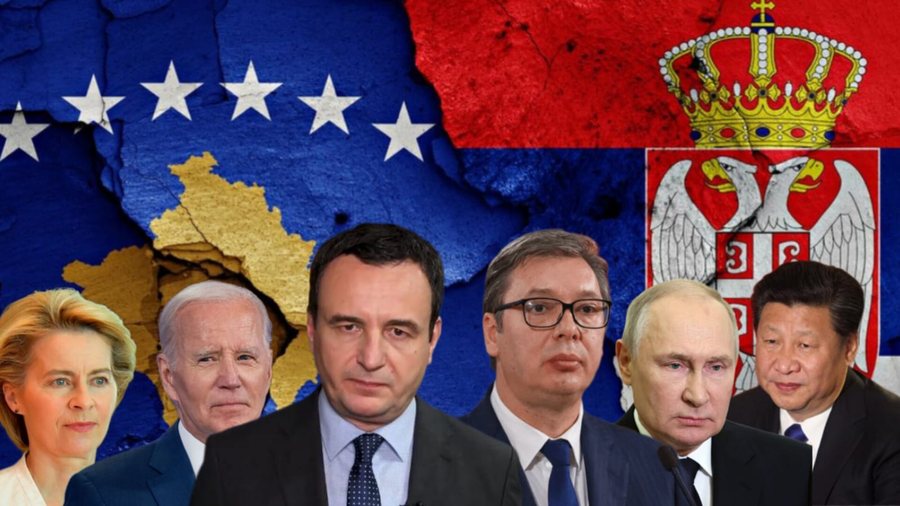
The deal essentially throws a lot of money at Kosovo and Serbia to persuade them to end their conflict by offering significant EU and US investment in both countries. But given Serbia's recent free trade agreement with China, there is less incentive for Vucic to sign the deal in its current form.
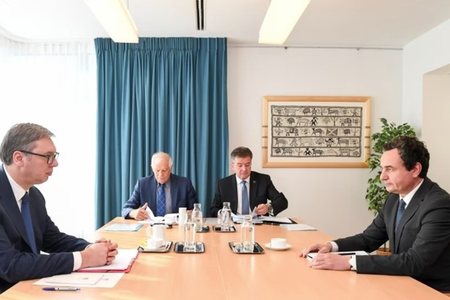
The West is planning for Kosovo Prime Minister Albin Kurti and Serbian President Aleksandar Vucic to meet this weekend for the first time since NATO decided to send about 600 more peacekeeping troops to the Balkans in early October to quell some of the growing tensions in the region.
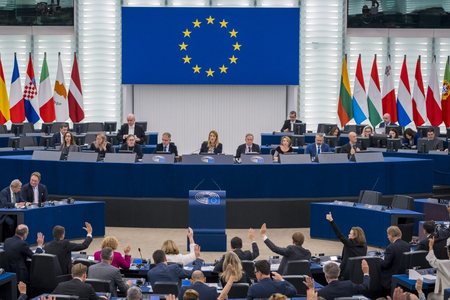
The United States has already asked Serbia to withdraw its military presence along the border with Kosovo to reduce tensions. On October 18, the EU Parliament passed a resolution that also condemned the military buildup of the Serbian army on the border with Kosovo and asked Vučić to avoid any further action.
The meeting follows a deadly attack on Kosovo police and security forces by a paramilitary group of more than 30 heavily armed nationalist militants on September 24.
The attack in Banjska in northern Kosovo was led by Milan Radoicic of Lista Serbe, a political party of Kosovo's ethnic Serb minority with close ties to Vučić. The attack raised tensions in the Western Balkans to an unprecedented level.
Fearing that the recent tensions could lead to the full destabilization of the region, EU and NATO officials have organized a meeting on October 21, hoping that Serbia and Kosovo will agree on a deal.
Vucic met with Russian President Vladimir Putin on the sidelines of China's Belt and Road Initiative forum in Beijing on October 18, when he also signed a free trade agreement with Chinese President Xi Jinping.
Vucic's meetings with Putin and Xi have fueled further concerns that Serbia is moving away from the EU membership quest and moving closer to China and Russia.
Putin's influence in the Western Balkans
Vucic has not imposed sanctions on Russia following Putin's invasion of Ukraine – something all the other countries in the Balkans have done. Meanwhile, Putin has sought support in the region to counterbalance the influence of the EU and NATO, especially since the invasion of Ukraine in February 2022.
Shortly after Radoicic claimed responsibility for carrying out the deadly attack in northern Kosovo, Russian broadcasters reported the incident as saying Serbia was "taking back" its land and comparing Serbian paramilitary actions to Russia's decision to invade Ukraine. In addition, some officials of the Russian embassy have said on their accounts on X/Twitter that "Kosovo is Serbia".
Since Russia's invasion of Ukraine, Putin's close political allies in the Western Balkans, Vucic and Bosnian Serb leader Milorad Dodik appear to have encouraged regional friction.
In July 2023, the US Treasury Department announced that it was imposing sanctions on Aleksandar Vulin, the head of Serbia's Security Intelligence Agency (BIA). The Treasury announcement alleged that Vulin was using his official position as the country's top spy and ties to paramilitary groups and nationalist militants to carry out destabilizing efforts on behalf of Russia.
Meanwhile, it has recently been reported that Russia is recruiting ethnic Serbs and their paramilitary groups to join its military in Ukraine.
Rocky road to agreement
In March, Vucic and Kurti agreed to implement an agreement on a path towards normalizing relations between the two countries at a meeting in Ohrid, North Macedonia, set up by the EU. But Vucic then refused to sign it, saying: "I don't want to sign any legally binding international document with Kosovo because Serbia does not recognize its independence."
Vucic's public narrative on Kosovo since March has increasingly used military terminology. Across Serbia, an increasing number of murals have appeared bearing the colors of the Russian and Serbian flags, painted with the phrases "When the army returns to Kosovo" and the "Z" symbol, which have come to represent the war of Russia in Ukraine.
The Ohrid Agreement, approved by the EU and the US, which they hope Serbia and Kosovo will finally sign this weekend, is not what each country wants. For example, the agreement does not mention when Serbia will be able to join the EU. Similarly, there is no mention of when the five EU member states (Cyprus, Greece, Romania, Slovakia and Spain) that have not yet recognized Kosovo's independence will do so and pave the way for Kosovo to to be integrated into the EU and NATO.
The deal essentially throws a lot of money at Kosovo and Serbia to persuade them to end their conflict by offering significant EU and US investment in both countries. Given Serbia's recent free trade agreement with China, there is less incentive for Vucic to sign the deal in its current form.
In order to stop these repeated crises between Serbia and Kosovo, the current version of the agreement must be redrafted. First and foremost, the EU must declare when Serbia and Kosovo can join the EU. Membership is a powerful incentive for a peace agreement. Second, in order to be considered a reliable ally in the Western Balkans, the EU must come up with a common position on Kosovo.
The refusal of the five EU countries to recognize Kosovo indirectly furthers both the cycle of violence and Putin's aim to destabilize the Western Balkans.
This weekend's meeting could not be more important in the effort to resolve the long-standing tension between Kosovo and Serbia, but the chances of success currently remain remote./ Adapted 'Pamphlet' from 'TheConversation'


Lini një Përgjigje