


 Shkruar nga Narain Batra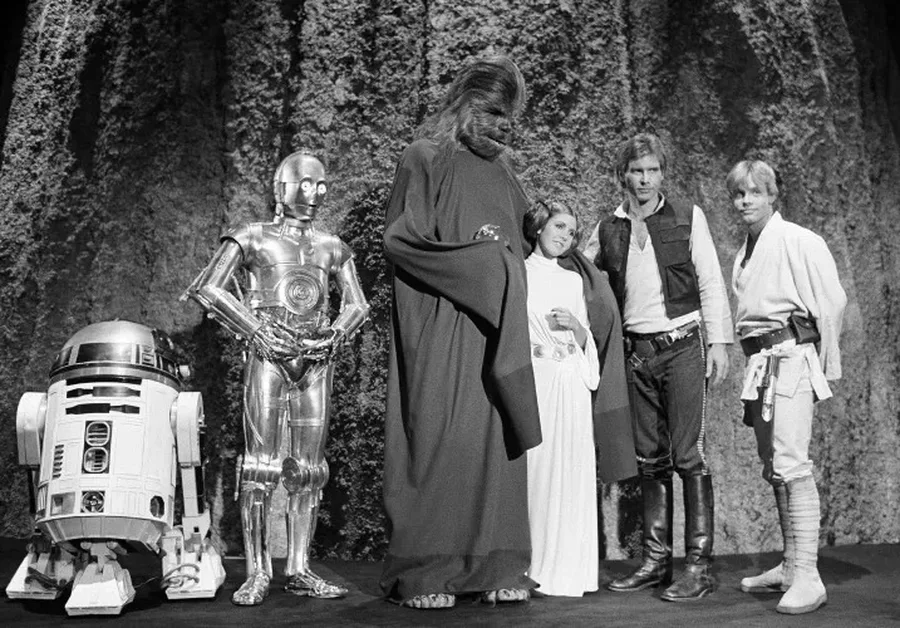
Is there anything really new or are we just rehashing echoes of the past?
From fashion to business to art, it seems like every new idea has a familiar echo, of something that has existed before. Every idea builds on older concepts, and every invention reimagines past creations. But does this mean there is no true originality? Or does it reveal a deeper truth about how ideas evolve and reinvent themselves?
Consider fashion, where each decade brings a revival of an era. The '90s are having a moment, with long pants, socks, and crop tops all back, but packaged as something new. Are they really "back," or did they ever go away?
Fashion, like language, is a living, breathing story that we collectively write. When designers bring back bell-bottom jeans or retro jackets, they’re not necessarily trying to retell the past. They’re reaching for the familiar for comfort and continuity, while layering it with new materials, cuts, and cultural significance. Changing fashion allows each generation to reimagine and reinterpret the style of an era, infusing it with new energy while paying homage to the past.
As designer Coco Chanel said, “Fashion changes, but style remains.” Innovations can lie in the details, in the way each piece adapts to today’s society, culture, and technology. The broader story of clothing is the same, identity, self-expression, community, which each generation expresses in its own way.
Storytelling, from ancient myths to today’s most successful films, may be the most obvious example of the paradox of originality. Think of Joseph Campbell’s The Hero with a Thousand Faces, a book that describes the “hero’s journey.” Almost every story across time and culture follows a common arc. A hero dares to go forth, faces adversity, overcomes trials, and returns transformed. Star Wars, Harry Potter, the Odyssey, and the Ramayana are all rooted in the same ancient narrative structure.
But the twist is that while the plot may be the same, the specifics—the characters, the settings, the voices—bring endless variation. J.K. Rowling reimagined the hero’s journey through the halls of a magical boarding school, while George Lucas took him to a galaxy far, far away. By mixing old tropes with new cultural influences, settings, and details, the creators create something that feels both timeless and unique.
This is the true power of generative AI, its ability to make the old new again. By repurposing existing knowledge, language, and imagery into fresh patterns, it transforms what is familiar into something original, relevant, and alive for the present moment. In doing so, AI becomes less an inventor of the unprecedented than a reinventor of tradition.
Innovation in business may seem like the land of new, groundbreaking ideas. But if you dig deeper, you'll often find that the seeds of today's startups and breakthroughs were planted decades or even centuries ago.
The iPhone was revolutionary, yes, but the technology it relied on was a culmination of innovations dating back to the telegraph, early computers, and the pioneering dreams of people like Nikola Tesla and Alan Turing.
Consider how many “new” business models are simply reinterpretations. The sharing economy that gave birth to Uber and Airbnb is simply an updated version of ancient trading systems and the exchange economy, updated with the power of mobile technology.
Tesla's cars may look futuristic, but they are built on principles pioneered by the likes of Ferdinand Porsche, who invented the first hybrid car more than a century ago.
These so-called “new” ideas draw their strength from history. Any entrepreneur may be rehashing old concepts, but by combining them with today’s technology, culture, and resources, they are creating something that feels both familiar and transformative.
In this sense, the question is not so much whether an idea is truly new, but rather how the past is repurposed to meet the needs of the present.
Greek gods became modern superheroes. Norse legends inspired characters like Thor in the Marvel universe. The fascination with these mythical figures remains, but we bring them into the 21st century with contemporary issues, values, and challenges. Superman, Batman, Wonder Woman, and other characters grapple with similar themes of power, justice, and moral ambiguity, making ancient ideas accessible and relevant to a new audience.
Originality is not about abandoning the past. It is about absorbing it with our knowledge of the present, shaping it through our unique perspectives and finding new connections. Architects may use ancient materials like wood and stone, but they design forms that resonate with modern values and environmental awareness. Musicians sample and remix past hits, adding contemporary lyrics or rhythms to make an old song resonate with today’s listeners.
Perhaps our greatest innovation is not the creation of something entirely new, but our constant ability to reinvent, reframe, and reimagine. In doing so, we transform ancient stories into something that, for each of us, feels entirely our own. / Taken from the Concord Monitor, adapted by the Pamphlet






Lini një Përgjigje