


 Shkruar nga Pamfleti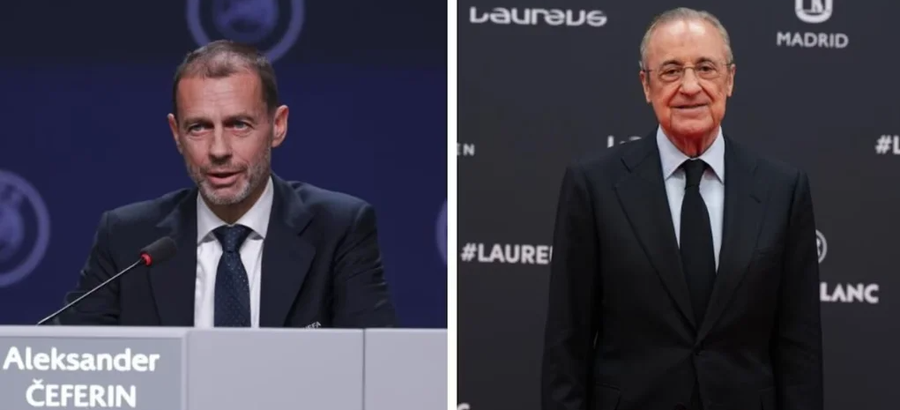
After months of tension, threats and legal action, Real Madrid and UEFA have signed an agreement that ends the standoff between the Spanish club and European football's governing body. However, the development is seen more as a "truce" than a final resolution to the disputes.
An agreement to end the legal conflict
The agreement reached between the parties aims to resolve legal issues that arose in the context of the debate over the European Super League. An official statement states that "after months of discussions, an agreement in principle has been reached between UEFA, Real and the EFC", underlining the will to close the institutional conflict.
The clash had reached its peak after the rulings of the Court of Justice of the European Union, which emphasized that UEFA had abused its dominant position in the market. Real Madrid president, Florentino Pérez, had also announced a claim for damages worth 4.5 billion euros.
Super League: 2021 project and new developments
The original format of the European Super League, introduced in 2021, is now considered closed. However, the initiative has not completely disappeared. The company A22, associated with the project, has reorganized and proposed a new tournament model, with a system of promotion and relegation, as well as an increased focus on revenue management.
One of A22's main proposals was the "Unify" platform, a free streaming service, supported primarily by advertising revenue, with the aim of increasing fan access and changing the traditional broadcasting model.
UEFA's financial and technological objectives
At the same time, UEFA aims to significantly increase revenue in the 2024-2027 cycle. According to forecasts, revenue is expected to increase from 4.4 billion euros to over 6 billion euros. The strategy includes innovative broadcast packages, data exploitation and the use of new technologies to improve the fan experience.
The open future
Although the current agreement closes an important chapter in the conflict, the question of reforming European competitions remains open. Court decisions, financial interests and technological developments continue to influence the debate on the future model of football in Europe.
In this context, "weapons" seem to remain on the table, while the parties try to find a balance between sporting, economic, and institutional interests.



Lini një Përgjigje