


 Shkruar nga Pamfleti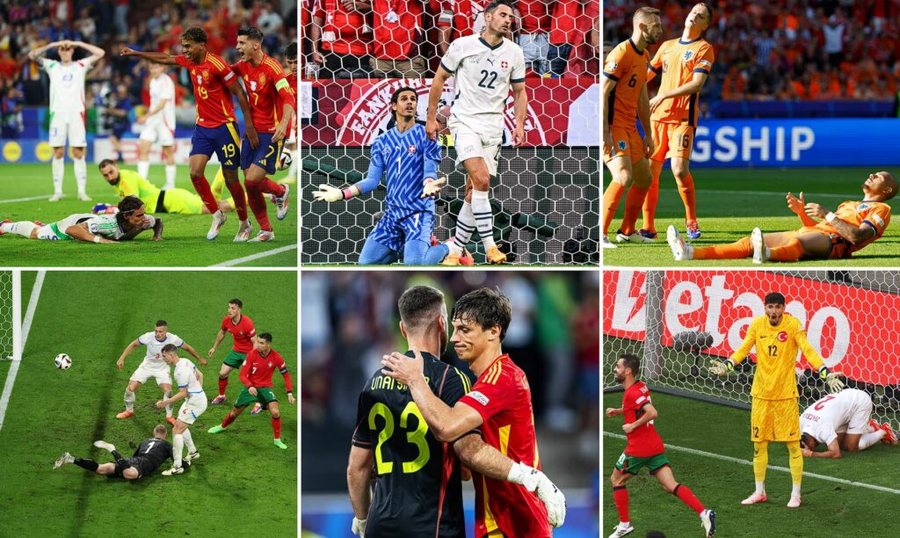
When Belgian defender Jan Vertonghen deflected Kolo Muani's shot to give France a 1-0 win and a place in the quarter-finals, he became the ninth player to score an own goal at Euro 2024. But it was not the first time France had benefited from a own goal in this tournament. 66% of their goals were scored by opponents.
Nine own goals in 44 games is a surprising number. To put it in context: Germany's scorers are Cody Gakpo, Georges Mikautadze, Jamal Musiala and Ivan Schranz, who each have three goals. Only one team has scored more goals, host Germany with 10.
In the last two European championships, 20 own goals have been scored, one every five games. This figure is very high considering that only nine own goals were scored in the first 15 Europeans between 1960 and 2016. This means that there was an average of one own goal in 30 games.
There were no own goals until the 1976 championship. The first to score one was Czechoslovakia captain Anton Ondrus in the first semi-final of Euro '76. Dubbed the "Beckenbauer of the East", Ondrus had earlier scored to give the Czechoslovaks a 1-0 lead against the Netherlands before stopping the ball in his own net. Czechoslovakia beat the Netherlands 3-1 after extra time and Ondrus lifted the trophy after his side beat West Germany in the final thanks to Antonin Panenka's famous penalty.
There was an empty space of 20 years before the second own goal was scored. It was Bulgaria striker Lyuboslav Penev who deflected Youri Djorkaeff's free-kick into his own net at St James Park in 1996. In previous years there were fewer games, but that still doesn't explain the huge increase in own goals in the last two tournaments. We went from 2 own goals in 20 years to four own goals in four days at Euro 2024. So what happened?
Rule change?
Awarding own goals used to be the responsibility of referees who have not been consistent in their approach. Former UEFA president Michel Platini intervened in March 2008. “There has been a lot of discussion about deflected goals and whether a goal should be awarded to the player who shot the ball or the player who touched it last. We want to clarify this issue and have the same rules every match", he said.
UEFA ruled that the players would be awarded a goal if the ball was going towards the net when the deflection occurred. Off-target shots deflected into the net shall be attributed to the player who deflected the ball. Platini admitted that this instruction was being informally followed by most referees, but would be officially "codified" for all UEFA matches, including the European Championship. Since then, UEFA has taken responsibility itself and relieved the match officials of this burden.
A mundet që ky ndryshim në qasje të shpjegojë rritjen e autogolave? Nëse ka patur një luhatje drejt dhënies së më shumë autogolave, kjo do të reflektohej edhe në dy botërorët e fundit. Por në 64 ndeshjet në Katar kishte vetëm dy autogola. Ndërsa në turneun e mëparshëm që u zhvillua në Rusi ka pasur 12, dukshëm më shumë se çdo Botëror tjetër, por edhe këto shifra nuk përputhen me dy europianët e fundit, të cilat përbëjnë 69% të autogolave të shënuara në historinë e europianëve. Dhe ka ende shtatë sfida për t’u luajtur në Gjermani.
Më shumë krosime?
A ka më shumë autogola sepse topi po krosohet më shumë? As ky argument nuk qëndron. Kishte 32.1 krosa për ndeshje në Euro 2020 dhe 33.8 krosa për ndeshje në fazën e grupeve në Euro 2024. Por këto shifra nuk janë më të larta se turnetë e kaluara. Në fakt numrat e kroseve për ndeshje në dy turnetë e fundit janë më të ulëtat që kur nisën të regjistroheshin të dhënat në vitin 1980.
Mungesa e kroseve mund të lidhet edhe me përdorimin në rritje të sulmuesve anësorë që përdorin këmbën e kundërt (pra kur një sulmues që luan në krahun e djathtë, gjuan me të majtën). Ka më shumë mundësi që ata të futen nga qendra e zonës dhe të godasin. A mund ta kenë rritur ata numrin e autogolave? Nëse do të ishte ky rasti, atëherë do të kishim shifra rekord të autogolave edhe në Premier League, apo kompeticionet e tjera. Këtë sezon në Premier League pati 49 autogola, njësoj si në kampionatin e kaluar. Por i njëjti numër autogolash ishte edhe në sezonin 2013-14, para se këta lloj sulmuesish të ishin në modë. Megjithatë rritja e autogolave në Premier League nuk është kaq e madhe sa në dy europianët e fundit.
Ndryshim në stilin e portierëve?
Një teori tjetër është se portierët kanë ndryshuar vitet e fundit. Ata e prekin më shumë topin tashmë, çka rrit mundësinë e gabimit në zonë. Por deri më tani asnjë nga autogolët nuk ka ardhur nga një portier “aventurier” apo që ka bërë pasime gabim.
Më shumë blloqe të ulëta?
Ndoshta është mënyra se si skuadrat po luajnë skuadrat? Tendenca e qëndrimit pas dhe goditjes së kundërshtarit me kundërsulm i ka inkurajuar skuadrat që të mbrohen më thellë, në blloqe të ulëta. Devijimet kanë qenë përgjegjëse për tetë nga nëntë autogolat e turneut dhe shumica kanë ardhur nga gjuajtje në një distancë të shkurtër në zonën e portierit. Për shembull: kishte tetë lojtarë të Belgjikës në zonën e portierit kur pësuan autogolin ndaj Francës. Ndërkohë kishte 10 italianë në zonë kur pësuan golin ndaj Spanjës. Me kaq shumë lojtarë që mbrojnë, devijimet duket se janë të pashmangshme.
Disa skuadra kanë luajtur me kundërsulme, veçanërisht skuadrat e renditura më ulët. Skuadra të ndryshme kanë pasur sukses. Për shembull Gjeorgjia mesatarisht ka pasur posedimin e topit vetëm 33.8%, por arriti në 16-she. Ekipet janë më të organizuara për t’u mbrojtur në blloqe të ulëta dhe kundërsulme, por kur “paketohet” mbrojtja në zonën e portierit rrezikohet të devijohet goditja në portë.
Apo kemi të bëjmë thjesht me fat të keq?
Maybe we're just dealing with bad luck? Portugal entered 2020 as the reigning champions but crashed out of the group stage after losing 4-2 in a match where Ruben Dias and Raphael Guerreiro both scored own goals.
Likewise, Slovakia also scored two own goals four days later after being beaten 5-0 by Spain. After these "disasters" and not only, it is not for nothing that Portugal and Slovakia held the joint record for the most own goals in European competition, with three each. But on the other hand, Portugal has had good luck in this tournament.
They benefited from the most spectacular own goal of Euro 2024 so far, in a 3-0 win against Turkey. Semet Akaydin was not on the same wavelength as his goalkeeper, which caused a mix-up at the back. The defender returned the ball to the goalkeeper without checking the latter's position and unfortunately, even though the ball passed by him, he had no chance to stop it from entering the net.
"There was a misunderstanding," said Turkey coach Vicenzo Montella. "It happens sometimes and unfortunately it happened to us today. Next time it could be our opponents", he added. Given the sheer volume of own goals in this tournament, the next "misunderstanding" may not be too far off. /The Guardian-TV Clan



Lini një Përgjigje