


 Shkruar nga Pamfleti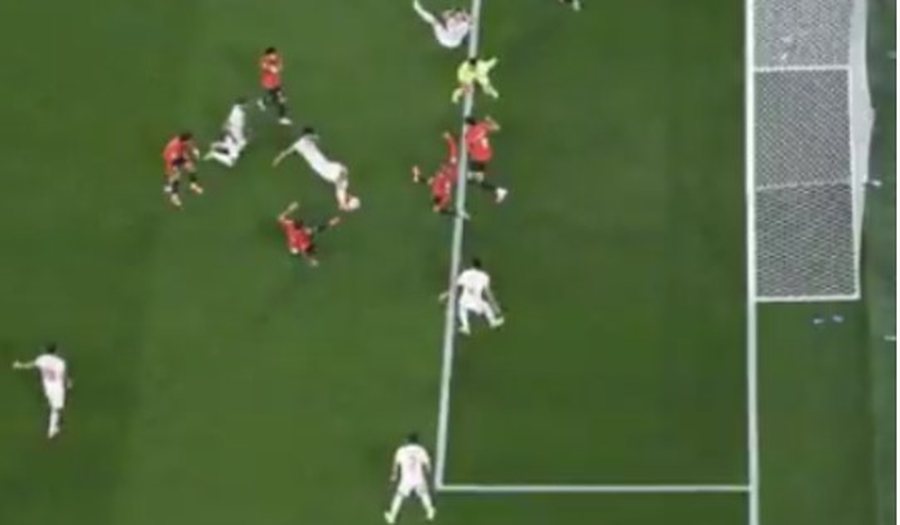
Iran protested after a goal was disallowed in a crucial moment of the match against Egypt. The goal, scored in extra time, would have given the Iranians a 2-1 victory and automatic qualification.
The referee's decision, confirmed by the VAR system, sparked debate among fans and analysts, as at first glance it appeared that an Egyptian player was closer to the goal line than the Iranian striker.
However, according to IFAB Law 11 on offside, the decision turns out to have been correct.
In the action in question, the Egyptian goalkeeper had stepped away from the goal, leaving only one field player behind him. In these cases, the last defensive player closest to the goal is considered the main reference for calculating the offside position, practically taking on the role that the goalkeeper usually has.
The rule states that an attacker must have at least two opposing players between him and the end line at the moment of passing, so that he is not in an offside position. In most cases, these are the goalkeeper and a defender, but when the goalkeeper leaves his area and is not one of the two players closest to the goal line, the calculation is made on the last two opponents, regardless of their position.
For this reason, even though an Egyptian player was closer to the goal than the Iranian striker, he was considered the last defensive player, while the lack of a second player behind the striker meant that the latter was considered offside.
The match ended in a 1-1 draw, with Iran remaining in the race for qualification as one of the third-place teams.







po pra por në momentin që oortieri kthehet dhe oret topin nuk konsiderohet meë di jashtë loje. nejse elefantinua me trapin donte ta poshtëronte Iranin gjithsesi.