


 Shkruar nga Pamfleti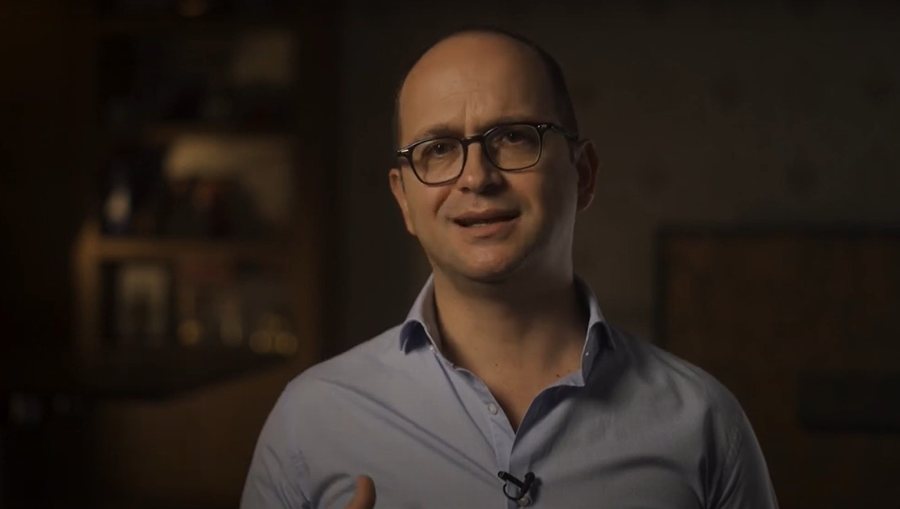
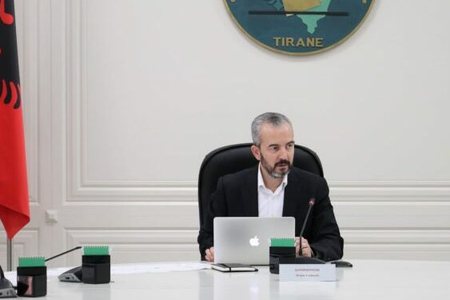
Ditmir Bushati on his Public Square Podcast discussed with Pierre Mirel, former Director of Enlargement at the European Commission, about the geopolitical situation. During this conversation, Bushati and Mirel discussed some important issues starting from Europe and what is happening to it now that the Franco-German axis is no longer so strong?
What is happening to Europe now that Donald Trump is back at the helm of the US? Will he further expose geopolitical differences, or will he somehow force Europe to align itself further in order to complete and consolidate the European project?
"Especially, if we refer to the publication of the Draghi and Letta reports, the EU is stuck between China, and this is clear, but also the US. And this is my particular concern, if Trump threatens the EU on various issues, we could very easily get involved in a trade war. So it is a very, very difficult and delicate period. Observing the divisions that already exist in Europe between the member states, I am not sure, in fact I am sure of the opposite; that the member states could distance themselves even more from each other. A lot depends on the outcome of the peace talks between Ukraine and Russia", says Mirel.
Excerpt from the interview:
Ditmir Bushati: Pierre, when we talk about the Western Balkans, you know very well from your experience in the European Commission as Director for Enlargement, that the US has traditionally been considered as tightening the security perimeter, while the EU, and especially the European Commission, has worked with candidate countries and countries aspiring to become EU members in terms of the rule of law, or the rule of law in the economy. How do you see these two critical elements in the current circumstances?
Pierre Mirel: Are you asking me to make the impossible possible?
Pierre Mirel: I think this is the most important question for the Commission and for the EU. Why? Because I don't think that member states would accept new memberships just for geopolitical reasons, which means ignoring the fulfillment of rule of law reforms and good governance. I don't think they will accept them, because with the experience of Bulgaria, Romania twenty years ago, and they don't want to have another illiberal Hungary, another Orbán. Of course, not all member states, but a good number of them. I think that they will continue to push, and to put the emphasis on reforms, or the so-called "fundamental issues", as they refer to them during the process.
Ditmir Bushati: There are two critical points in our region: the unresolved Kosovo-Serbia conflict, and the functionality of Bosnia and Herzegovina. Do you see room for any maneuver by the EU to facilitate the conclusion of these two critical situations, but also to facilitate the path towards membership for these countries, or will we continue to witness a status quo?
Pierre Mirel: It can't happen like that. This may be in Serbia's interest, but not Kosovo's. I don't think the status quo can continue. It's impossible. It's very difficult to answer your question. This is because since the 2013 agreement, twelve years ago, where the key principles that both Serbia and Kosovo should follow are made clear, plus the developments after the Ohrid Agreement, nothing has happened. Almost nothing. It's not a simple answer. But I would also, just for the fundamental aspects, suggest, I'll be a little bit blunt when I say this, that the EU should "buy" peace. What I mean is that the EU should offer significant financial rewards for the agreements made so that they are implemented. Both countries need this. They need money for transport, for energy, for everything.
You probably remember when in 1998, the Commission issued a document to explain the opinions on the candidates, and the possible impact of enlargement, this was called “Agenda 2000”. Now, together with some colleagues, I have asked the Commission to issue “Agenda 2030”, where the benefits, the advantages, the reason why this should be done and should be continued, the difficulties, the obstacles, why not, will be explained to the public opinion in our countries that are not very supportive of new memberships. As in “Agenda 2000”, one of the solutions should be a special financial envelope for development under the next financial perspective. To bring together the countries, the Western Balkans and the EU, to face the weak economic situation. But not only economic, but also political.


Lini një Përgjigje