


 Shkruar nga Pamfleti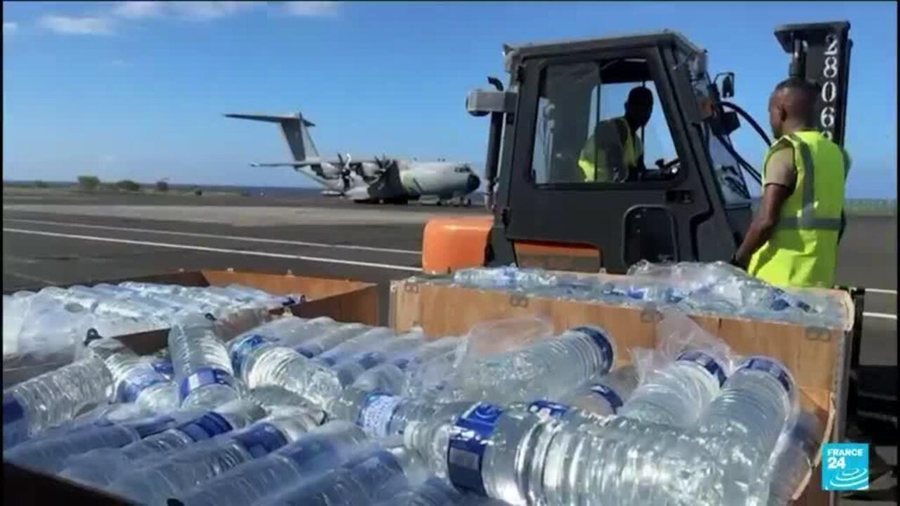
The European Union is entering a new era of crisis preparedness, announcing for the first time a coordinated plan to create strategic reserves of essential goods, such as food, water, fuel and medicine.
The initiative comes at a time of heightened concerns about the possibility of a military attack by Russia, but also about other complex threats, from natural disasters to pandemics and cyberattacks.
The Commission's new "stockpiling strategy" draws key lessons from the experience of the Covid-19 pandemic, when many Member States rushed to secure protective equipment and masks, resulting in shortages where they were most needed. This time, the aim is coordinated preparation at European level, so that societies are not caught unprepared again.
EU Commissioner for Crisis Management, Haja Labib, stressed that "the goal is very simple: to ensure that the essential supplies that keep our societies alive, especially those that save lives, are always available. The more prepared we are, the less panicked we are."
Stocks for every threat
The plan envisages the creation of a European network of stocks of food, medicines, generators, raw materials, but also special materials such as water purification products, equipment for repairing submarine cables, drones and mobile bridges for use in conflicts or natural disasters. At the same time, it is planned to create regularly updated lists of critical goods, adapted to each threat.
By 2026, the EU aims to create a critical raw materials hub for the joint procurement of essential goods on behalf of European companies. In addition, the budget of the European Investment Bank's loan program to support start-ups and small businesses in the field of innovative medicines will be doubled to €200 million by 2027.
"Danger at the Borders" and the Different Scenarios
Differences between member states are large. Countries like Finland, Estonia, and the Czech Republic already have a tradition of stockpiling reserves due to their proximity to Russia.
"Of course, if you have a thousand-kilometer border with Russia, it is logical to feel the threat of war," Labib explained. "However, in Spain, they consider fires the most likely. There is no one-size-fits-all solution," she explained.
The Commission is urging countries to tailor their priorities to their specific circumstances. In practice, this means reserves covering everything from energy needs and health crises to hybrid threats, such as cyberattacks or disinformation campaigns.
The new strategy also includes a European wastewater monitoring network, which will act as an "early warning radar" for infectious diseases. During the pandemic, wastewater analysis proved to be a cost-effective method of detecting epidemics before massive outbreaks occurred. In the field of civil protection, the EU already has a fleet of firefighting aircraft and helicopters, medical evacuation planes and medical equipment, but the Commission stresses the need for further reinforcement as the climate crisis makes forest fires more frequent and severe.
"Survival Package" and the message to citizens
Since the spring, the EU has called on European citizens to have an "emergency kit" with food, water and basic necessities, which will ensure their self-sufficiency for at least 72 hours, in the event of a military attack, natural disaster, power outage or industrial accident.
Similar initiatives are being taken outside the EU. Sweden, for example, which only joined NATO in 2024 after almost 200 years of neutrality, recently distributed 5,000,000 information leaflets with instructions on how to prepare for the possibility of war. At the same time, Denmark is urging citizens to keep food reserves in their homes.
Britain and the new sustainability strategy
Britain, a member of NATO but outside the EU, is also trying to fill gaps in political preparedness for emergencies. In June, it published its National Security Strategy 2025, titled “Security for the British People in a Dangerous World,” acknowledging that for the first time in decades, its territory could be under immediate threat.
The strategy includes a range of measures, from strengthening borders and critical infrastructure to investing £1 billion in preparing for biological incidents, accidents and attacks. Britain also pledges to build resilience to threats that “could massively disrupt our way of life” and plans new public awareness campaigns.
The Commission summarises the philosophy of its strategy in the Labib statement. "We know the threats we face: hybrid attacks, energy disruptions, extreme weather events, pandemics. These risks are no longer theoretical, but real. That is why preparedness is moving from the margins to the forefront of European defence."
As geopolitical instability and the climate crisis continually present new challenges, the challenge for Europe is clear: prepare before the crisis, not panic when it comes. / (A2 Television)


Lini një Përgjigje