


 Shkruar nga Pamfleti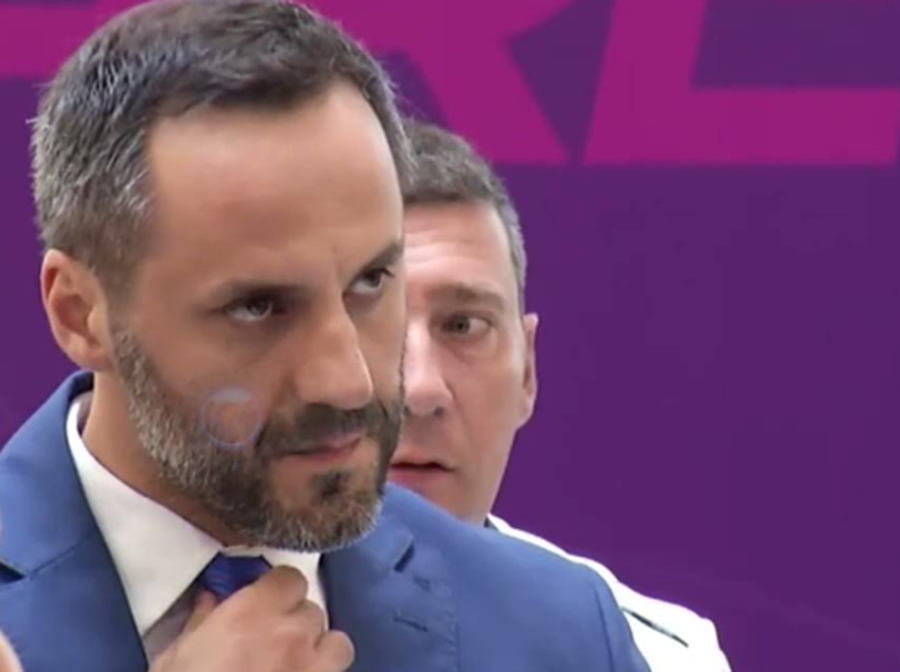
Why is Minister Lamallari silent and how was Indrit Doda appointed without the relevant qualifications to head the Internal Control of Prisons...
The silence of the Minister of Justice, Besfort Lamallari, in the face of such a sensitive appointment, is becoming a bigger problem than the appointment itself. It concerns the appointment of Indrit Doda as head of the Internal Control Service at the General Directorate of Prisons, a structure that is in charge of internal security, administrative investigation and filtering of criminal connections within the system.
This position is not simply an administrative task. It requires a high professional profile, specific training, documented experience in internal investigation, security, disciplinary procedures and above all, unquestionable institutional trust. This is where the fundamental question arises: by what criteria was Indrit Doda appointed and why does the minister refuse to publicly explain this decision-making?

According to the information made public, Indrit Doda does not have specialized academic and professional training for internal control in the prison system. He has not gone through the Penitentiary Administration School, has no certified training for internal institutional investigations and does not appear to have direct experience in the prison sector. However, he was placed in one of the most sensitive positions in the system, without transparency, without competition and without any public explanation.
Even more worrying is the fact that the appointment is accompanied by known, documented personal ties between the minister and the appointee. In any serious state, a friendly relationship or previous cooperation would require at least self-exclusion from decision-making or an open procedure to avoid conflict of interest. In this case, neither of these standards was followed.
Minister Lamallari began his mandate with strong statements about cleaning up the administration, integrity and zero tolerance for connections with crime. But the first real appointment that bears his signature contradicts this narrative. The minister's silence in the face of facts, denunciations and public questions makes the situation even more problematic.
Because if the minister doesn't speak up today, tomorrow it may be too late. Problems in prisons don't appear immediately. They are built silently: through tolerating connections, turning a blind eye, purging professionals, and creating networks of personal loyalty. And when they explode, political responsibility falls directly on the one who made the appointment.
This is not a personal attack. It is a legitimate request for transparency. The Minister of Justice has a legal and moral obligation to explain:
1. why were the professional criteria overlooked,
2. why was a competitive procedure not conducted,
3. why was a person chosen without the relevant education (Doda only has a three-year Police School and not a Master's degree as required by the criteria), and
4. why has he chosen silence so far?
In a justice system that claims reform, silence is not neutrality. Silence is a choice. And in this case, the choice of the minister is in danger of turning into a serious political, institutional and criminal liability in the future./ Pamphlet






Lini një Përgjigje