


 Shkruar nga Pamfleti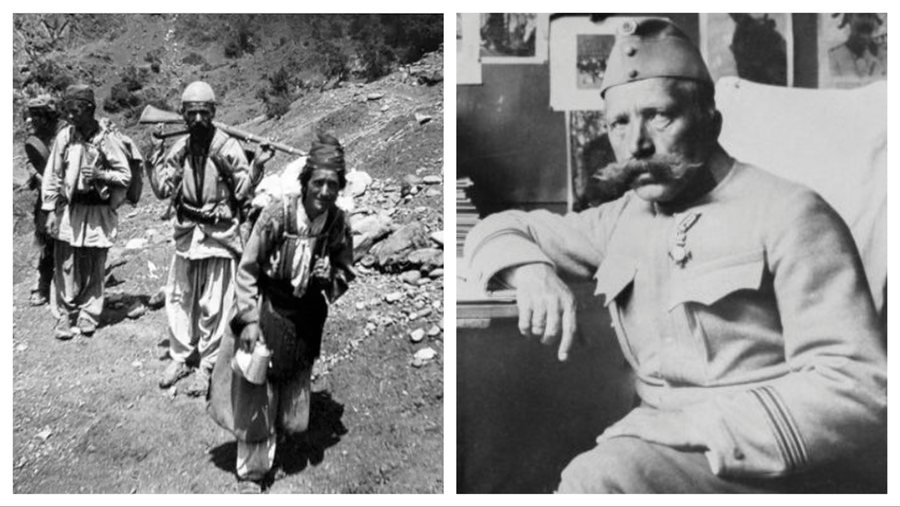
“My Albanian Diary” by the Austrian parish priest, Fabian Barcata, is published for the first time in Albanian by the “Mirdita” Publishing House, on its centenary. It was written in 1905-1906, in Kryezez (Rubik) and was published twenty years later, in the Franciscan magazine “Franzisziglöcklein”, Austria, in 1926-1927. This is the first genuine diary of a foreign priest for Albania. The name of Fabian Barcata, this Austrian mystic of the beginning of the last century, is almost unknown to today’s reader. This was also the case seventy years ago, until his book “Flowers” was translated and published in Albanian, thanks to the care of Professor Karl Gurakuqi, one of the prominent names in Albanian literature and culture, who died in Rome as a political emigrant, in 1971.
A figure like Barcata brings honor to Austria itself
(Excerpt from the diary…)
In Kryezez, to recover from malaria fever
Today I returned with everything I had from Alessio (Lezha). The malarial fever had been wearing me down a lot lately. On the way I had to stop and rest twice and when I arrived here I was shaking so much that I could not control myself. A festive welcome! From above, where the church and parish were located, rifle shots could be heard. Between the shots the sweet sound of the church bells could be heard. All the people I met along the way greeted me with respect.
In front of the doors of the houses and huts stood women, while before them ran children, somewhat frightened, who watched me with their fingers in their mouths. A young woman with a child in her arms, who stood next to me on the way, said to me in a loud voice: "Sir, stay with us, the air of Kriezez will drive away the fever of the disease." I believed this too. The Archbishop had sent me here to recover.
How poor the parish is. Of course, Lezha didn't pamper me either, and even the smallest comfort they gave me there, I completely miss here. It rained last night and I had to change my sleeping place four times, as it was dripping all over my room.
Finally, there was nothing left for me but to wrap myself in my raincoat. So I fell asleep, and when I woke up, I was completely soaked. The most pleasant thing is the fire in the kitchen, which is kept burning all the time. I sit for hours in an armchair near the fire, especially when I have malarial fever.
Yesterday I complained about the conditions in my apartment and this is not fair at all, since God has not blessed Kryezez with anything better. How poor the church is here! Four old walls and on them a bad unfinished roof with stone tiles and on top of that, the ceiling is missing. The altar is like a cube of wall, where to get to it, you have to go over two steps, also walled in.
Above the altar, on the wall, hangs a wretched scene, painted on wood. There are only two wooden candle holders, which are also missing their legs. Instead of legs, they have nails to hold them up. The other candles are kept in empty bottles.
The only decorations in the church are two old bouquets of paper flowers, which have also lost their shape. Two small bottles made of pumpkin serve as wine holders. When I was saying the Holy Mass for the first time, my heart sank. I felt that I had to change something.
I immediately wrote for some new metal candle holders and asked the nuns at Kallmet to make me 4 new bouquets of flowers. The church also needs to be whitewashed, which I will do myself. Why did I go to art school?
"A sensitive and believing soul"
Today I made my first visit to a sick person. I was called to an old man who was dying. I rode to the hut. There a man took my horse. Through a low door I entered the hut's only room. In the room there was only an old man, leaning against the wall, who was calmly smoking a cigarette. I looked around to find the sick person for whom I had been called, but I did not see him.
The old man had silently observed my searching gaze. Finally he said to me: “I am the sick man”! I was almost angry, because when I was called to visit the sick man, I was lying in bed and exhausted from fever. I had been riding for about two hours, affected by fever, and I came to visit a man who was healthier than me. Did the man understand my anger? I think so.
He invited me to sit next to him, took my hand and after placing it on my mouth and forehead, he began to speak to me and his voice became sweet, as if he were hiding an inner prayer in it: "O Lord, I see that you are also sick and my soul aches that I have called you. But do not regret your coming, for it has not been in vain. I am dying and I want to pay the account that I have with God. Do you know that I am a great sinner and when the time comes for me to appear before God, I do not know what will save me except your generosity."
Unë e dëgjova rrëfimin e tij dhe m’u duk sikur kësaj here kisha bërë mjaft. Ai donte që unë t’i bëja dhe vajimin e fundit. E kundërshtova me vendosmëri, pasi ky sakrament bëhej vetëm për njerëzit që ishin duke vdekur. “Zotëri, më beso, do të vdes së shpejti”. Gjatë kësaj kohe erdhën në dhomë dhe të afërmit e burrit, të cilët iu bashkuan lutjes së tij. Edhe ato mendonin se ai do vdiste së shpejti. Nuk isha i bindur, por i shtyrë nga lutjet e njerëzve, i bëra këtij burri vajimin e fundit. Pas ceremonisë më përgatiten kafe dhe unë qëndrova ca kohë duke biseduar me këtë burrë.
Ai më tregoi për kohët e shkuara dhe më dukej se i kishte vënë qëllim vetes, të më tregonte vetëm gjërat negative që kishte bërë gjatë gjithë jetës së tij. Por qëllimi që i kishte vënë vetes, nuk pati sukses. Pas çdo fjalie që ai thoshte, fshihej një shpirt i ndjeshëm dhe besimtar. Pasi folëm rreth një gjysmë ore me njëri-tjetrin, ai hoqi cigaren nga goja, u shtri në tokë, më mori dorën dhe pas disa frymëmarrjeve të zgjatura, vdiq.
“Në dhomën e të vdekurit, mora vendimin…që të bëhesha vetë mjek”
Ai djali i ri, tek i cili kam qenë dje për vizitë, ka vdekur. Oh, sa më dhemb shpirti, kur shoh se si vdes një gjak i ri. Sigurisht që ai do të kishte shpëtuar, po të kishte pasur mjek dhe ilaçe. Në dhomën e të vdekurit, mora vendimin që të zëvendësoja atë që mungonte dhe të bëhesha vetë mjek. Sikur këto letra të bien një ditë në duar të huaja, do të qesheshin për optimizmin me të cilin po shkruaj, në lidhje me këtë qëllim që i kam vënë vetes.
Të bëhem mjek, kur nuk kam as shkollë, as dije, as përvojë. Nuk do të guxoj të shëroj sëmundjet e komplikuara, por sëmundjet e zakonshme që shërohen me mjete të thjeshta. Këtë do ta bëj. Uroj që për mjetet që na mungojnë, të na japë Zoti i madh, bekimin e tij. Ajo çka forcon bindjen time, është besimi që kanë kur vijnë e më pyesin herë pas here për sëmundjet që kanë.
“Unë jam bërë me të vërtetë mjek”!
Unë jam bërë më të vërtetë mjek. Para një muaji erdhi një grua, një vejushë e mjerë, të cilës ia kishin vrarë burrin për gjakmarrje. Ajo kishte gjashtë fëmijë dhe më i madhi ishte 14 vjeç. Më vete solli fëmijën më të vogël. Kjo krijesë e gjorë ishte 4 vjeç, por nuk mund të ecte. Trupi ishte shumë i ënjtur dhe i fortë për t’u prekur, gjymtyrët s’ishin aspak rezistente dhe krejt të pafuqishme. Më duhej ta ndihmoja, por si?
E ndjeva që s’mund të bëja ndonjë gjë, kështu që e luta gruan të qëndronte në famulli dhe të flinte aty dhe pastaj e dërgova me kalin tim, të shoqëruar nga një shërbëtor, për në Kallmet, aty ku ishin murgeshat, të cilat punonin si mjeke. Në darkë u kthye përsëri shumë e gëzuar dhe e qetësuar, me dy shishe ilaçe që i kishte marrë atje.
After a week she came again with the children, but this time very upset. “The child is not at all better”! and she begged and swore to me to help her. And so I did. What I gave her were some light medications to break the waters. To tell the truth, I did not have much faith in the action of this medicine. But what happened? Three weeks later the woman came to me and showed me with shining eyes that the child was much better.
The body had shrunk and the child had already started walking. She begged me to give her medicine again. Yesterday I went to this widow's hut. At the entrance to the hut my little patient stood upright and without anyone helping him, he took steps towards me. I took a small piece of sugar from my pocket. Then I gave him a bag of beans and one of sugar for his mother.
One had to be careful with the rules, so as not to embarrass the poor people. If a friend came to the house, he had to pray with coffee, even in the poorest huts. That is the sacred tradition. It is a shame if it does not happen like that. I should have guessed that the most elementary thing was missing here.
Poor harvests due to severe drought
The harvest has been very poor. The culprit of this fact has been the great drought. How will the poor people live this year? They are rightly complaining this time. They have a great access to it. Most are in debt, their lenders are the merchants of Lezha and they know no mercy at all. The price of corn, which until then was very low, is now twice as much./ Memorie.al


Lini një Përgjigje