


 Shkruar nga Pamfleti
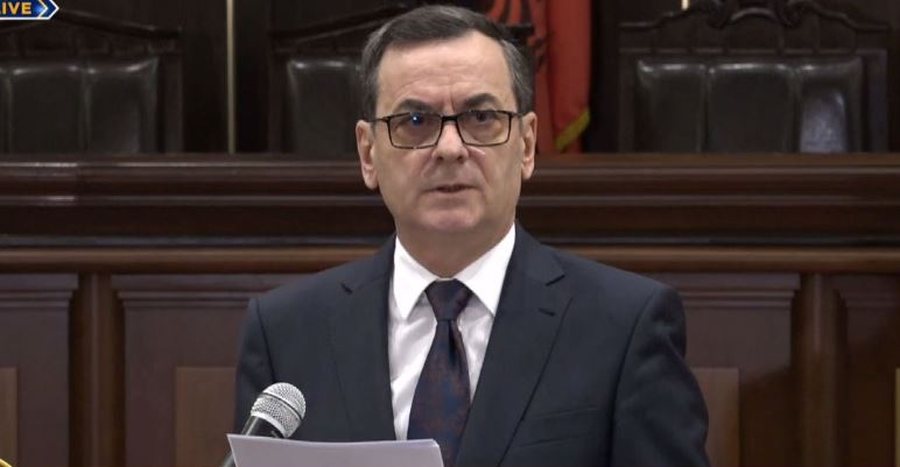
The President of the Supreme Court, Sokol Sadushi, in a media conference, summarized the achievements for the year 2023, while emphasizing that the number of backlog cases has been decreasing.
He emphasized that after examining the backlog cases accumulated throughout 2018-2019, there will be no cases that exceed reasonable trial terms.
"Very soon you will find that after we have completed the review of the cases belonging to the years 2017-2018, as the years with the highest number of registered cases, there will be no cases that exceed the reasonable trial terms. It is enough to refer to the number of decisions given from 2020, to be confident that for a period of almost two years, the backlog of 24,000 cases will be considered a reminiscence of the past", he emphasized.
Speaking about the challenges, the head of the Supreme Court said that they accept any criticism, which comes from the public opinion and the media, while he promised that the process of reviewing the backlog files will proceed quickly and professionally.
Full word:
The year 2023 was very busy, with countless challenges, carried over from the past, with natural tension, but also with prominent successes. The completion of the Supreme Court with 18 judges has made the United Colleges fully functional, as a decision-making body for the change of judicial practice, while the General Assembly of Judges has completed the procedure for electing judges of the Constitutional Court, as well as the President of the Court of Justice. High and Vice Presidents.
Three years ago, when it resumed function with only three members, the Supreme Court was in complete collapse. Let me tell you, the optimists who believed the situation would return to normal were in the minority. The promise at that time is now a part of reality and the skeptics are gradually becoming silent and accepting the product of a work absolutely at the limits of the impossible.
Only in the span of three years of recovery, the number of 24,688 decisions has exceeded the backlog, which is significantly reduced to 24,120 cases. Reducing the high number of backlog cases requires time and a coherent and fruitful strategy, which thanks to cooperation with the project supported by the Department of State, Bureau of International Narcotics and Law Enforcement Affairs at the US Embassy in Tirana, has resulted in successful.
The Supreme Court is carrying out the function of delivering justice, through a clear methodology and a high pace of work of the judiciary and support staff, with the main aim of conveying more hope and trust to the public. Different reports, with different methodologies, have reached a common conclusion: the Supreme Court is regarded as the most open and transparent institution within the system.
Being transparent and rejecting closed doors has made the hermeticism dictated by tradition now a thing of the distant past. We are convinced that this is the only way to follow in public communication and a way to guarantee institutional authority and legitimacy, effectiveness in judgment and professionalism of the corps, which has directly influenced the increase of public trust.
Believing that numbers are often like pictures and as the media parlance says, the right picture is worth a thousand words, I'm going to show you some easily verifiable numbers.
For the year 2023, 7,848 court decisions were issued, of which 2,931 belong to the Administrative College, 2,689 decisions of the Civil College and 2,228 decisions of the Criminal College.
The main indicator of performance and efficiency, referring to CEPEJ's standards and best practices, is the rate of liquidation of cases, which is determined by the ratio between completed cases and new cases that are registered. The Supreme Court has been exceeding the international standard for over 2 years, reaching for the year 2023, a rate of liquidation of cases of nearly 425%.
During this year, 1,846 new cases were registered, and according to international standards, the number of court decisions should have been the same, while 7,848 decisions were given, that is, 4 times more than the yield rate per judge. Referring to these data, each judge held for this year a workload of nearly 440 decisions per year (a record number), while historically, in its best year and with more legal advisors, the Supreme Court reviewed on average no more than 250 cases per year per judge. These are data that testify to the high responsibility of the judiciary to face, but also to get out of this situation.
You will soon find that once we have completed the review of cases pertaining to 2017-2018, as the years with the highest number of cases recorded, there will be no cases exceeding reasonable trial times. It is enough to refer to the number of decisions given from 2020, to be confident that for a period of almost two years, the backlog of 24,000 cases will be considered a reminiscence of the past.
Efektiviteti është një tregues i mirë i performancës së gjyqtarëve dhe i prirjes për një ulje të backlogut, por rendja me nxitim pas shtimit të numrit të vendimeve nuk është qëllim në vetvete. Përtej sasisë së çështjeve, gjyqtarët mbeten të fokusuar veçanërisht tek cilësia e vendimmarrjes. Në këtë drejtim jemi të orientuar te shtimi i vendimeve për njësimin, zhvillimin e ndryshimin e praktikës gjyqësore. Gjatë vitit 2023 ka filluar procedura për 13 vendime njësimi (4 nga Kolegji Penal, 2 nga Kolegji Civil dhe 7 nga Kolegji Administrativ), ndërkohë që një pjesë prej tyre janë shpallur dhe të tjerat janë në proces arsyetimi. Vendime të strukturuara mirë profesionalisht, përmes të cilave zhvillohet dhe njësohet praktika gjyqësore e bëjnë shumë më eficent gjykimin dhe qëndrueshmërinë në vendimmarrjen e gjykatave më të ulta, duke garantuar stabilitet dhe siguri juridike në zgjidhjen e mosmarrëveshjeve. Ky është dhe do të mbetet prioriteti ynë.
Gjatë vitit 2023, krahas shqyrtimit të çështjeve sipas kriterit kronologjik është ndjekur edhe një skemë përparësie, ku përfshihen rekurset e veçanta, çështjet e pezulluara, çështjet familjare, të pronës, masat e sigurimit pesonal, vendimet për ekstradime, etj, pa shmangur çështjet emergjente dhe me afate të shpejta gjykimi, në veçanti ato që i përkasin shtresave më vulnerabël të shoqërisë, sidomos pensionistëve, apo të larguarve padrejtësisht nga puna.
Heqjet dorë nga rekursi prej institucioneve publike ka vijuar edhe gjatë këtij viti, fenomen që është vënë re edhe te individët. Janë 468 kërkesa për heqje dorë nga rekursi, nga të cilat 384 i përkasin institucioneve publike dhe 84 individëve, të ndara në: 261 në fushën administrative, 177 në civile dhe 30 në penale. Kjo prirje nevojitet të shoqërohet edhe me mosparaqitjen e rekurseve të reja, që dukshëm rezultojnë të pabazuara.
Përherë e kam evidentuar si një problematikë shqetësuese numrin e lartë të rekurseve, të cilat nuk arrijnë të kalojnë testin e pranueshmërisë. E ndarë sipas fushave, për vitin 2023 nuk e kalojnë këtë test 36% e rekurseve në Kolegjin Civil, 70% në Kolegjin Administrativ dhe 70% në Kolegjin Penal. Por nëse do shohim raportin ndërmjet individëve/personave juridik privatë, nga njëra anë dhe organeve publike nga ana tjetër, rekurset e papranueshme në fushën administrative dhe civile i përkasin më tepër organeve publike. Për këtë vit, organet publike rezultojnë gjyqhumbëse në 70% të çështjeve administrative (1.441 çështje) dhe 73% të çështjeve civile (701 çështje). Individët/personat juridik privatë rezultojnë gjyqhumbës në 30% të çështjeve administrative (629 çështje) dhe 27% të çështjeve civile (263 çështje). Ky raport është i ndryshëm në fushën penale, ku prokuroria rezulton gjyqhumbëse në 33% të çështjeve (521 çështje), ndërsa individët rezultojnë gjyqhumbës në 67% të tyre (1039 çështje).
The omission of the eligibility test addresses the concern of private lawyers, the State Bar and the prosecution. It is unacceptable for those who are presumed to have knowledge of the law to continue to present patently unfounded appeals. It must be clearly understood that the conclusion drawn by the Supreme Court for an obviously unfounded appeal does not have any difference from the case, when the commission of an abusive action by the lawyer or representative of the state, who cannot and should not be left unpunished, is evident. both from the National Chamber of Advocacy and from the State General Advocacy.
The way in which appeals are presented constitutes a very serious problem that testifies to the low professional level of representation. Regardless of the measures taken by the Supreme Court, even with the fining of lawyers, it is necessary to change the legal mentality, but also the understanding of the means of appeal, in general and recourse, in particular. Lawyers must understand that the Supreme Court is a court of law and not a court of fact. It is necessary for them to follow judicial practice, in order not to invest the Court with unnecessary cases, with unsuccessful and obviously unfounded appeals. This is best proven by the recourse selection procedure applied by the Administrative College, which is giving positive results both in not allowing the artificial addition of cases, in the quick orientation of judicial practice, but also in the evidence of the lack of professionalism of legal representatives. Only during the year 2023, from this selection process in the administrative field, 42% of the presented appeals were evaluated as clearly unfounded.
Through a very transparent process, with the real-time publication on the official website of decisions and special publications, as well as the periodic distribution of the electronic newsletter with the outstanding decisions, an original solution for the judicial system and very pleasant for legal practitioners, The Supreme Court is aiming to do its best.
Undoubtedly, a lot has been done, but for the citizens who expect justice as soon as possible, it is not enough. The Supreme Court carefully assesses and treats with seriousness any quality criticism that comes from the media, civil society and public opinion. We are aware of the challenges we face and are convinced that they cannot be overcome without everyone's contribution. Thanking you again for being here today, we welcome your questions and comments.





Lini një Përgjigje