


 Shkruar nga Pamfleti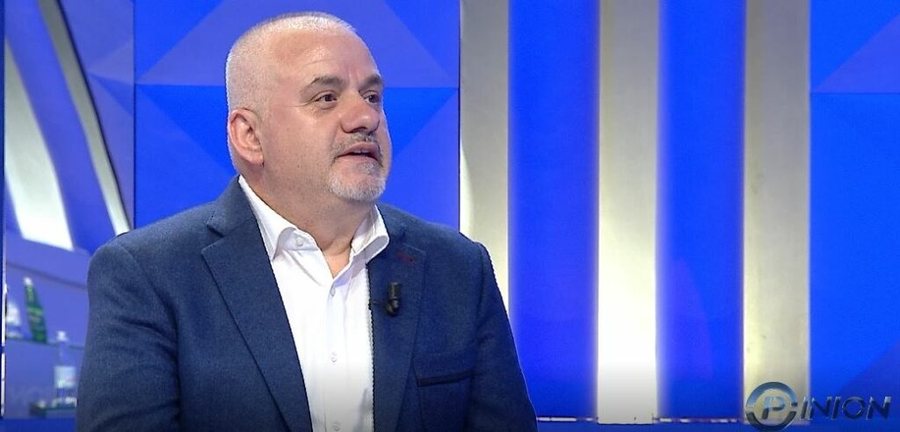
Artan Hoxha said that the range of Iranian ballistic missiles could extend to Europe.
Tensions in the Middle East and recent military and political developments place Iran in a delicate phase. Journalist Artan Hoxha stated that the range of Iranian ballistic missiles could extend to Europe, describing Tehran as a power with regional influence, but not global.
According to him, Iran has lost some of the influence it previously exercised in the region. He argued that last year's coups and internal protests have weakened the regime, placing it in one of the most difficult moments in recent decades. Hoxha added on A2 CNN that the operation undertaken by the United States and Israel hit not only the religious leadership, but also the state's leadership structure.
He stressed that Iran has been investing in military infrastructure for years, also as a result of the long conflict with Iraq. However, according to him, the country's capacity remains within the framework of a regional power. In this context, he also mentioned statements about long-range ballistic missiles that can reach European territory.
Artan Hoxha: Iran has lost the regional power it had. It no longer has that power. And with the blow it received last year and the major protests that erupted later, it seemed that the regime was in one of the weakest positions it has had in the half century that they have been leading a country as large as Iran. Under these conditions, the United States of America and Israel carried out this attack. Britain did not join this operation. But the strike was fatal, because it did not only hit the Ayatollah. It hit the core that governed that country. That country, due to the 10-year conflict it had with Iraq, had invested and had a military infrastructure, quite large, which cost the country a lot. But on the other hand, the power that that country has faced, so Iran is a regional power, not a global one. That is its power. I also saw last year, the range of missiles that they said could reach Europe, ballistic missiles, but it is a regional power, it is not a global power.
Considering that it is not a democratic country, so that it has this and that other problem, surrounded by countries with which it has occasionally had conflicts. The war with Iraq, Afghanistan that it has there has brought it up. It is an open opponent of Arab countries. From time to time there have been frictions with Turkey, because Iran also has 7% of the Kurdish population and always the Kurds since it is a nation that does not have a state, distributed in three Turks, Syria, Iraq and Iran and they are ready at any moment that they are given a hope that you can create a state they can become allies and we have seen what the Kurds did in Iraq and Syria. So the Kurds are always a nation that is a nation with over 20 million inhabitants that can react and become an ally of the Westerners if they have the opportunity to have their own state.


Lini një Përgjigje