


 Shkruar nga Pamfleti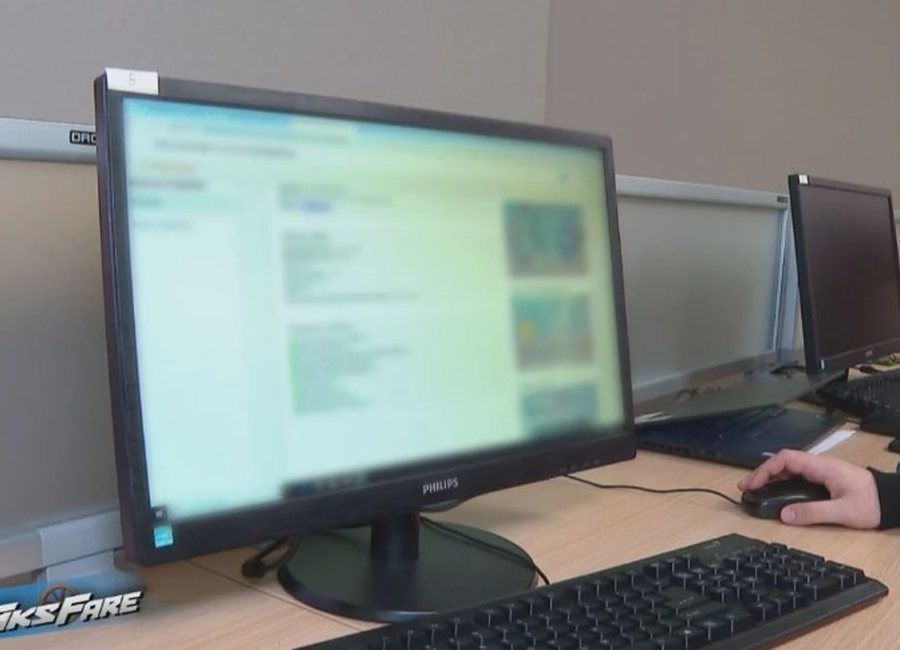
Fiks Fare broadcast the complaint of an Albanian immigrant living in Florence, Italy, on Thursday evening.
Mr. Ideal Mujo, who has registered on the CEC platform to vote in the parliamentary elections of May 11, 2025, complained to the editorial office of the investigative show. He says that, 2 days after registering on this platform, dozens of messages from a candidate for MP and political forces competing in the elections arrived at his official email address.
He says that before he registered, no one contacted him and that his personal email address was private and no one knew it. "In the emails they write to help a candidate named Johan Hoxha. I don't know which party he belongs to, but they write to help us register or in other ways," he says.
"The problem is that they contacted me after I registered. They didn't directly tell me who to vote for, but they opened groups in e-mail and included my address. They wrote that they would help with the registration process," says the citizen, who expresses indignation that his data has been "sold." "I contacted you because, before we applied to the CEC, we were 'promised' that the data was personal. But no, since it has been distributed," says the citizen.
Fiksi checked the internet for the name of Mr. Johan Hoxha, finding several videos distributed by the Socialist Party platform “the deputy we want.” According to the SP, the platform aimed to provide citizens with representation in the Albanian Parliament, with new people and ideas.
Candidate Johan Hoxha ran in the subcategory "for the diaspora", aiming to have his name on the candidate lists for the May 11 elections. However, his name was not on these lists, which were made public yesterday evening!
Following the complaint, Fiks Fare contacted the Central Election Commission, asking several questions. When asked whether political forces or candidates for deputies have access to the platform, the CEC says that "no force has access, only authorized personnel and the processing of requests is carried out in an environment monitored by cameras 24 hours a day, 7 days a week". The show asked the CEC how it operates for the registration of immigrants, while the answer is that the process is individual and that assistance is provided by the Commission by phone, by e-mail or even at the website address.
But has this data been distributed by the CEC? The body that controls and administers the vote says that personal data is stored according to laws and protocols. In fact, the staff is limited and even signs a confidentiality statement when they take office.
"The data that is shared with third parties, other than the CEC that manages the voting process from abroad, is only statistical data (gender, age, status of the request, date of application, etc.). This data is shared with political parties, Albanian and foreign non-governmental organizations, as well as international organizations," the Commission says.
But, where did the political forces or candidates get the phone numbers or e-mail addresses?! The CEC answers this question by saying that "the personal number and e-mail were used only for registration purposes and that the CEC does not maintain contact with any party, political force or candidate for deputy."
The last question that Fiksi addressed to the Commission was what measures the CEC has taken regarding this phenomenon? "The platform guarantees security at the highest level and verifies the identity of citizens who apply as voters from abroad."
If the Central Election Commission did not give them the data, where did the political forces and the candidate for deputy get the data of citizen Ideal Mujo?! According to the information available to Fiks Fare, the Emigrant Registration Platform was established by the CEC a few months ago. In November 2024, the Commission allocated an amount of 2.1 million euros to create it. In recent days, the institution that controls and counts the vote, opened another procedure, worth 1.1 million euros, for support and updates of this platform.
Despite the fact that the money was not lacking, the emigrants have accusations that their data has been "sold"! As has often happened in the past with other institutions that have published the personal data of citizens living and working in Albania; such as salaries, phone numbers, judicial status or even border crossings!







Lini një Përgjigje