


 Shkruar nga Pamfleti
What will happen to the Gjadri camps after the European Court's decision, is the Meloni-Rama agreement on migrants being called into question, and how will it affect the determination of safe countries of origin?
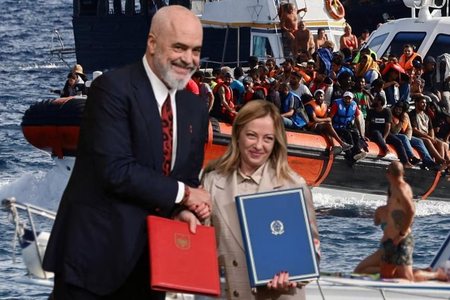
The Court of Justice of the European Union (CJEU) has set guidelines for the "Albania model", which concerns the migrant camps set up in Gjadra by the Meloni Government, which now operate as CPRs, regarding accelerated asylum procedures abroad.
This Meloni government project is now controversial. But what is the significance of the decision of the highest European court?
What did the court decide?
The case concerned the conditions under which EU member states can classify countries as so-called “safe countries of origin”. In this specific case, Italy designated Bangladesh, among others, as a safe country of origin. The European Court of Justice has now clarified that, under EU law, member states can make such a classification themselves, but they must disclose the sources for their assessment so that it can be assessed by the judiciary.
In addition, judges in Luxembourg ruled that at least until a new EU asylum regulation comes into force, a country is not a "safe origin" if certain groups of people, such as gay people, are not safe there.
What does this decision mean for Germany?
Germany also has a list of safe countries of origin. In addition to EU member states, it includes the Western Balkan countries, as well as Georgia, Ghana, Moldova and Senegal. "The decision is also innovative for Germany, because the European guidelines for classifying safe countries of origin also apply here," says migration law expert Pauline Endres de Oliveira.
The Federal Interior Ministry, which is responsible for the case, initially said nothing about the specific implications of the ruling for Germany. A spokesman said they would evaluate the ECJ's ruling. He stressed that Germany already discloses the reasons for classifying a country of origin as safe and that Germany generally only classifies countries as such if their populations are considered safe.
What do the country lists have to do with the "Albania model"?
The designation of safe countries of origin is a fundamental prerequisite for the implementation of the “Albania Model”. The background is that EU member states can assess the protection status of people coming from so-called safe countries of origin in an accelerated procedure.
Italia synon të kryejë procedura të tilla jashtë BE-së, konkretisht në Shqipëri. Kështu, GJED sqaroi vetëm një çështje të pjesshme të modelit dhe krijoi kuadrin për shqyrtimin e kërkesave për azil nga migrantët e Mesdheut jashtë BE-së.
Sipas ekspertit ligjor Endres de Oliveira, mbetet e paqartë nëse dhe si mund të vazhdojë "modeli i Shqipërisë" pas vendimit. "Ende ka shumë pyetje ligjore rreth 'modelit Itali-Shqipëri'", shpjegon profesori në Universitetin Humboldt në Berlin. Për shembull, nëse akomodimi i planifikuar i azilkërkuesve në qendra të tilla barazohet ligjërisht me ndalimin, kjo do të ishte problematike, sepse sipas ligjit ndërkombëtar, askush nuk mund të ndalohet pa baza ligjore dhe paraqitja e një kërkese për azil nuk është bazë për ndalim.
Si reagoi qeveria italiane?
Vendimi u prit me kritika të ashpra në Itali. Kryeministrja Giorgia Meloni tha se vendimi ishte i habitshëm dhe kufizon më tej fushëveprimin tashmë të kufizuar të veprimeve të qeverive. "Ky është një hap që duhet t'i shqetësojë të gjithë. Sistemi gjyqësor, këtë herë ai evropian, po pretendon kompetenca "që nuk janë e drejta e tij, ndërsa përgjegjësia u takon politikanëve", tha Meloni.
Si funksionon saktësisht modeli italian?
Italia ka lidhur një marrëveshje me Shqipërinë në lidhje me shqyrtimin e kërkesave për azil në territorin shqiptar, por sipas ligjit italian. Për këtë qëllim, në Shqipëri janë ndërtuar dy kampe ku zyrtarët italianë do të vendosin për kërkesat për azil nga migrantët që u ndaluan gjatë rrugës së tyre për në Evropë në Mesdhe. Megjithatë, kjo vlen vetëm për migrantët nga të ashtuquajturat vende të sigurta origjine që janë në moshë madhore dhe meshkujt, ndërsa gratë dhe të miturit përjashtohen. Aplikantët nuk lejohen të largohen nga kampet në Shqipëri, ndërsa kërkesat e tyre janë duke u shqyrtuar. Vetëm nëse kërkesa e tyre për azil është e suksesshme, ata do të lejohen të hyjnë në Itali.
Modeli nuk ka funksionuar deri më tani: gjyqësori italian ndaloi planet e koalicionit qeveritar të krahut të djathtë.
Çfarë ndodh aktualisht me kampet në Shqipëri?
Pas humbjeve në gjykatat italiane, koalicioni i Melonit miratoi një dekret të ri në mars duke lejuar që azilkërkuesit e refuzuar të strehohen në Shqipëri ndërsa presin deportimin. Kjo zgjeroi përdorimin e kampeve. Në prill, azilkërkuesit e refuzuar u transferuan për herë të parë në qendrën në Gjadër, në veri të Shqipërisë.
Më parë, mjediset ishin kryesisht të zbrazëta dhe përdoreshin kryesisht nga nëpunësit civilë. Që nga futja e opsionit të ri të përdorimit, rreth 110 persona kanë kaluar nëpër qendra deri në fund të qershorit, sipas revistës "Altreconomia", e cila citon të dhëna nga Ministria e Brendshme italiane. Ministria e Brendshme nuk i është përgjigjur ende një kërkese për informacion në lidhje me numrin e personave që ndodhen aktualisht në mjedise.
Cili është qëndrimi i BE-së ndaj modelit?
The Italian agreement with Albania was closely followed in several EU member states, not least because some governments could envisage similar models. Denmark, for example, expressed early interest in asylum procedures in third countries.
A new EU regulation stipulates that in the future, countries can be classified as safe countries of origin, even with exceptions for certain groups of people and certain regions. The provision is part of a major reform of EU asylum law, which will enter into force in June 2026. The court in Luxembourg noted that the EU is free to accelerate the entry into force of the provision. However, until then, the old EU law and the court's interpretation will continue to apply.
In addition, the European Commission proposed an EU list of safe countries of origin in April. This would speed up asylum procedures for applicants from Kosovo, Bangladesh, Colombia, Egypt, India, Morocco and Tunisia. The proposal still needs the approval of the European Parliament and the Council of the European Union.
What is the difference from repatriation centers?
Several EU countries are currently discussing the idea of relocating asylum seekers whose applications have already been definitively rejected to third countries outside Europe, in so-called return centres. German Interior Minister Alexander Dobrindt (CSU) recently confirmed this intention. The EU Commission has proposed a law to this end, but negotiations between EU countries and Parliament are still pending. However, according to the "original Albanian model", the examination of the application would already take place abroad. /Adapted from Pamphlet by dpa/






Lini një Përgjigje