


 Shkruar nga Pamfleti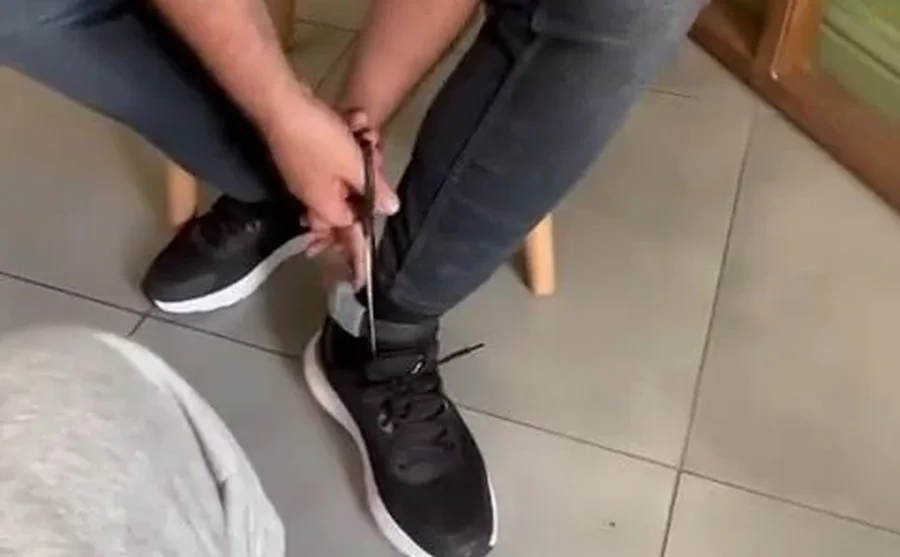
In one video, the man who cut off his bracelet is asked: "Where are the police?" He replies: "At the police station, lol. I took it off myself."
The Home Office lost contact with two-thirds of asylum seekers who were being monitored through electronic bracelets, a report has revealed.
The migrants – including many who had crossed the Channel in small boats – were fitted with ankle bracelets, helping the Home Office track their movements and ensure they reported every two weeks to immigration officials.
However, the pilot scheme involving 1,000 migrants to test the technology failed and ultimately made no difference to the work of the Home Office.
Officials admitted that around 88% of those placed under electronic surveillance were Albanians, who were considered mainly economic migrants rather than genuine asylum seekers, when they made up the bulk of migrants crossing the Channel.
After 500 days, officials reported that 2/3 of those with tags were no longer in contact with the Home Office, as were a "control" group that was without tags.
"At the end of the pilot, only 32 percent (162 out of 502) of the labeled group were compliant with reporting and 34 percent (174 out of 509) of the control group were compliant," the report said.
Nearly 1 in 6 of the tagged group (16 percent) had escaped, compared with 16% of those from the unbraced control group.
Even those who were classified as compliant had tried to free themselves from their bracelets, with officials overseeing the pilot scheme reporting that there were nearly 1,400 attempts to remove electronic ankle straps or batteries.
The Telegraph revealed in 2023 how Albanians had demonstrated how to free themselves from electronic bracelets.
They posted TikTok videos showing how they use kitchen scissors to cut the labels, which they have described as "British Rolexes".
They boasted that this enabled them to escape despite the threat of prison or other sanctions for violating their immigration bail.
In one video, the man who cut off his bracelet is asked: "Where are the police?" He replies: "At the police station, lol. I took it off myself."
Another posted a comment asking, "If I remove it and change my address, will that work or am I still in trouble?" One response said, "When you remove it, don't come home lol."
A third claimed that the old-style bracelet simply records whether someone is home, unlike a GPS tag, which tracks someone 24/7 across all locations.
"I took off the bracelet and left it at home, so I'm not worried at all," the man said.
A fourth warned that removing the bracelet could result in an automatic 28-day return to prison.
But, one response said: "doing 28 days in prison is nothing. It's as easy as eating bread and cheese."
A Home Office spokesman acknowledged that “this pilot scheme, carried out under the previous government, sought to explore the impact of electronic monitoring on compliance rates, but the evaluation report notes that its findings cannot be applied to the asylum seeker group as a whole, given the scheme’s heavy concentration of Albanian nationals.”
"However, the evaluation report has been published in the interests of transparency, given the public funds spent on running the pilot scheme. This government is determined to restore order to the asylum system so that it operates swiftly, decisively and fairly. This includes working with our partners to respond to loss of contact, non-compliance and absconding."
The scheme, how Albanians arrive in the United Kingdom
Albanians left from poor areas, like Kukës.
Those with clean legal records or who have not attempted the crossing before fly to Brussels, others with criminal records or previous failed attempts go overland in vans through Serbia, Hungary, Germany and France.
Those taking the road trip to France will board small boats in Calais. Those flying to Brussels usually board small boats in Nieuwpoort in Belgium, which is just across the border from Dunkirk.
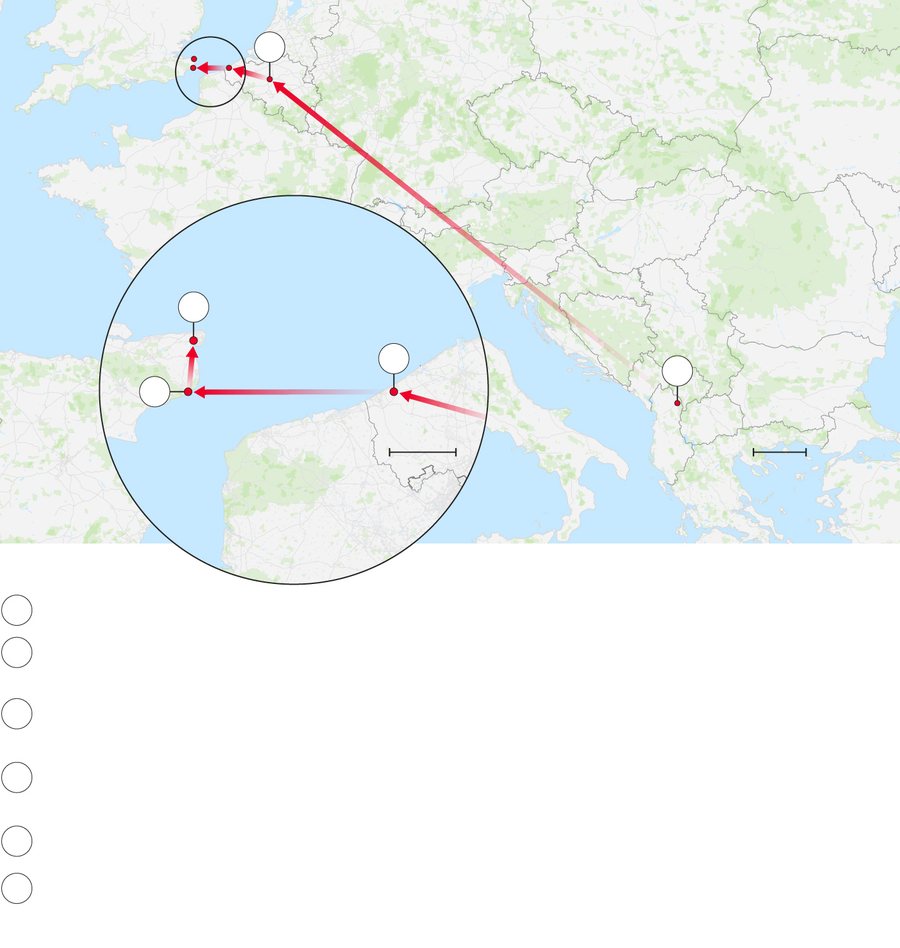
90% of boats are intercepted in the Channel by the Border Force or the RNLI. Each migrant is given a wristband with an ID number and a number for the vessel they were picked up from.
They are sent to Western Jet Foil's arrival center in Dover for initial processing, medical checks and research.
Migrants are taken to Manston, where their biometric data, including fingerprints, is taken. Most are housed in hotels while their applications for asylum or leave to remain are processed. Known criminals go to Immigration Removal Centres to await deportation. / Adapted from The Telegraph /






Lini një Përgjigje