


 Shkruar nga Pamfleti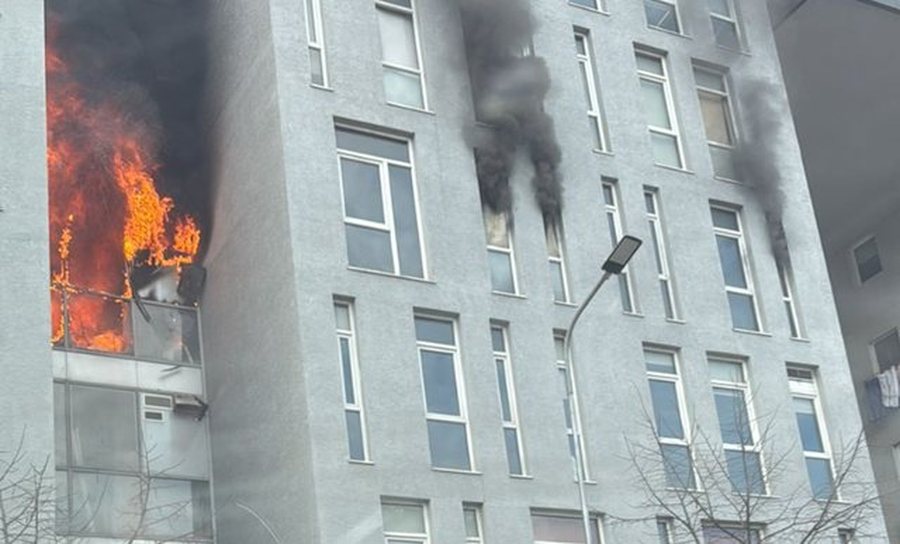
Building codes in Albania do not guarantee effective fire protection. The 2020 law obliges designers to take safety measures, but they are not required to install external stairs or thermal protection.
Some fires that break out in buildings risk getting out of control, due to urban infrastructure and the timing of firefighting efforts.
In such a situation, the rescue of residents is a matter of fate, as public buildings do not meet the criteria for evacuation or emergency cases.
So, the buildings have only one internal corridor and elevator, but no alternative for an external emergency exit. The only exceptions to this rule are buildings built by international institutions.
In Albania, unlike other European countries, there is no requirement for the material to be fireproof. Therefore, thermal insulation is a disadvantage for residents in the event of a disaster.
Furthermore, European Union countries apply other safety elements, such as fire doors that isolate one floor from another, apartment entrance doors or windows that resist fire for 60 to 90 minutes, and the use of fire-resistant electrical cables.
The 2020 law on "Control and Discipline of Construction Works" states that it is the duty of the designer and then the developer of the building to be responsible for fire safety and other safety measures, but with current codes and buildings built to date, this measure is determined through a notice indicating the method and order of evacuation, a letter which is missing in buildings where there is no administrator.
The cases of recent days reveal that the responsibility for rescue lies solely with the emergency forces, as the buildings are not equipped with special fire extinguishers that could eliminate the spread.
In fact, the costs of the damage that a fire can cause during this period may become unaffordable for many families, as it is seen that the number of those who insure their properties is very small. / Euronews Albania





Lini një Përgjigje