


 Shkruar nga Christian Herrmann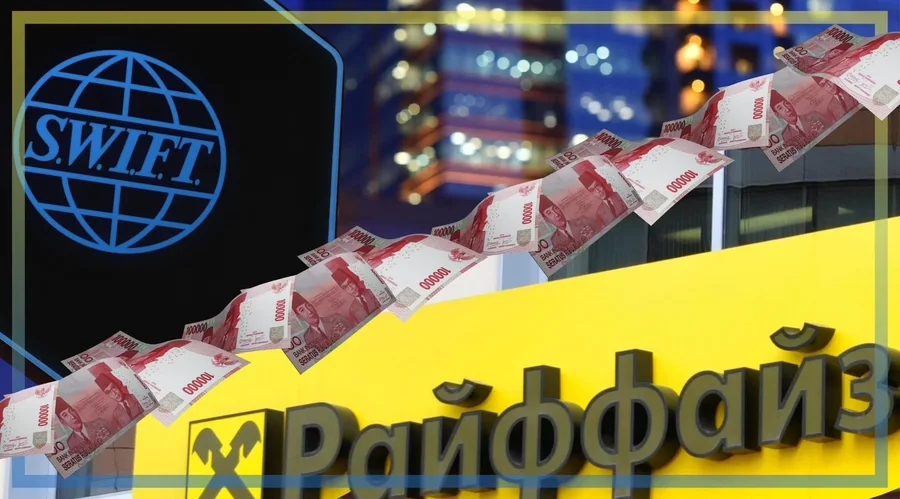
Raiffeisen Bank has found a third way to save part of its Russian income abroad: a swap agreement with the Russian company MKAO Rasperia, behind which hides the oligarch Deripaska.
Raiffeisen Bank has played with everyone, with Ukraine, the USA and the EU. Two years after the start of the war, the Austrians are making big profits from Russia and are trying to do the impossible: leave the country without losing their money.
For Ukraine, the Austrian Raiffeisen Bank is an international sponsor of the war.
The US also has doubts about this bank. In early March, a senior official of the US Treasury Department visited the headquarters in Vienna. Anna Morris specializes in illicit money flows from countries such as Russia and suspects that Raiffeisen Bank is helping Russian oligarch Oleg Deripaska to evade sanctions. The EU Commission has similar doubts.
Why is Raiffeisen Bank facing this problem? Raiffeisen Bank benefits from Russia more money than any other bank, explains Russian economist Vladislaë Inozemsev.

" Currently, if $200 is transferred to your Raiffeisen Bank account in Russia, Raiffeisen Bank tells you that you will receive only $50 because the commission is $150. This is how Raiffeisen Bank does business. No Russian bank can even think of introducing commissions such are the fees, but in the case of Raiffeisen Bank, the Russian Central Bank and the Russian Antitrust Authority have allowed it to operate freely .
Monopoly on Western transactions
" Thanks to the controversial Russian business, the Austrian financial institution Raiffeisen Bank International (RBI) is earning billions ," said the economist on ntv.de a year ago. At the time, the small bank from Vienna announced that it had made a profit of nearly 3.5 billion euros in the first year of the war.
According to experts, almost half of this came from the Russian branch in Moscow. According to the Russian ambassador in Austria, it was 60 percent. Raiffeisen Bank is the only Western bank that is on the list of 13 important credit institutions in Russia.
The Viennese financial institution has a kind of monopoly in Russia for all transactions with Western banks.
" It is a link between the Russian and Western banking systems and therefore can make a lot of money in Russia ," says economist Inozemsev.
Ekziston vetëm një problem: Pas fillimit të sulmit ndaj Ukrainës, banka qendrore ruse vendosi kontrolle të kapitalit për të parandaluar veçanërisht kompanitë perëndimore që të iknin jashtë vendit me kapitalet e tyre. Kjo ndikoi dhe vazhdon të ndikojë edhe në të ardhurat ruse të Raiffeisen Bank deri më sot.
Drejtuesit e bankës komentuan në mënyrë të heshtur situatën e vështirë. Për muaj të tërë pas fillimit të luftës, gjithçka që u tha ishte se të gjitha opsionet strategjike do të shqyrtoheshin me synimin për një dalje të kontrolluar nga Rusia dhe Bjellorusia. Vetëm në mars të vitit 2023, shefi i Raiffeisen, Johann Strobl foli publikisht për herë të parë për një shitje të mundshme të degës ruse sigurisht për një çmim përkatës.
Ky është problemi i madh, thotë Inozemsev. Kushdo që dëshiron të shkojë mund të shkojë. Në çdo kohë kompanitë e tjera perëndimore e kanë bërë këtë. Por nëse largoheni, rrezikoni të humbni gjithçka. Ashtu si Carlsberg dhe Danone kohët e fundit .
Ambasadori i Putinit paralajmën humbje
Me siguri Raiffeisen Bank e kupton se komisionet jashtëzakonisht të larta ishin thjesht një joshje për t'i shantazhuar. Ambasadori rus në Austri paralajmëroi në dhjetor se një tërheqje e mundshme e bankës nga Rusia mund të rrezikonte stabilitetin e grupit dhe "nuk do të ishte pa dhimbje për taksapaguesit austriakë".
Ekonomisti Inozemsev e thotë qartësisht: “Rusia ka marrë peng Raiffeisen Bank”.
Banka tashmë ka kontaktuar disa herë me bankën qendrore ruse dhe ka kërkuar këshilla. "Por banka qendrore ruse nuk mund të krijojë kushte për tërheqjen. Gjërat funksionojnë ndryshe në Rusi. Këtu ka një komision për investimet e huaja që i raporton qeverisë. Pra, në fund është presidenti Putin ai që vendos."
Mbrojtja e të dhënave
Në fund të fundit, banka ka saktësisht dy opsione. Ajo mund të qëndrojë në Rusi, të bëjë shumë para si dikur dhe të pranojë reputacionin e saj të keq në Perëndim, ose mund të largohet dhe të heqë dorë nga biznesi i saj më fitimprurës. Apo ndoshta jo?
Transaksione të dyshimta
Raiffeisen Bank ka gjetur një mënyrë të tretë për të kursyer të paktën një pjesë të të ardhurave të saj ruse jashtë vendit: një marrëveshje shkëmbimi me kompaninë ruse MKAO Rasperia. Ajo zotëron 28.5 milionë aksione në grupin austriak të ndërtimit Strabag. Kjo korrespondon me një 24 përqind të mirë të kompanisë, aktualisht me vlerë pothuajse 1.1 miliardë euro.
Në dhjetor, Raiffeisen Bank njoftoi se donte të blinte këto aksione nga Rasperia. Me sa duket ato do t'i transferoheshin më pas vjenezi si një formë dividenti. Asnjë rubël e vetme nuk do të largohet nga Rusia. Çdo kapital në këtë mënyrë do të transferohej nga një llogari ruse në një llogari tjetër ruse. Dhe kështu do të shmangeshin kontrollet e kapitalit të bankës qendrore ruse.
Lidhja me oligarkun rus
But behind MKAO Rasperia is the Russian oligarch Oleg Deripaska. He owns the shares of Strabag. We recall that immediately after the start of the war, the close confidant of Vladimir Putin was subjected to sanctions by the EU and the USA. Brussels and Washington now suspect that he would personally benefit from the Raiffeisen Bank swap deal, which would be a violation of sanctions.
That is why Anna Morris, the senior official at the US Treasury Department spoke openly at Raiffeisen Bank headquarters in Vienna in early March. This is why the EU Commission also seems to be losing patience with the bank. The news has already received that the Austrians themselves will be punished.
Who controls the Illiad?
The swap deal, however, is sophisticated: the MKAO Rasperia itself has also had a new owner since late March. The company, along with Strabag's shares, was transferred to a company called Illiadis. Strabag himself made this known after the Austrian group of Illiadis and Deripaska were informed of the deal.
The reason is clear: Unlike Rasperia, at Illiadis it is unclear who owns the company. Therefore, a review of the sanctions cannot be done, Strabag says in the statement. The group claims it "cannot assess whether the transaction affects Raiffeisen Bank's intended acquisition of Strabag shares".
However, Strabag is showing caution: "The company continues to assume that Strabag's shares in MAKO Rasperia have been frozen in accordance with the EU Sanctions Regulation."
Raiffeisen Bank sees it differently. Where Strabag has doubts, the Viennese bankers are confident in a statement that the planned share purchase "fully complies with all applicable sanctions rules". So was the transaction the latest step in a sophisticated plan to extract its own assets from Russia?
" It would be the best possible result ", believes Vladislav Inozemtsev.
The economist still doubts whether Austrian managers are aware of who they are dealing with here: "The Russian government will set conditions for this deal. Because as I have understood the situation over the past two years, Moscow will not allow Raiffeisen Bank to leave under its conditions" he says.
Therefore, the economist brings another thesis: " I think that Raiffeisen Bank will wait and hope that the war will end and they can continue doing business in Russia "./ Adapted Pamphlet from "NTV"


Lini një Përgjigje