


 Shkruar nga Pamfleti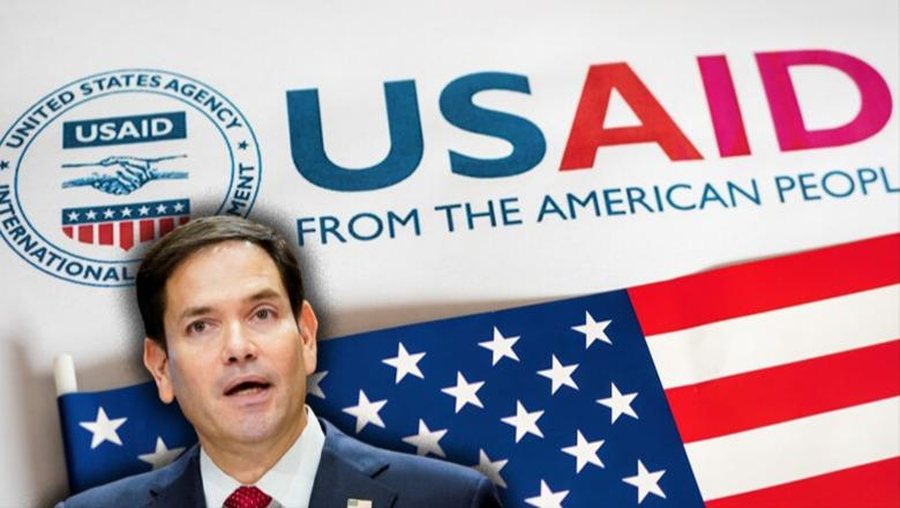
US Secretary of State Marco Rubio has unveiled a new scheme, which is very different from what was previously applied through USAID.
The United States of America has restored funds or foreign aid, which were blocked on the first day that Donald Trump officially took office as US President on January 20.
A little more than two months after President Trump's decision, Secretary of State Marco Rubio announced that the US would increase foreign aid to countries it considers partners.
And among these countries, of course, is Albania, which initially restored support for SPAK and GJKKO by re-engaging experts who assist the two institutions that prosecute and try the highest-ranking officials in crime and criminal organizations.
With the ban on foreign funding, Albania was one of the countries affected by Donald Trump's decision or decree, which froze funds. However, Albania was second to last among the countries in the region in terms of the amounts it had benefited from USAID, with the largest donations having gone to Kosovo and Bosnia and Herzegovina.
But how will the American grants be distributed, what are the projects that will be financed?
US Secretary of State Marco Rubio has unveiled a new scheme, which is very different from what was previously applied through USAID.
For the State Department led by Republican Rubio, the USAID scheme was a failure, as it was not in line with American interests, but also with the host countries, that is, countries that were considered partners.
“ The difference is that we want to provide foreign assistance in a way that is strategically aligned with our foreign policy priorities and with the priorities of host countries and the states with which we partner.
Basically, how it would work, how it has worked in the past, is USAID or some other entity would come to a country and say, this is what we think you need. And then they go out and hire an NGO that maybe they've convinced them that this is what you need, and they give them a bunch of money and they come to the country and do things.
Some of these programs are good. They are beautiful things. But most of the time, not so much. Anyway, that's how it used to be.
How do we want it to be in the future?
"We want our Embassies to engage with the host government, with our partners. And we ask them, what are your needs? And we provide assistance geared toward the needs of the nation states that are hosting us and that we are partners with ," the US Secretary of State said.
In this context, it seems that foreign aid, or funds that will be allocated by the US to partner countries, will be channeled through US embassies in these countries, which, after coordinating with the host governments, then follow up on the requests that are being faced with what are considered US priorities in foreign policy.
And if we refer to President Donald Trump's public statements about the international war on drug trafficking organizations and organized crime, it seems that this will be one of the essential priorities of the US in relation to those countries that are considered its partners, in terms of foreign policy.
Ted Yoho, a Republican from Florida who served in Congress from 2013 to 2021, during which time he was chairman of the House Foreign Affairs Subcommittee on Asia-Pacific from 2017-2019, in an analysis published in American media states that “ America is safer when there is less conflict and more positive American sentiment. This translates into fewer terrorists. A dollar spent on properly designed and effectively implemented foreign aid saves many more dollars in bullets and boots, leaving more money in American pockets and secondarily furthering our goals of prosperity .”
“ Secretary of State Marco Rubio has set out a strategic framework to guide US foreign policy and development assistance in line with President Trump’s Inauguration Day foreign assistance executive order: to make America safer, stronger, and more prosperous.
These goals are intuitive to us and to many Americans. However, they leave a lot of room for deciding which policy areas to prioritize and which interventions to fund.
Done right, America’s foreign aid investments will have a more meaningful impact and better value for taxpayers. But if they are poorly implemented, we will invite China and Russia to fill the gaps we create, inadvertently making America less secure, weaker, and less prosperous.
"As a former foreign aid critic turned reform champion and expert on the economics of international aid, we offer here the beginnings of a plan for U.S. foreign aid that meets the weight of the task ," Yoho writes for The Hill. / Pamphlet /




Lini një Përgjigje