


 Shkruar nga Flamur Vezaj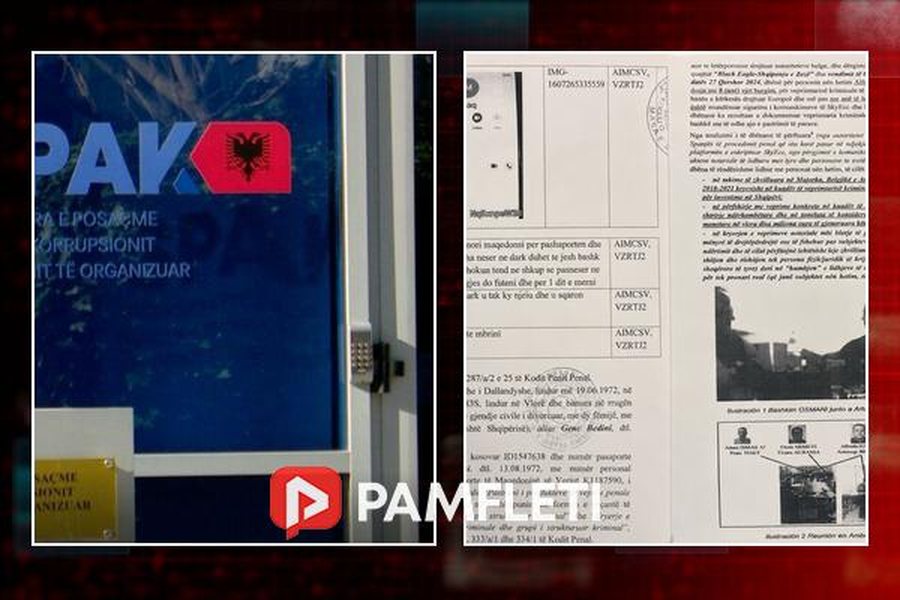
One of the people whom SPAK suspects of being part of one of the largest cocaine trafficking networks from Latin America to Europe turns out to have been equipped with identification documents and passports from three different countries, using three different names and three different dates of birth.
Documents obtained by "MaShqip" in the investigative file of the Special Prosecution Office shed light on what could turn into an institutional scandal for Albania, Kosovo and North Macedonia.
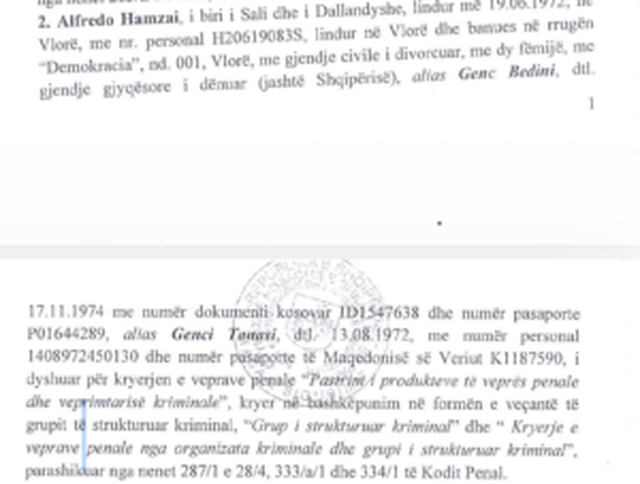
According to the file, the suspect appears in Albania as Alfredo Hamzai, born in Vlora on June 19, 1972. In Kosovo, he appears with the identity Genc Bedini, born in Vlora on November 17, 1974, equipped with an identity card with the number ID1547638 and a passport of the Republic of Kosovo with the number P01644289. While in North Macedonia he appears as Genci Tanasi, born on August 13, 1972, with personal number 1408972450130 and passport with the number K1187590.
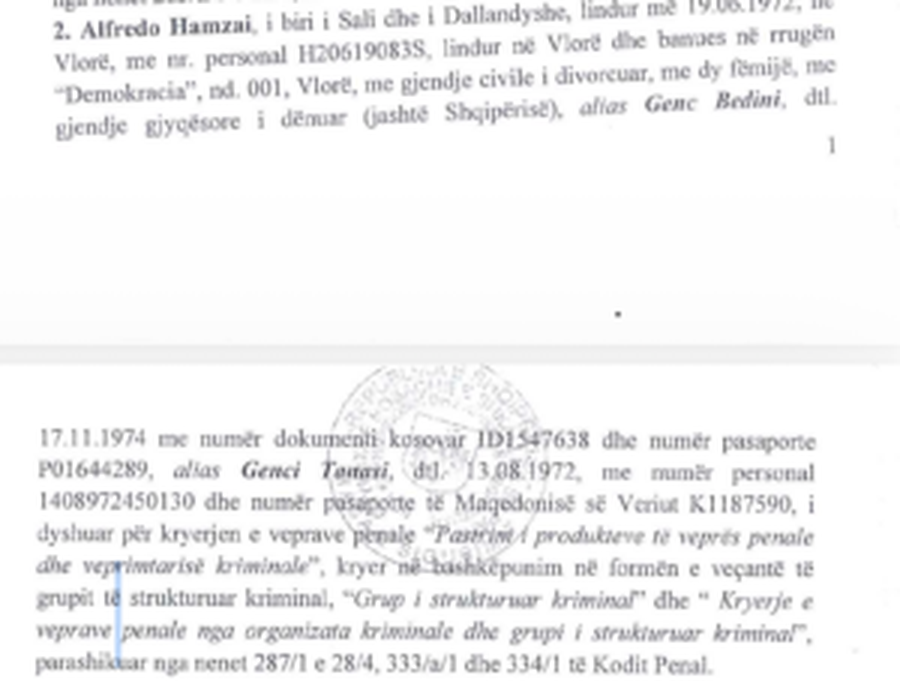
So, according to official documents from three countries, the same person turns out to have been born on three different dates, to hold three different identities, and to be equipped with three authentic original passports.
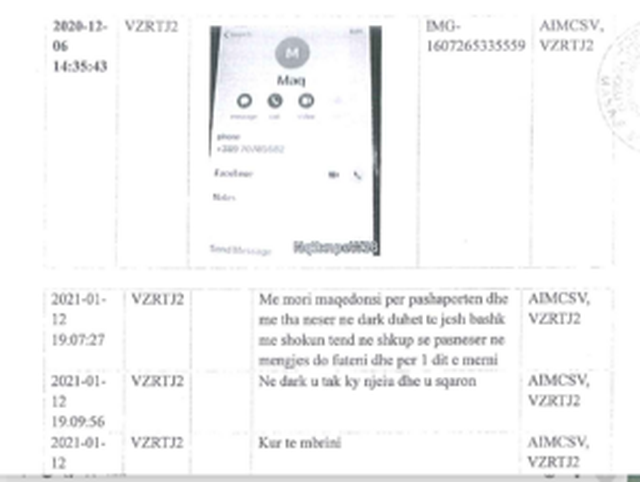
The SPAK file obtained by "MaShqip" raises suspicions that these documents were not obtained through normal procedures. In one of the intercepted communications by the authorities, which is in the investigative files, the way in which the North Macedonian passport was obtained is mentioned. "He took my Macedonian passport and told me tomorrow at dinner you should be with your friend in Skopje that the day after tomorrow morning you will enter and receive it in 1 day."
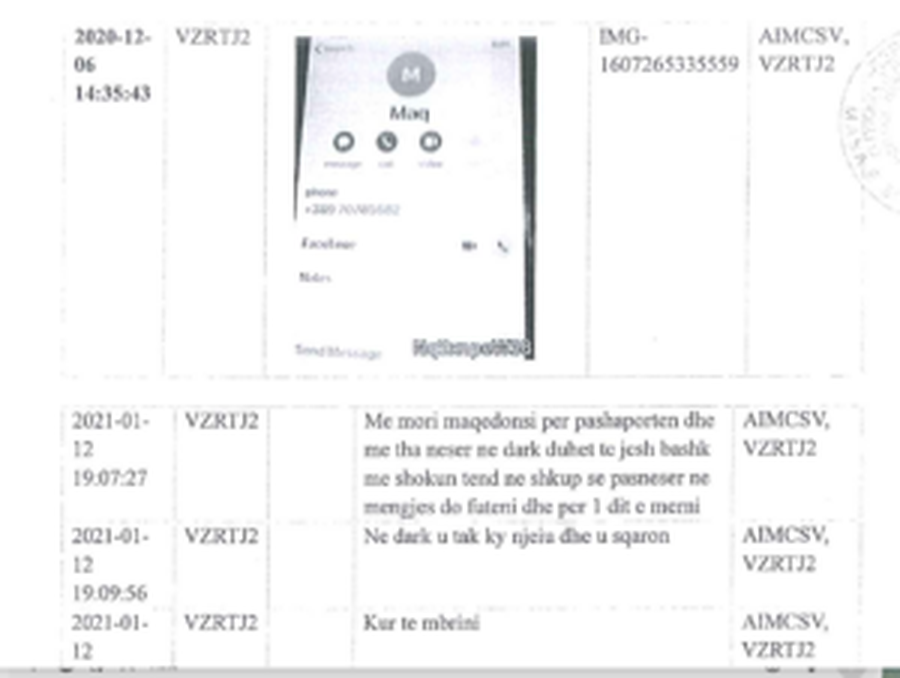
This communication raises strong suspicions that the documents were obtained through illegal interference and financial payments, as normal procedures for obtaining citizenship and issuing a passport require numerous administrative verifications, security checks, and deadlines that are not compatible with issuing documents within one day.
This is where the scandal begins. If the person known in Albania as Alfredo Hamzai is the same person who appears in Kosovo as Genc Bedini and in North Macedonia as Genci Tanasi, then the question arises as to how the biometric identification, civil status and security verification systems in these countries have functioned.
Will the Kosovo and North Macedonian authorities open investigations for document forgery, false declarations, fraud to obtain citizenship, or abuse of office? Who proposed granting citizenship? Who verified the documents? Who signed them?
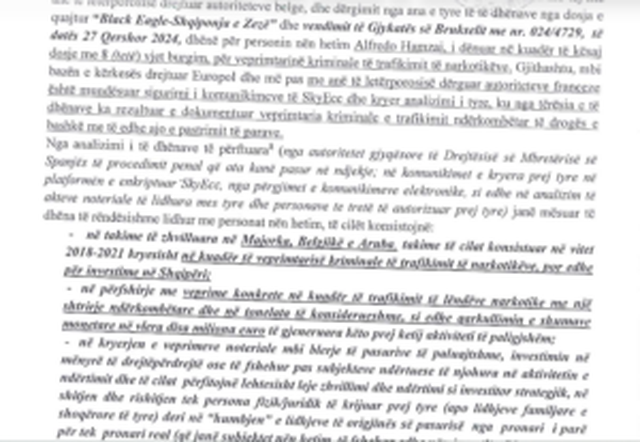
According to SPAK, Alfredo Hamzai alias Genc Bedini alias Genci Tanasi is suspected of the criminal offenses of "laundering the proceeds of crime and criminal activity", "structured criminal group" and "committing criminal offenses within the framework of a criminal organization".
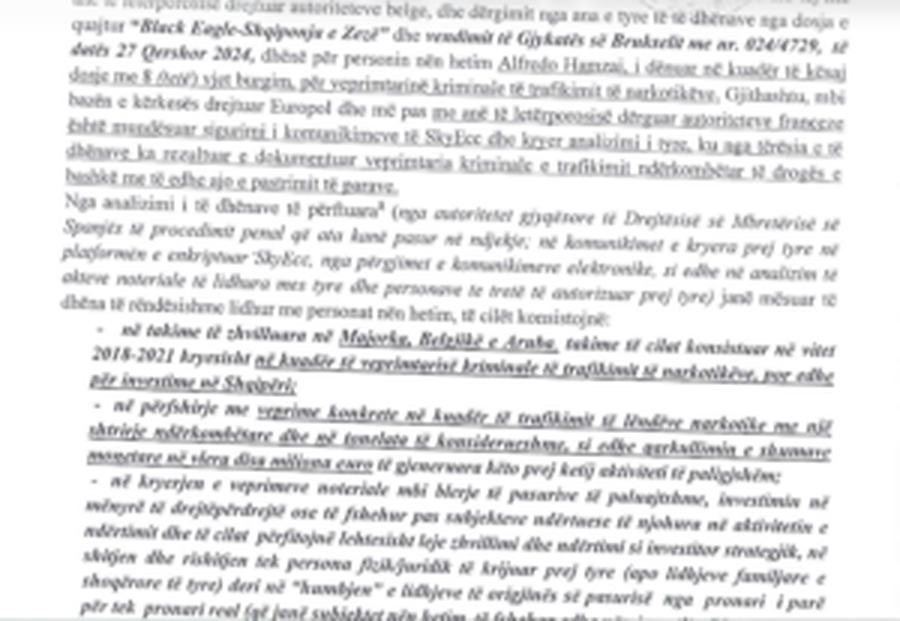
Investigations show that he was previously convicted in Belgium for cocaine trafficking, while the suspected profits from criminal activity were invested in Albania through the construction of luxury tourist resorts, villas and real estate in the most sought-after areas of the coast.
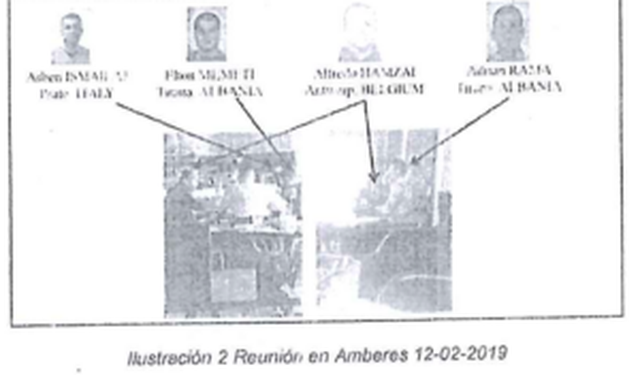
According to the dossier, he and his son have been participating in the notorious Aruba meetings since 2019, meetings where SPAK suspects the activity of international drug trafficking networks was coordinated. The group's contacts subsequently extended to Monaco, Spain, Belgium and Germany.
The group he is suspected of belonging to is linked to some of the largest cocaine seizures in Europe. The dossier mentions episodes involving over 8 tons of cocaine, including around 700 kilograms seized in Antwerp, 2,010 kilograms in Guayaquil, Ecuador, 1,100 kilograms in Rotterdam, as well as another 4.1 tons of cocaine seized in the Netherlands.
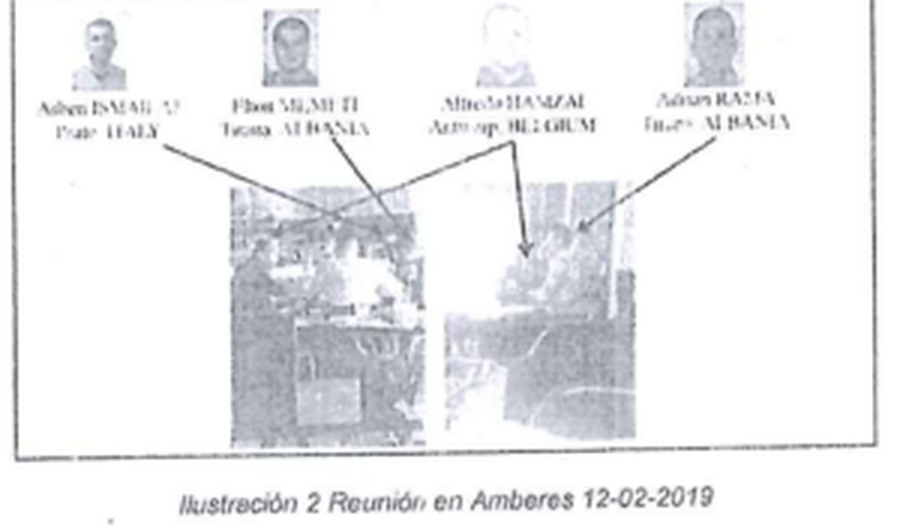
Equally shocking are the figures of assets seized by SPAK. The operation has led to the freezing of around 150 million euros of assets, including 491 properties, dozens of commercial companies and 209 bank accounts. Among the assets placed under seizure are tourist resorts, luxury villas, apartments, land and considerable areas of land on the Albanian coast, according to the file obtained by “MaShqip”.
As SPAK continues its investigations into the cocaine trafficking and money laundering network, one question still remains unanswered: how did a person convicted of drug trafficking, with three different names and three different dates of birth, manage to obtain authentic passports from Albania, Kosovo, and North Macedonia without raising any alarms in state systems?
The answer to this question may reveal not only a drug trafficking network, but also a much broader scheme of identity fraud and the penetration of organized crime into the region's state institutions./ MaShqip


Lini një Përgjigje