


 Shkruar nga Frrok Çupi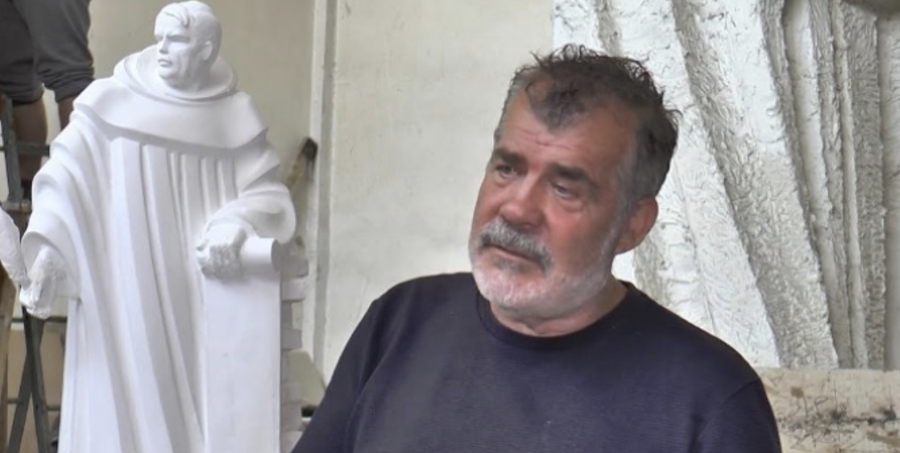
Even when they want to praise Agim, it seems they know him a little...
Dawn went yesterday. Since yesterday, I have not left a page without reading to find out about Dawn what I have found about famous people when they die. More or less, they leave nothing unsaid about the living life of the famous man. Sometimes, in my opinion, they even overdo it; or worse drool about the other person's personality.
It happened differently with Agim Rada. Very few people have taken up the pen and written something, although everyone is 'dying' for a prominent man to die and prove that they knew him, appreciated him, even worshiped him. Even those who wrote, took from each other, and grinded only two, not even three, things related to the life of a truly special artist like Agim Rada.
His friend, Gjergj Luca, studied in Arts but got rich with the fish business, had written heartfelt words, with the promise that 'when we come to you, Agim, who knows how you will receive us'. Pain, of course.
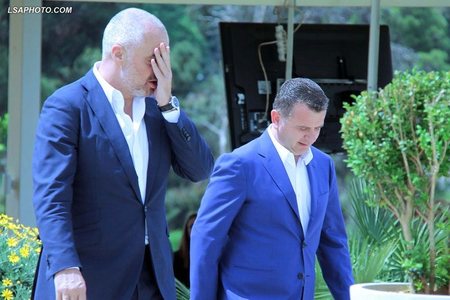
While Agimi's close friend, Edi Rama, happened to be away in Vilnius for the NATO Summit. But even if he was here, what would he do more than what he did in Agim's life. When he was not sick, the two talked back and forth, quarreled and reconciled, reconciled and quarreled. When he fell ill, Rama helped his artist friend to be cured in 'magical' hospitals in Turkey and Ireland. But that was it, nothing more could be done...
There is nothing else, even though today Dawn has occupied the eternal dwelling.
Very few have known the dawn; and not through the fault of people who want to know too much of the artist's work. But Agimi did not let anyone know much. Agim Rada was not the 'popular artist', for whom many people die since those who are declared 'Honour of the Nation', or 'Great Artist'.
No, Agimi had nothing to do with 'the people'. None of his works in sculpture were created, on the one hand cooking clay and on the other observing from the window 'which people' were admiring him. His art is art, it is not 'folk'.
The great figures of history for whom he raised statues have nothing to do with 'the people'. They are even often controversial figures. Mit'hat Frashëri, for example, is frowned upon by those who are familiar with communist historiography. Not even Gjergj Fishta, whose monument he left in the middle, to tell the truth, is not loved by the 'people'. Some why he was 'with the Serbs', some why he 'didn't like Enver and others', some why he was a Catholic priest, etc. Petro Marko, the peerless writer, spent his life alone in his apartment in front of the typewriter, as well as on a walk on the boulevard.
Agim Rada has nothing to do with 'the people'. That's why they don't need to know him much.
But neither was Agimi a 'rebel', as someone says, wanting to elevate him to the level of a strange man. Even in the lathe where he worked alabaster in the Migjeni Artistic Enterprise, Agimi did not show any dissatisfaction or sign of rebellion. He did not rebel against the cloud of alabaster dust, which one day invaded his lungs and took his life, so how could he rebel against people?!
Even when they want to praise Agim, they seem to know him little.






Lini një Përgjigje