


 Shkruar nga Pamfleti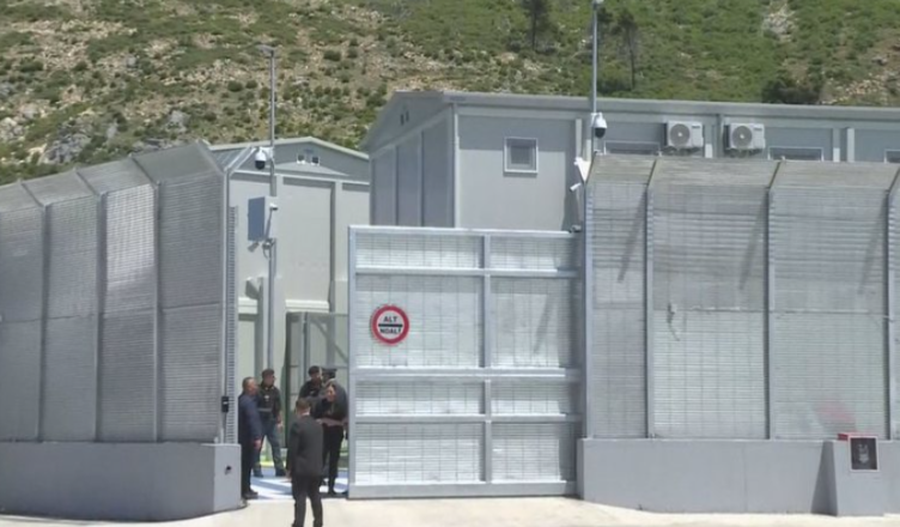
Unlike previous operations, this time Albania required photo identification of those disembarked. Upon arrival, the people were subjected to a new set of fingerprints, raising further doubts about the legitimacy of the treatment reserved for them by both countries.
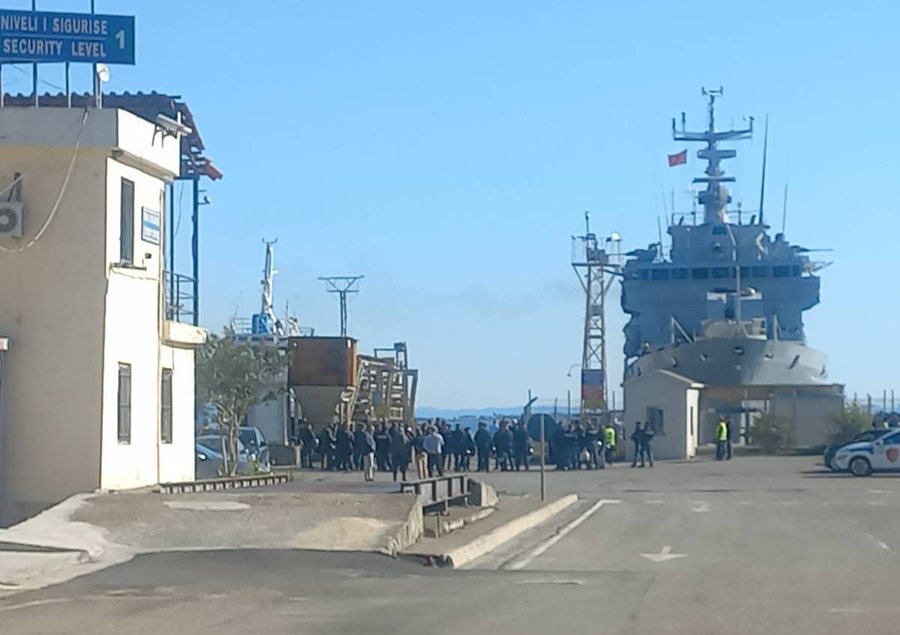
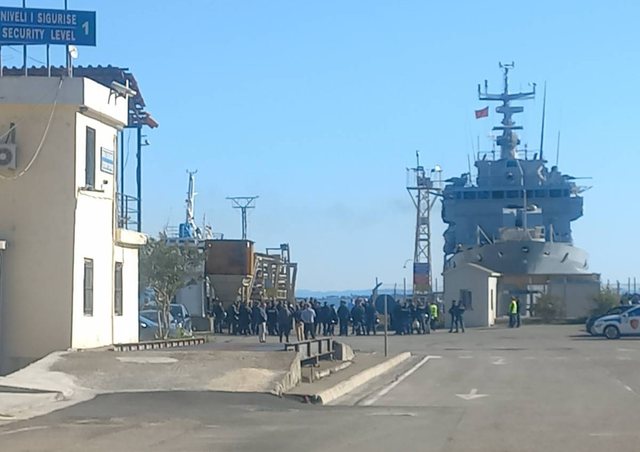
On Friday, April 11, Italy transferred the 4th group of migrants since the entry into force of the Meloni-Rama bilateral agreement. The navy ship Libra docked in the port of Shëngjin at around 4:00 PM with 40 people on board.
One of them returned to Italy before the group was transferred to the CPR in Gjadra. This raised doubts about the real number of people transferred, as it was not clear from official statements whether this person was already included in the 40 declared people or not.
MEP Cecilia Strada reported serious obstacles to accessing this information during her on-site inspection. If the number is confirmed, there are now 113 people in total who have been transferred to Gjara, under the Italy-Albania agreement, despite the fact that the first three groups of migrants were returned to the country across the Adriatic due to court decisions.
The fourth group of people transferred to Gjadra do not belong to the category of those migrants caught at sea, but were taken directly from the Repatriation Detention Centers (CPR) on Italian soil.
With Legislative Decree 37/2025 of March 28, the Government approved a modification of the implementation of the agreement, which provided for the transfer to Albania of only persons captured directly at sea.
In reality, the agreement with Albania, in Article 1 of the definition of migrants subject to application, spoke of "third-country nationals and stateless persons, for whom the existence or non-existence of requirements for entry or residence in the territory of the Italian Republic must be established or has been established".
Practically, therefore, the possibility of transfers from Italy had already been foreseen. Another demonstration of how the ambiguity of Italian laws is functional for political exploitation and to always guarantee a wide space for maneuver and arbitrariness in their implementation.
Unlike previous operations, this time Albania requested photo identification of the people disembarked. Upon arrival, the people were subjected to a new fingerprinting, raising further doubts about the legitimacy of the treatment reserved for them by the two countries to which they are subjected. In fact, the legitimacy of Albania's request for photo identification is unclear, given the fact that the detainees remain under Italian responsibility and jurisdiction.
The Gjadër CPR is already full. The prisoners are awaiting confirmation of their detention and their legal defenders are preparing for the hearing to confirm this detention, which will mark a verdict on this further obligation by the government, determined to make the agreement work at all costs.
It is still unknown on what basis the forcibly transferred persons were selected, as there is no public information about the procedure that led to their selection within the facilities in Italy.
In many cases, the arrested were neither informed of their transfer to Albania nor their lawyers.
Lawyer Rosa Guerra, for example, rushed to Albania only after discovering that four of her clients had been accidentally transferred. “I went for an interview and my client wasn’t there,” she told La Stampa in front of the facility in Gjadra.
In Italy, it is very common for people to be locked up in CPR or transferred to other facilities without being informed. Many people are openly deceived: they are told that it is simply a police check and after getting out of the patrol car they find themselves in CPR. Often, transfers from one facility to another, where different management rules apply, for example whether or not someone can keep a mobile phone, mean that people lose contact with their legal advisors, loved ones and friends in the area.
As highlighted by the Association for Legal Studies on Immigration (ASGI), legislative decree 37/2025 turns Albania into a “gray area” for the extraterritorial management of the right to asylum, contrary to the fundamental principles of the rule of law 1 .
ActionAid and the associations of the Asylum and Immigration Board also denounce that the entire mechanism calls into question the right to protection, appeal and respect for human dignity, taking to the extreme a security paradigm that criminalizes mobility and ignores any individual assessment of histories, vulnerabilities and protection requirements.
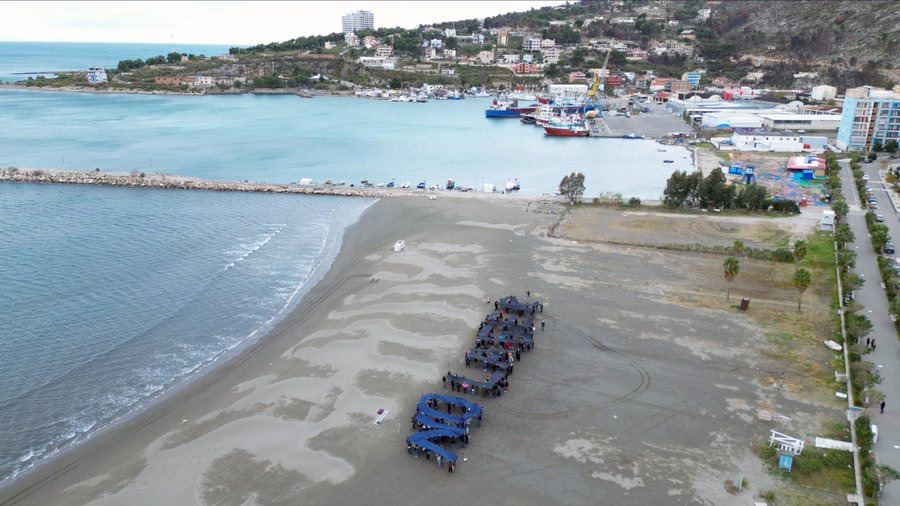
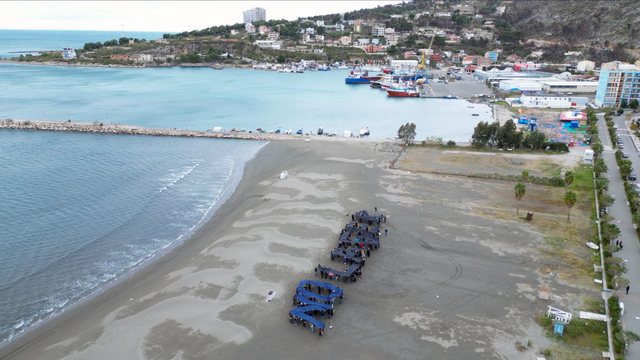
In December, a large mobilization organized by the Network Against Migrant Detention marched through the streets of the capital and to facilities in Gjadra and Shëngjin, to reject the migration management model that the agreement represents, also in view of the entry into force of the European Pact on Migration and Asylum.
The situation becomes even more paradoxical after Interior Minister Matteo Piantedosi recently declared that all people transferred to Albania will have to return to Italy for actual repatriation to their country of origin. At least for now.
This means that the mechanism introduced by the Italy-Albania agreement is a cruel and costly sham, which produces no real effect in terms of forced returns.
The consequences of this persecution were not long in coming: 3 cases of self-harm have already been reported within the Gjadër CPR; some prisoners broke a window and used the glass to injure themselves. These gestures are extremely widespread within CPRs in Italy.
Local activists say that some of the Medihospes Albania staff within the centers are shocked as they did not expect such a situation and a large group of them are even considering resigning.
At the moment there is no information from Gjadri, where the arrested have also had their cell phones taken away and, as in most other Italian CPRs, they only have a cell phone at their disposal that Medihospes operators provide or not based on the circumstances for a call that is not made under conditions in accordance with the freedom of correspondence that must be guaranteed.
As already pointed out, the Italy-Albania agreement is not only ineffective, but extremely dangerous. A true “authoritarian laboratory”, as described in a press release by ASGI, in which increasingly brutal and dark forms of externalization are being experimented with.
Article 10 of the Italian Constitution, which protects the right to asylum, is meaningless, as is the Geneva Convention itself on the duty of member states to guarantee the protection of those fleeing persecution and violence.
Foreigners residing in Italy in an irregular situation constitute around 0.78% of the total resident population (sources: ISTAT, ISMU, 2023). It is clear that these operations respond to a political logic and not to a real need. In a year marked by important electoral appointments, the Meloni government seeks consensus by showing an iron fist against immigrants.
Charter flights, military ships, wristbands: everything is designed to feed the illusion of total control, of a government that "manages" immigration and, above all, that is ready to accelerate the militarization of the Italian economy, politics and society.
The fourth deportation confirms what activists, lawyers and organizations have been denouncing for months: the Italy-Albania agreement is a dangerous precedent. It does not serve to manage migratory flows, it does not protect people's rights, it does not offer solutions. /Adapted from Pamphlet by meltingpot.org/







Lini një Përgjigje