


 Shkruar nga Pamfleti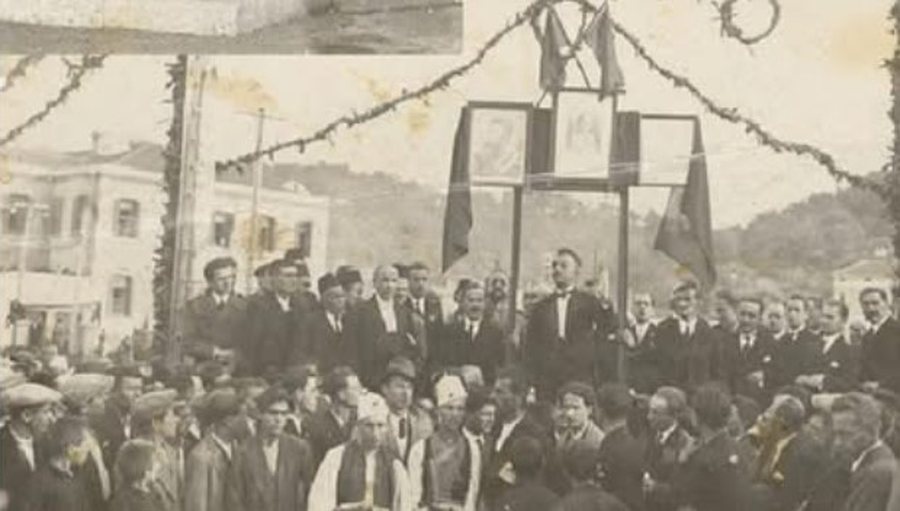
The four-page manuscript that the Vlora poet, Ali Asllani, wrote on the day the remains of the old man of Vlora arrived in Vlora and then departed for Kanina is discovered. The poet was the mayor of Vlora at the time. In his notes about the funeral ceremony and his memories of the day, he also tells about this poem. Touched by this loss, he wrote 13 verses of the poem and read it at the moment of farewell. He then donated the manuscript to Ismail Qemali's sons. The poem is published for the first time.
The Death of the Old Man of Vlora
Ismail Qemali died on January 24, 1919 at the Hotel “Brufani” in Perugia, where he was invited by the Italian Government, with the aim of reaching “an agreement with all the Albanians of Albania and the delegates of America”, to participate in the Peace Conference, which was to be held in Paris. On February 8, 1919, according to his will, the lifeless body of Ismail Qemali, accompanied by three of his sons: Et'hemi, Qazim and Qamili, as well as by representatives of the Italian Foreign Ministry, was sent by train to Brindisi from where, on board the torpedo boat “Alpino”, it was escorted to Vlora.
FUNERAL AND FAREWELL DAY
On February 12, under a magnificent ceremony, the funeral ceremony took place. The entire population of Vlora had gathered at the Pier. At 10 am, the lifeless body of Ismail Qemali, from the building of the “Naval Base” Command, was placed on the cannon bed. From there, the grand procession set off towards the city. Also present at the funeral ceremony was the Mayor of Vlora, the patriot and poet Ali Asllani. It was on this very day, as he himself notes, that he wrote the poem “Ismail Qemali”, which he gave in manuscript to his sons.
Also, in addition to this poem, Ali Asllani also wrote “The Funeral of Ismail Qemali”, in which the poet expresses the extremely tense situation that had been created in Vlora, due to the Italian occupation. The Italian military command had taken all measures to prevent the funeral ceremony from turning into a popular manifestation against the invader. For this purpose, they did not want to allow the use of the Albanian flag in any way, which the Vlora poet strongly expresses in his verses.
It was January 24, 1919. At the "Brufani" Hotel in Perugia (Italy), where he was invited by the Italian Government, with the aim of reaching "an agreement with all Albanians of Albania and the delegates of America", to participate in the Peace Conference, which was to be held in Paris, Ismail Qemal Vlora, the protagonist of Independence and the head of the first Albanian Government, died.
His sudden death, at one of the most delicate moments that Albania was going through, on the eve of the Conference proceedings, was met with great sadness, both in Albania and throughout the diaspora. Everywhere, from the south to the north, to mourn the great loss of their son, the people would compose epitaph verses:
"...The bad news for Vlora came."
The olive trees lowered their crowns.
Albania left the song
that a wound opens in your heart.
Shushica stopped running,
They say 'Smail Qemali died.
The flag was covered in mourning,
"he mourns for his master"
On February 8, 1919, according to his will, the lifeless body of Ismail Qemali, accompanied by three of his sons: Et'hemi, Qazim and Qamili and by representatives of the Italian Foreign Ministry, was sent by train to Brindisi from where, aboard the torpedo boat "Alpino", it was escorted to Vlora.
On February 12, under a magnificent ceremony, the funeral ceremony took place. The entire population of Vlora had gathered at the Pier. At 10 am, the lifeless body of Ismail Qemali, from the building of the “Naval Base” Command, was placed on the cannon bed. From there, the great procession set off towards the city. “The city fell into a state of rest that day. A great silence reigned everywhere. It seemed that it was a day of mourning: the closed shops of the market, the obituary letters pasted on the doors of the shops and on the walls, the letters with a black circle and the words: “National mourning for the great patriot Ismail Qemali”, all showed this on the sad faces of the people.
Through the doors and windows of the houses, women and girls had come out, and all of them mentioned the name of Ismail Bey, all of them remembered the Old Man of Albania. Yes, all of them remembered him with reverence because, some of them, they had even known him: they knew the time of their childhood that he had spent in this city, they had seen his generous face, they had heard of his holy deeds and they had also participated in the great joy of the blessed day of the 28th of the autumn of the third month of 1912, that historic day that gave the Albanian Nation its independence and that saved it from the greedy clutches of its neighboring enemies.
In front of the market, the body of the deceased was stopped, where two eulogies and eulogies were delivered, one by Prof. Jani Minga and the other by Mr. Qazim Kokoshi, and where the final farewell was made by the army with a royal march and soldiers holding their weapons in honor.
After this ceremony, the coffin was taken to Kanina, accompanied by the trumpet of the soldiers of Kaloria, by the religious leaders, by the leadership and by a large part of the people of Vlona. In Kanina, the usual prayers were held and then the holy body of the desecrated old man was buried near the tomb of Ferid Pasha, to make his eternal rest in the afterlife, leaving his name, memory and deeds immortal and unforgettable in the hearts of the Albanians and in the history of his birth…”.
I pranishëm në këtë ceremoni mortore ishte edhe Kryetari i Bashkisë së Vlorës, patrioti dhe poeti i madh vlonjat, Ali Asllani. Pikërisht këtë ditë, siç shënon edhe vetë, ai shkroi poezinë “Ismail Qemali”, të cilën ua dhuroi në dorëshkrim djemve të tij. Gjithashtu, përveç kësaj poezie, Ali Asllani shkroi edhe “Varrimi i Ismail Qemalit”, në të cilën poeti shpreh gjendjen tepër të tensionuar që ishte krijuar në Vlorë, për shkak të pushtimit italian. Komanda ushtarake italiane kishte marrë të gjitha masat që ceremonia e varrimit të mos kthehej në manifestim popullor kundër pushtuesit. Për këtë qëllim ata nuk donin të lejonin në asnjë mënyrë përdorimin e flamurit shqiptar, gjë që poeti vlonjat e shpreh fuqishëm në vargjet e tij:
“…Kur mbi arqe ku ish Plaku
u duk ngjyr’e një bajraku…
ish bajraku Italisë!
Gjëmoj zër’i djalërisë!
Na u duk se Plaku vetë
nëpër heshtje diç na pyet,
sikur pyeti më përpara
“Ku ësht’flamuri që vara”?
Në sajë të protestave të popullit të Vlorës, njëkohësisht për të shmangur pasojat që do sillte një qëndrim i tillë, komanda italiane lejoi që arkivoli, ku prehej trupi i Ismail Qemalit, të mbulohej me flamurin shqiptar:
“…Vlora bëri si e deshi,
me bajrak të saj’e veshi,
veshi Plakun me bajrak
me bajrakun ngjyrë gjak!
Me një shkab’të zez’në mes,
dhe i vdekuri që s’vdes
mori udhën për në Vlorë…”.
Adhurimi dhe respekti që Ali Asllani kishte për Heroin e Pavarësisë dalin qartë, jo vetëm në vargjet që ai shkroi për të, por edhe në ato pak kujtime që mundi të botoj në raste përvjetorësh të Pavarësisë. Në vargjet e poezisë “Ismail Qemali”, në këto pak rreshta, poeti i madh, me forcën e penës së tij përshkruan gjithë historinë e Plakut të Vlorës, apo “Plakut të pavdekshëm”, siç e quante ai; jetën e tij; vështirësitë që ai ndeshi në Shpalljen e Pavarësisë; rolin që ai lujajti në të; patriotizmin; sakrificat; dashurinë që kishte populli për të; e deri tek dëmi që i solli kombit vdekja e papritur e tij, duke e mbyllur me vargjet që sintetizojnë krejtësisht jetën dhe veprën e Ismail Qemalit:
“…Plaku i vërtetë ish Profit
dhe mbet Profit
Dhe qëndron ashtu si ishë
Do mbaj emrin si e kishë
Emr’i tija i vërtetë
është Nëntor njëzet e tetë…”!
KATËR FAQET E DORËSHKRIMEVE TË ZVERDHURA
Ali Asllani u lind në Vajzë të Vlorës, më 20 nëntor 1882. Prindërit e tij, Asllan dhe Hyjrie, vdiqën të rinj, duke e lënë ende të vogël. Pasi mbaroi filloren, në “Muradie” të Vlorës, u vendos në Janinë, ku studioi në shkollën e njohur “Zosimea”. Studimet e larta i kreu në Stamboll, ku pasi ndoqi një vit për Mjekësi, u regjistrua në Institutin e Lartë të Shkencave politiko-shoqëroro-administrative, të cilin e përfundoi më 1906.
Ali Asllani u aktivizua që i ri në lëvizjen patriotike kombëtare, duke qenë një nga anëtarët e shquar të Klubit “Bashkimi”, të Janinës. Për bashkëpunimin me Ismail Qemalin ai filloi të¨persekutohej nga organet qeveritare turke, madje u dha urdhër të internohej. Mundi t’i shpëtojë internimit duke kaluar në Korfuz dhe prej andej në Vlorë. Mori pjesë në Kuvendin e Dibrës (1909), si përfaqësues i Klubit “Bashkimi”.
Më 1910, pas rënies së kabinetit që e kish internuar, u kthye sërish në Stamboll. Pas Shpalljes së Pavarësisë, Ismail Qemali i besoi detyrën e Sekretarit të Përgjithshëm të Presidencës e të Këshillit të Ministrave, detyrë që e mbajti deri më 22 janar 1914, ditën e dorëheqjes së Ismail Qemalit nga Qeveria e Vlorës. Edhe pas largimit të Ismail Qemalit nga Shqipëria ai mbajti lidhje dhe korrespondencë të rregullt me të, së bashku me patriotë të tjerë vlonjatë, si Ibrahim Abdullahu, Hasan Sharra, Abaz Mezini, Alem Mehmeti, Osman Haxhiu, Qazim Kokoshi, etj.
Pushtimi italian e gjeti nënprefekt, por meqenëse kundërshtoi pushtimin u pushua nga puna. Nga dhjetori i vitit 1918, deri më nëntor 1920, ishte Kryetar i Bashkisë së Vlorës. Në vitet 1921-1922, ishte Kryekëshilltar i Qeverisë dhe më pas Sekretar i Përgjithshëm i Kryeministrisë. Për një kohë të gjatë u emërua Konsull në Trieste, ku qëndroi deri në fund të prillit 1925. Po atë vit u emërua ‘Zëvendës i ngarkuar me punë’ në Sofje, më vonë, po aty, u emërua ‘Sekretar i Parë’ dhe ‘i ngarkuar me punë’.
Në vitet 1930-1932, ishte Ministër i akredituar në shtetin grek. Më 1934, përsëri është Kryetar i Bashkisë së Vlorës, deri në prag të pushtimit fashist, më 1939. Pas pushtimit u emërua anëtar i Këshillit të Lartë por, shumë shpejt pas këtij emërimi, u largua nga jeta politike dhe u vendos në vendlindje. Pas “çlirimit”, është ndër themeluesit e Lidhjes së Shkrimtarëve dhe Artistëve.
Edhe pse nuk u dënua, siç u bë me shumë miq e familjarë të tij, jeta e poetit dhe patriotit të madh, pas “çlirimit” të vendit, ishte shumë e vështirë. Miqësinë me familjen e Ismail Qemalit e ruajti gjithë jetën. Që në Stamboll kishte zënë miqësi me të gjithë djemtë e tij, sidomos me Qamil Vlorën, i cili vdiq në burgjet komuniste, më 1950, në moshën 55-vjeçare. Esma Vlora (Hurshiti), gruaja e djalit të Qamil Vlorës, Ismailit, e kujton me shumë respekt “plakun” Ali Asllani.
“Sa herë që na takonte, – kujton ajo, -duke qenë se ne ishim akoma të rinj, na drejtohej, për të na dhënë kurajo, me shprehjen ‘Amore felicita’. Ali Asllani, përveç miqësisë me Ismail Qemalin, kishte pasur miqësi me djemtë e tij dhe veçanërisht me Qamil Vlorën dhe për këtë i vinte shumë keq që im shoq, djali i djalit të Ismail Qemalit dhe familja e tij të vuante në Shqipëri deri për bukën e gojës…”!
Sigurisht, për Ali Asllanin, të cilit “i shkonin lotë… sa herë-herë që kujtonte Vlorën dhe ata burra të shquar të saj si Ismail Qemalin, Ibrahim Abdullahun, Osman Haxhiun, Qazim Kokoshin, Hamza Isain, Abaz Mezinin, Jani Mingën, Tol Arapin, Halim Xhelon, Abdul Kuçin, Ahmet Lepenicën…”, ishte e rëndë tek shihte, jo vetëm familjen e tij, por edhe shumë patriotë të tjerë, që kishin luftuar bashkë me të, që kishin dhënë gjithçka për kombin, të persekutoheshin dhe familjet e tyre të vuanin për bukën e gojës. Ndaj nga shpirti i tij “që përbrenda kishte dallgët e një dhimbje të madhe”, do buronin fuqishëm vargjet:
“Jepi dorën, jepi dorën
këtij djali që i ati,
na dha gjith’ato që pati,
na dha jetën, na dha Vlorën”!
Pak vite para vdekjes, (më në fund) iu lidh një pension i vogël! Vdiq në Tiranë, më 20 dhjetor 1966.
Krijimtaria e Ali Asllanit
Krijimtaria e Ali Asllanit nis që në moshë të re, gjatë periudhës kur studionte në Janinë. Vazhdoi të shkruaj edhe në Stamboll ku, vjershat e tij, i gjejmë në periodik të ndryshëm si: “Dituria”, “Përfytyrimi i shkencës dhe edukatës”, etj. Nga vjershat e para të thurura prej tij kanë qenë “Fshati im”, dhe “Kroi”. Gjatë viteve 1914-1920, shkruajti mjaft poezi por shumica e tyre mbeti pabotuar.
Më 1920 shkroi “Vlora-Vlora”, e cila lindi në zjarrin e Luftës së Vlorës dhe u kthye në një këngë-himn, shoqëruar me muzikën e mjeshtrit Thoma Nasi. Gjatë viteve ’30-të, botoi mjaft poezi në shtypin e kohës, por ajo që e bëri të njohur dhe e solli përfundimisht poetin në letërsinë shqipe, është vepra e tij madhore, poema “Hanko Halla”. Shkruar më 1929 në Sofje, kjo poemë ishte botuar pjesë-pjesë, fillimisht në “Kosova” të Kostancës (1932) e më vonë në “Shkëndija” (1942).
Po më 1942 poeti e publikoi të plotë në një botim të veçantë, së bashku me vjershat e gjata “Dasma shqiptare” dhe “Vajza shqiptare”. Para vdekjes mundi të botoj pak libra: “Vidi-vidi pëllumbeshë” (1960), “Shqipëria kryesorja”, (1961), “Vajzat dhe dallëndyshet” (1964), “Kur merr zjarr rrufeja” (1966).
Pas vdekjes iu botuan: “Poezia shqipe” (1973), “Poezi të zgjedhura”, (1996) dhe “Vidi, vidi pëllumbeshë” (1999), etj. Përveç aktivitetit të tij politiko-atdhetar, si dhe krijimtarisë letrare, Ali Asllani do mbetet i njohur për qytetin e Vlorës edhe për ndërtimin e dy monumenteve: “Shtylla e Flamurit Kombëtar”, në Sheshin e Flamurit, dhe “Kulla e Sahatit”, të dyja skicë-idetë u përgatitën prej tij dhe inagurimet e tyre u bënë në vitin 1937, gjatë periudhës që ai vetë ishte Kryetar i Bashkisë së qytetit.
ISMAIL QEMALI
(Vjershë e pa botuar, shkruarë e kënduar ditën që erdhi Ismail Qemali në Vlorë i vdekur)
“Mbyllur det’ edhe stere
Kush do pyes?…edhe përse?
E kush pyet për Shqipërinë,
Rreth me male një shketinë
E pa zë dhe e pa zotë
Vetëm vlente për një botë
Që të bënej ndonjë ditë,
Një thërime një kafshitë
Për atë e për këtë,
Vleft’e saja hë për hë,
Dele dajos……..
Kur nji ditë,
Vjen e çfaqet një Profitë;
Ish njI plak i bardhë borë,
Nji bajrak me zok në dorë;
Çan tokë e çan detë
How lightning splits the clouds;
And he went down right there.
Where did they say that from and for what?
Yes, there in that place,
Our two broken minds,
Not that they didn't say "sorry"
They are telling them, "Go back where you came from!"
Poor old man, miserable old man,
Where will it come and where will it fall,
Through the wind and through the rain
Through brine pits?
Day and night passed.
He also misses dry bread;
Even bread was missing,
His heart was pounding.
Like mud, the foot was shaking,
As an old woman, her body trembled,
There he was protected from the enemy,
Here he was protected from evil.
But the old man made wings;
I cross mountains, I cross coasts,
I cross endless ponds,
I cross pathless forests.
His head saw a star
The day was hiding the star.
The old man is gone, gone, gone
After a few days one morning,
When you hear a chirping sound,
An entire city was in turmoil.
It was a place, a free place.
In the best language
Since in the language of Asllan,
They call it the place of the scimitar;
They say Vlon' and they say Vlora
Where two proud eagles,
He found everyone he wanted,
Gunpowder boys, gunpowder boys,
With faith the armed man,
Bravery that has no end,
And who was that old man?
And who was that flame?
Like a star that has been snapped
In a box inside,
He forgot us... Where are you today?
It didn't come as we wanted,
But in the land where we put the will
So we will hold it in our hearts.
And there I will live as long as the mountains.
His soul will not be forgiven.
It won't be forgiven like the Sun,
Where sea and sky meet,
There it fades away as it should,
Around the world, the sound is heard;
But the sun and then,
Shoot and shoot at others;
The sun always remains the sun,
Always with your head in the sky,
Even the Old Man this day,
How did a person end his life?
Okay, the real Old Man.
It was Profit and remains Profit;
And it remains as it was;
I will keep the name as it was;
His real name;
"It is November twenty-eighth."
POETRY
In the verses of the poem "Ismail Qemali", the great poet, with the power of his pen, describes the entire history of the Old Man of Vlora, or "the Immortal Old Man", as he called him; his life; the difficulties he encountered in the Declaration of Independence; the role he played in it; patriotism; the sacrifices; the love the people had for him; and even the damage that his sudden death brought to the nation, closing with verses that completely synthesize the life and work of Ismail Qemali. / Memorie.al / By Darling Ismail Vlora




Kshtu nha sllavokoministet u persekutiane gjithe patriotet nacionalist shqiptar.
Ali Asllani mbetet nje nga figurat me patriotike te kombit tone.
I VETMI kryetar bashkie....
F.m.për këtë shkrim kaq me vlerë për jetën dhe veprën e patriotit Ali Asllani se ka qenë në terr aktiviteti e vlera e tij nga regjimi kriminal i komunistëve injorant që dhe nga poezitë kishin frikë .