


 Shkruar nga Pamfleti
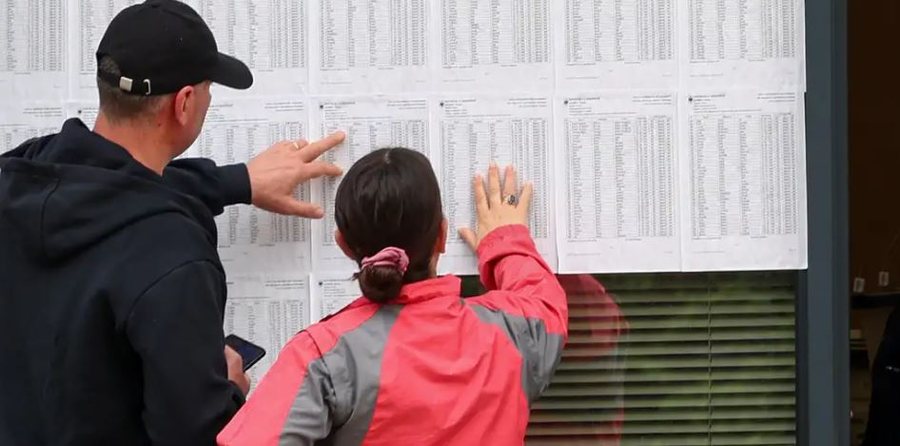
3.7 million citizens, including the diaspora for the first time, are called to vote for the new parliament on May 11 in Albania. How does the so-called "gray" electorate behave and how much weight does this group's vote have in the elections?
Klodeta I., an engineer by profession, has already decided who she will vote for. Since reaching adulthood, she has exercised her right to vote, although on many occasions she has been hesitant to decide which candidate or political entity she would add a vote to in the count.
She considers herself a gray electorate, like most of her friends. "I think the gray electorate is the electorate with the most common sense in a society like Albania. I can define it as the most inherent oppositional opinion in our country. But, unfortunately, this electorate is decreasing more and more in numbers, because in my opinion, it is the electorate that is abandoning the country," she tells DW.
For about 5 years, Klodeta has been living away from Albania and working in a European Union country, and this year she is sending her vote by mail, as the diaspora is allowed to vote for the first time.
Typology of the grey electorate in Albania
In theory, political science defines the gray electorate as that part of the electorate that cannot choose between the options offered to it, or that is indifferent.
What is the typology of the gray electorate in Albania? Political scientist Ermal Hasimja tells DW that Albania does not have accurate studies about this typology, "but it can be assumed with some certainty that the gray electorate is mainly urban and has a better than average level of education and economic status."
"The economic independence of this electorate makes it less dependent on politics," says Hasimja.
For Afrim Krasniqi, director of the Institute for Political Studies, "the gray electorate, according to studies, consists of 15-23% and has actively participated in elections only when there have been political rotations." According to him, this electorate consists of people who are informed and aware of politics, therefore in many cases this electorate is rejecting.
"I think that part of this electorate in these elections will be pushed towards new parties. But the current campaign is somewhat negativistic. It does not create a climate that inspires confidence in the electoral process and encourages people to participate in the electoral process. So, part of the gray electorate will boycott, while the rest, if they participate in the vote, will vote for new political parties," Krasniqi analyzes for DW.
For Klodeta, this category in Albania has grown progressively. The reasons, according to her, are the same as those for which young people are leaving the country.
"The programs of political parties that have the potential to enter parliament are not at all convincing. There is a lack of long-term perspective for the country. Also, the vote has lost its importance, as long as it is freely bought on the market," she says.
While Krasniqi thinks that the gray electorate is penalized by the completely opposite category from him.
"The more militants we have, as we currently do, political leaders are forced to feed the militant crowds and provide what the militants want. They do not offer a strategy to educate the militants, and as long as they use such a discourse, the gray electorate feels penalized."
The (Un)Power of the (Un)Decided
In Albania during the transition, politics has had the same political actors, with almost no new figures or diverse options. In these parliamentary elections, after 35 years, in addition to traditional parties, Albanians also have the opportunity to vote for new parties that have entered the scene.
"If we analyze the curve that this electorate has known over the years - excluding periods when there were massive votes like in '91, '92, '97, which were massive votes for or against - in other periods the gray electorate has been traditionalist or rejector, or voters of somewhat moderate candidates" - says Krasniqi.
According to him, the gray electorate in Albania does not constitute a political decision-making power, is not very active and has been deprived during most electoral processes of influencing policymaking.
"A gray electorate has value when the political spectrum is open, when there are new trends and when there is more pluralism and more choice opportunities, which we have not had so far. In these elections, new parties are struggling to secure a possible minimum in parliament, which means not to be third-party political decision-making actors."
For Klodeta, the questions about voting in these elections ended the moment she sealed the "diaspora envelope" and sent it to Albania. "The vote is my voice and at the same time the hope that one day someone will have ears to hear it," concludes Klodeta.
"The more the gray electorate in Albania is reduced to zero, the more the dominance of political party militants will decrease and the more space we will have for functional democracy, for political debate, for alternatives, for dialogue, for competition, for meritocracy, for transparency and accountability," says Krasniqi./DW






Lini një Përgjigje