


 Shkruar nga Pamfleti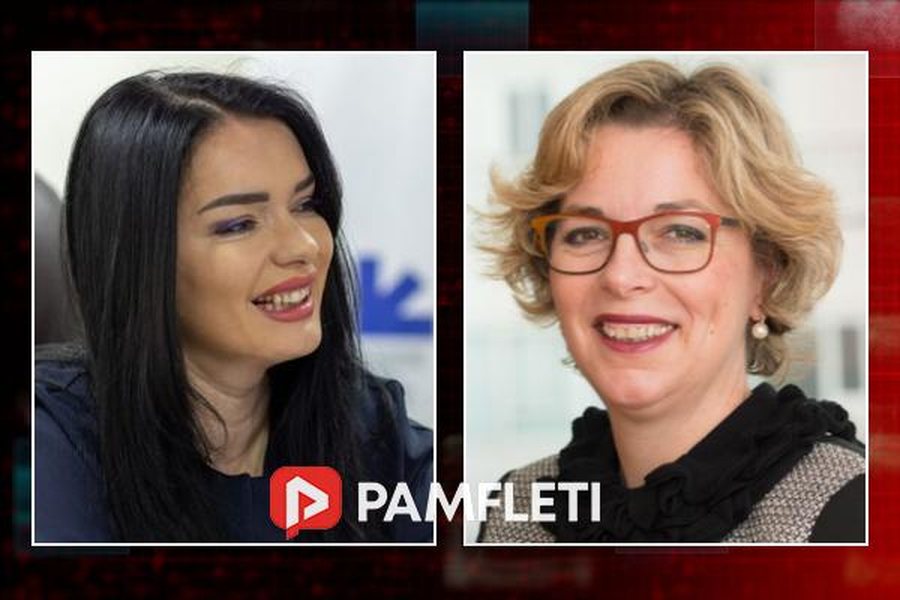
The company "GTS-Gazra Teknike Shqiptare" has started supplying hospitals before the tender date, with the blessing of Minister Evis Sala and the Director of Centralized Purchasing, Arlinda Pogaj...
The tender for the supply of medical oxygen to hospitals is expected to take place on December 4, but the company "GTS-Gazra Teknike Shqiptare" of the Italian mafia group 'Ndrangheta has already started distributing oxygen. The 1.5 million euro contract was pre-approved by Minister Evis Sala and official Arlinda Pogaj, turning the procedure into a formality to legitimize the money that has already been allocated.
Another scandal has been uncovered at the Ministry of Health.
The tender worth 1.5 million euros including VAT, for the purchase of medical oxygen for public hospitals, has turned into a planned farce.
Although the open competition was announced for December 4, 2025, the winning company began supplying a month earlier, with the approval of Minister Evis Sala herself.
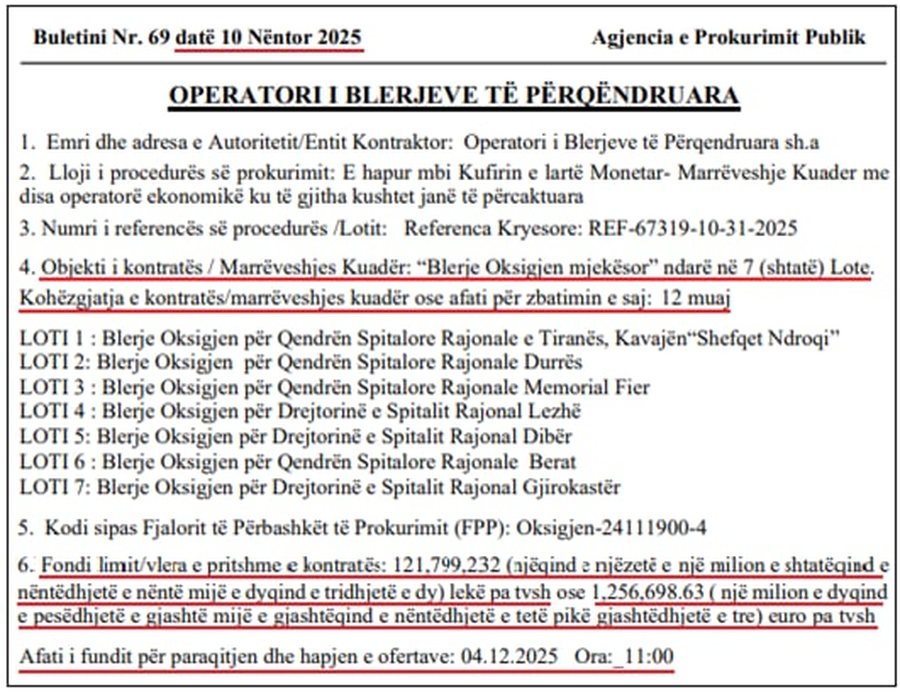
According to the documents of the Public Procurement Bulletin dated November 10, 2025, the tender is divided into 7 lots covering:
- QSU “Mother Teresa” Tirana
- “Shefqet Ndroqi” Hospital (Sanatorium)
- Fier Memorial Hospital
- Regional Hospitals of Durrës, Lezha, Dibra, Berat, Gjirokastra and Kavaja.
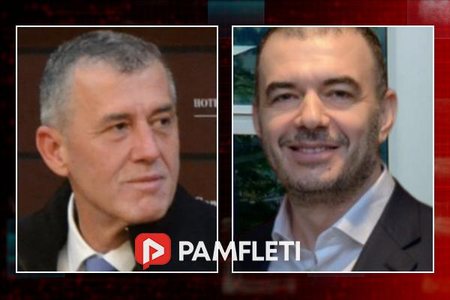
The economic operator supplying these hospitals is “GTS-Gazra Teknike Shqiptare”, represented in Albania by Besnik Halili, husband of former Ministry of Health official, Luneda Sufali.
The company is owned by the Italian mafia group “Ndrangheta”, previously involved in money laundering scandals and dubious contracts with the Italian healthcare system.
Although the tender will officially take place in December, supplies have already started a week ago, including all hospital centers.
Sources from within the system confirm that invoices and documentation will be completed after the competition, to simulate competition, while the contract is closed in advance.
This is a classic "advance" tender, which follows the same model used in many healthcare sectors: the supply is initiated, the competition is announced later, and the winner is formalized with retroactive documents.
This scheme is well-known in Edi Rama's government, where large tenders for medicines, oxygen, and medical equipment are controlled by a narrow circle of clients connected to ministers and high-level officials.
In this case, in addition to Minister Evis Sala, the direct responsible is Arlinda Pogaj, administrator of the Centralized Purchasing Operator, a structure that until two months ago was subordinate to Minister Blendi Gonxhe.
Pogaj, known as Gonxhe's realtor and confidant, is the author of the firm that allowed the start of supplies without conducting legal competition.
Both Sala and Pogaj are close friends and part of the same political circle that has taken control of the health procurement system.
According to "Pamfleti" sources, this is not the first tender that favors "GTS-Gazra Teknike Shqiptare".
Since the time of former minister Ilir Beqja, this company has had a monopoly on the supply of medical oxygen to all public hospitals, despite the fact that there are files opened against it in SPAK for corruption and links to the 'Ndrangheta group.
A clientelist chain in the Ministry of Health
This case proves that the healthcare tender system functions as an organized clientelistic network, connecting ministers, directors, and mafia businesses:
- Evis Sala, who succeeds Ogerta Manastiliu and Albana Koçiu, continues to protect the same companies that have had contracts for a decade.
- Arlinda Pogaj, appointed by Blendi Gonxhe, formally signs the contracts and covers the procedures.
- Besnik Halili, the local representative of the "Ndrangheta", receives the funds in advance and is declared the winner.
In conclusion, the oxygen tender is another clear corruption scheme: a company linked to the Italian mafia supplies hospitals without competition, a new "renaissance" minister signs it, and a trusted administrator of Gonxhe legalizes it.
In Rama's system, even patients' oxygen has become part of the government's clientele, with contracts that are inflated, competition that does not take place and money that is allocated before the tender./ Pamphlet



Lini një Përgjigje