


 Shkruar nga Pamfleti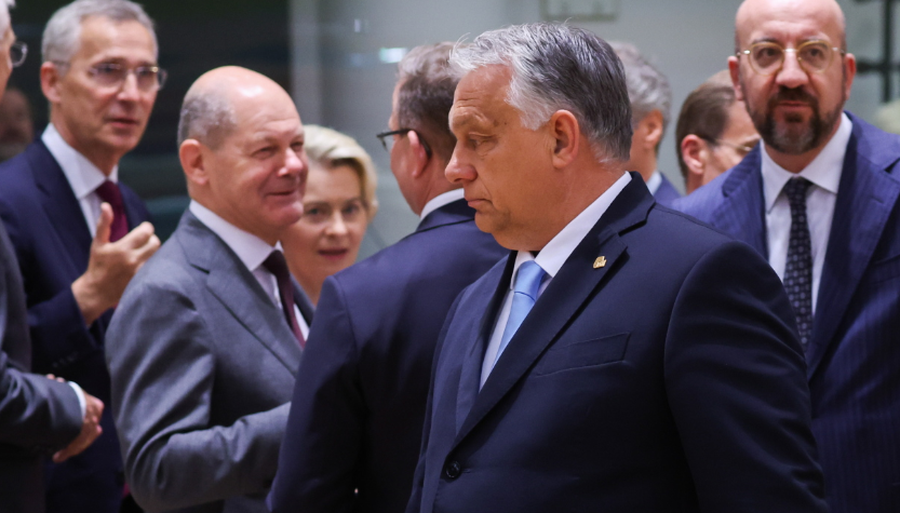
Today is the second day of the 27th Summit of the European Union. Hungary and Poland persisted in their opposition to the agreement in principle reached a few days ago between the relevant EU ministers, which provides:
- the first control of the external borders of the EU by frontline member states (Greece, Italy, Spain, Portugal and Malta),
-a mandatory solidarity mechanism. This means that any second-line member state that does not accept immigrants/refugees from another member state (eg Hungary does not accept asylum seekers from Greece) will pay 20,000 euros.
Due to reactions from Budapest and Warsaw, the text of the conclusions was blocked as it calls for the reception of asylum seekers arriving at the EU's external borders to be done on a voluntary basis, according to documents obtained by the German Agency.
As an adviser to Hungarian Prime Minister Viktor Orbán wrote on Twitter late Thursday evening, "the Polish-Hungarian duo is fighting and resisting together."
On the contrary, Italy and Austria have created a common front, since firstly, the formalities of the European Council speak of strict protection of the European external borders and secondly, of immediate assistance to the frontline member states.
12 billion euros for immigration on the "table"
On the first day of the European Council meeting, the 27 countries and the European Commission tried to arrive at the exact amount that should be paid to prevent the illegal entry of migrants into the EU and at the same time to facilitate the legal entry and resettlement of refugees. within EU member states.
More than 10 billion euros for third countries, i.e. EU neighbors such as Turkey, Libya and Tunisia, to prevent the entry of people who do not have legal documents and therefore keep them in their territories and another 2 billion for support EU member countries that are at the forefront of migration, such as Italy, Greece, Spain and Malta.
Member states are divided between those who call for tough messages against neighboring states that ease migration flows and those who call for greater cooperation.
For example, Germany not only wants more money to be given to neighboring countries, such as Turkey, which hosts a large number of immigrants, but at the same time to lure Ankara by updating the EU-Turkey customs union.
The case of Turkey is interesting since the EU member states want a better cooperation with President Erdogan and establish as a basis for further negotiations the need for the normalization of Ankara's relations with Athens and Nicosia.






Lini një Përgjigje