


 Shkruar nga Pamfleti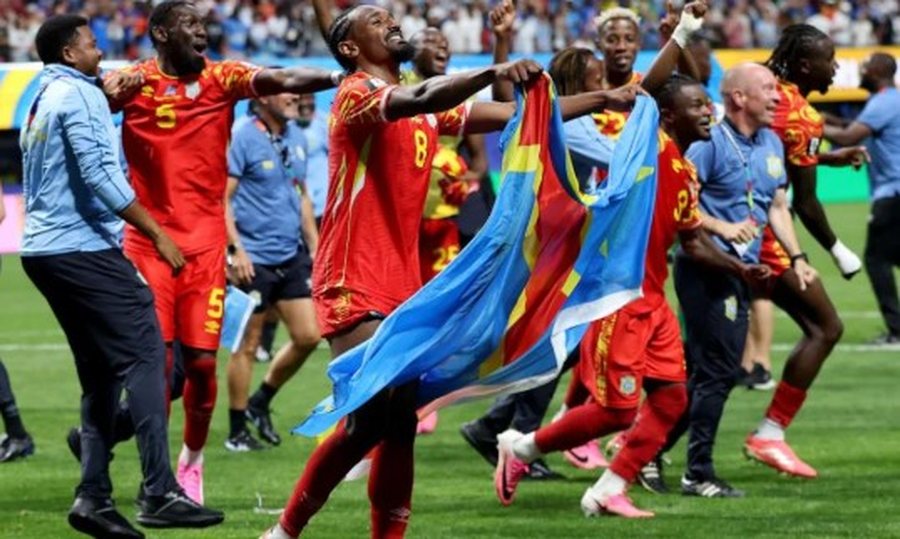
For the Democratic Republic of Congo, the 2026 World Cup has taken on a meaning that goes beyond football. After a 52-year absence from the final stage of the World Cup, the Congolese national team has written a historic chapter, securing passage to the knockout stage.
The "Leopards" closed the group stage with a draw against Portugal, a minimal loss against Colombia and a convincing 3-1 victory over Uzbekistan, where the protagonist was Joan Visa, the author of two goals.
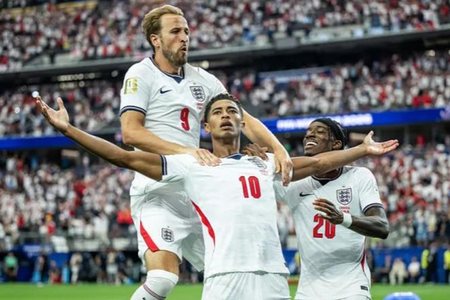
Congo now faces a big challenge against England, but for the footballers this match represents much more than a match.
" We deserve to play against England. We have worked hard to get here. It is not easy in our country, where the war continues in the east. Every time we wear this shirt, we think about our people ," declared Joan Visa.
The 29-year-old striker has become a symbolic figure for his connection to his homeland. In 2022, he visited the North Kivu region, an area known for armed conflict, but through social media posts he chose to show the world another side of Congo, with its natural landscapes, green hills, lakes and volcanoes. For the locals, Visa is not just a footballer, but also an ambassador for their country.
The Democratic Republic of Congo is one of the largest countries in Africa, with around 116 million inhabitants and a great diversity of ethnic and linguistic groups. However, the provinces of North Kivu and South Kivu continue to face the consequences of the conflict with the M23 rebels.
Despite geographical and political divisions, the national team has managed to create a sense of unity. Many easterners have never visited the capital Kinshasa, just as many Kinshasa citizens have never been to the east of the country. However, they all consider the national stadium, the "Stade des Martyrs", to be their home, a shared symbol of national identity.
The historic run at the 2026 World Cup brought celebrations in Kinshasa, Lubumbashi, Goma and Bukavu, even in areas affected by conflict.
The president of the Congolese Football Federation, Veron Mosengo Omba, described the success as an extraordinary moment for the country.
" Even in the occupied areas, people took to the streets to dance. These guys have given us something extraordinary ," he said.
The President of the Democratic Republic of Congo, Felix Tshisekedi, was also in the same line, who assessed that every victory strengthens national pride and the common identity of citizens.
This team also represents the connection between the country and the diaspora. Of the 26 players selected for the World Cup, 21 were raised outside Congo. Among them are Aaron Wan-Bissaka, Axel Tuanzebe and Aron Tshibola, who have previously represented England at youth level, while the rest were trained in the academies of Belgium, France and Switzerland.
Visa restrictions prevented many Congolese fans from traveling to the United States to watch the World Cup, but the diaspora in North America packed stadiums with their support. In Houston, where the team was based, thousands of fans created an atmosphere reminiscent of Kinshasa.
Regardless of the result of the match against England, for the Democratic Republic of Congo this World Cup has already gone down in history. Not only for its sporting achievement, but because in a few weeks football achieved what politics has not been able to do for decades: unite a nation divided by war, conflict and ethnic differences.


Lini një Përgjigje