


 Shkruar nga Pamfleti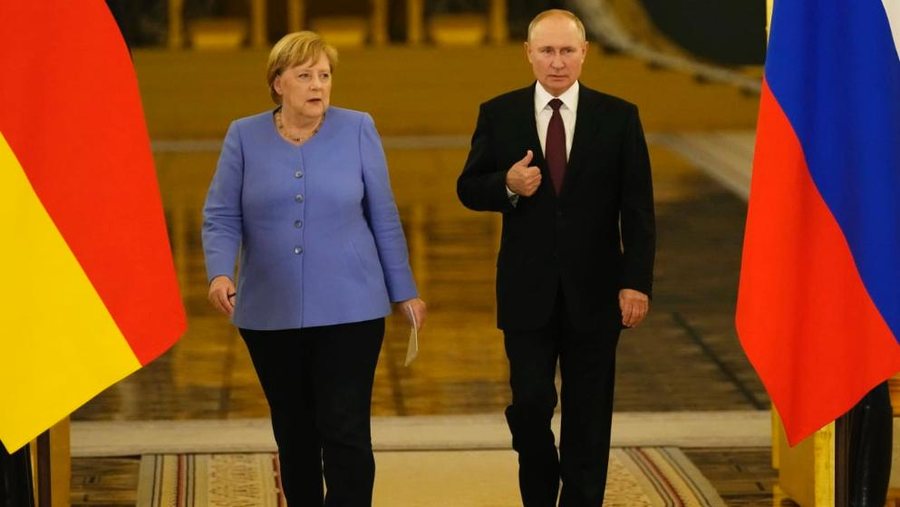
The EU has put itself in a position where it no longer has high-level diplomatic channels with Putin.
No one can excuse us for being overly kind to Angela Merkel during her long reign as German chancellor. We recall that there was much uncritical support for her, especially from the European center-left, the same group that is now more aggressive in its support for Ukraine and condemnation of its policies.
It is certainly too early for a historical assessment of the period from 2014 to 2022, the time between Russia’s annexation of Crimea and its full-scale invasion of Ukraine. What we observe is that now, almost four years after the start of the war, there is a coordinated pushback from her and her senior team against the dominant narratives. They could have done this earlier, but they waited until now, a moment when public opinion in Europe is no longer as charged as it was in the last three years.
In a recent interview with the Hungarian online service Partizán, Merkel said that Poland and the Baltic republics rejected her plan for a successor agreement to the failed Minsk agreement. If you read the interview and the relevant excerpt, you will be hard-pressed to find support for the claim that she blamed Poland and the Baltic republics for the war. This week, Sigmar Gabriel, a former SPD leader and foreign minister, doubled down on her stance. There is one specific claim he made that Team Merkel is pushing very hard.
"History shows that, because negotiations did not take place, the big war came later. Historical developments did not lead to the outbreak of the big war during Angela Merkel's time and during the period when she wanted to negotiate, but afterwards," he said.
It is more or less true that the war did not break out under her leadership, because she had left office by then. The question is what role diplomacy played in the period between the two wars 2014-2022, to what extent the decline in diplomacy directly contributed to the war, and whether a new diplomatic initiative could have succeeded. This is the one part of the Merkel/Gabriel narrative that we cannot immediately dismiss.
The EU has put itself in a position where it no longer has high-level diplomatic channels with Putin. In doing so, the EU has removed itself from the process of negotiating a post-war settlement.
Where Gabriel is undoubtedly right is in his assertion that Germany and the rest of the EU are not in a position to support Ukraine on their own and that they will depend on continued US support. On this critical point, we see no change in the Trump administration's stance./ Adapted from "Pamphlet" by "Eurointelligence"


Lini një Përgjigje