


 Shkruar nga Pamfleti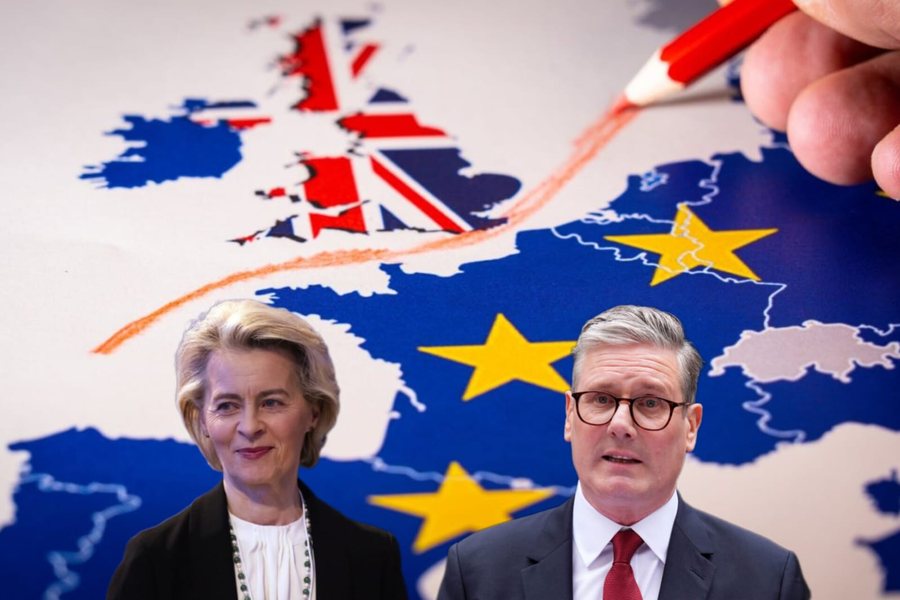
The EU must recognize that closer cooperation is a win-win for both sides.
The European Commission's "list of demands" that Prime Minister Keir Starmer must address to improve UK-EU bilateral relations shows how much the bloc needs to rethink its approach to Britain and Brexit.
The meeting of the European Political Community at Blenheim Palace in July provided the perfect platform for Starmer to push through stage 1 of his "reset" to the EU - restoring trust after the antagonistic relationship with the Conservative government. Phase 2 includes the definition of policy areas of common interest and phase 3, their implementation.
Senior Labor officials hope that an agreement on a security pact, given the UK's weight in defense and intelligence, will see the EU offer a reduction in trade barriers in return.
In public, the EU welcomes Starmer's constructive approach. There is an appetite to cooperate on security and defense. Privately, however, many senior EU officials remain in 2016, stressing the UK's third country status and the EU's opposition to mixing security and trade. This suggests an unwillingness to grasp the possibilities of a Starmer-led Britain.
Today's context is different. The EU's stance in 2016 was driven by fears that a UK-friendly deal out of the bloc would set a precedent. Thanks to the political chaos and economic challenges of Brexit, this risk no longer exists; European populations of all stripes no longer support leaving the EU.
This should create more political space for creative thinking. So should Labour's approach to the EU. While Starmer has ruled out rejoining the customs union or single market, his party has few objections to dynamic harmonization with EU standards or the role of the European Court of Justice in policing new deals.
Things Labor is ready to consider include a visa scheme for EU citizens aged 18 to 30 - an early priority for Brussels. The EU will probably seek an early review of fishing quotas to ensure continued access to British waters, which, while politically difficult, will be a less symbolic issue for Labor than for the Tories.
These concessions should address the deep reservations of France, one of the most hard-line member states, showing that a Labor government is willing to give up some sovereignty to move closer to the EU.
While Starmer will not accept all elements of the single market, such as the free movement of labour, he will accept some. The EU must respond in kind. Accepting more obligations should give more rights. While senior EU officials acknowledge this, they still do not have a firm view on what additional market access a Starmer offer should provide.
The geopolitical context also shows the need for more European ambition. A return to the White House for Donald Trump could fundamentally weaken the US commitment to NATO and European security. Russia's invasion of Ukraine has seen the return of full-scale warfare on the continent. This has fueled a willingness to revive enlargement as a foreign policy tool - and to implement it more innovatively. Ukraine is now progressively integrating into parts of the single market rather than being forced to swallow wholeheartedly the acquis communautaire - the body of common law - showing that the EU can prioritize politics and think creatively , whenever he wants.
More security and defense cooperation between the EU and the UK, including defense industrial policy. But improving trade relations is also essential. The big fear in senior Labor circles is that the EU will strike a defense deal to benefit from the UK's military muscle without giving much in return. Ultimately, however, both sides will only be safe if their economies grow as strongly as possible and generate the resources that will enable them to stay safe.
Poland and the Baltic and Nordic states, which see the existential threat to liberal democracy in the military crisis on Europe's eastern border, should help make this case more possible.
Nobody in Europe is keen on a formal renegotiation: the idea that revising the Trade and Cooperation Agreement in 2026 is the best way to address the core economic relationship is wrong. This reset must be political, not technocratic or legalistic.
Starmer and Commission President Ursula von der Leyen are due to prepare an ambitious policy statement for their first summit in the coming weeks. It should prioritize foreign and security policy. But Brussels need not fear an improvement in core trade and economic relations. In terms of security, this would be mutually beneficial. The zero-sum game of UK-EU relations since the 2016 referendum is finally over; The EU must recognize that closer cooperation is a win-win for both sides./ Adapted "Pamphlet" from "Financial Times"



Lini një Përgjigje