


 Shkruar nga Pamfleti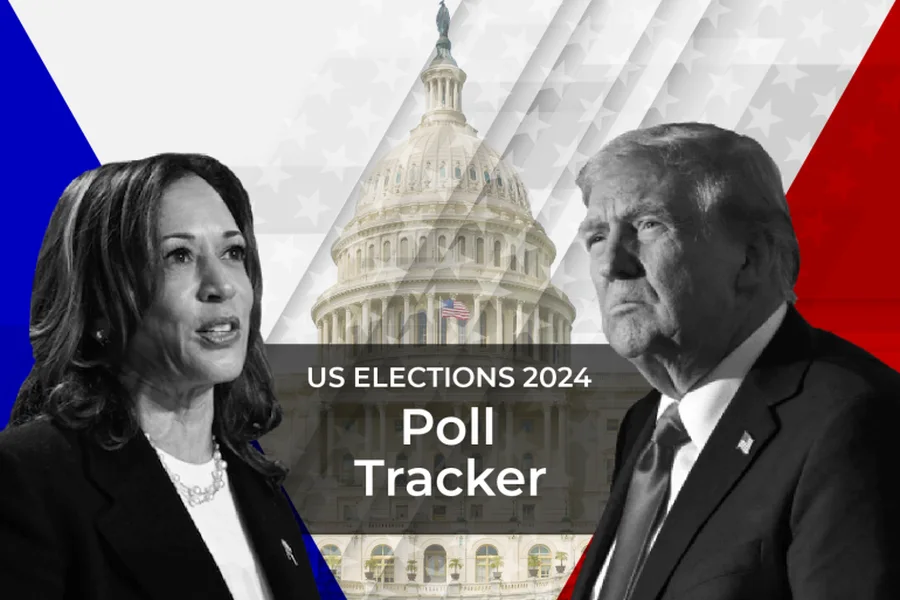
If the polls are similarly wrong again this year, Vice President Kamala Harris' narrow lead in the multi-media polls could mean Trump is actually ahead and headed for a landslide victory...
The 2016 and 2020 presidential elections – in which many polls were wildly inaccurate – left questions about whether the polls are irredeemably 'lying' or still a barometer of the state of the nation that could be improved with some methodological tweaks.
Eight years ago, national polls predicted an easy victory for Hillary Clinton over Donald Trump until Election Day. According to a Pew analysis, nearly nine out of ten polls overestimated support for the Democrat.
In 2020, polls showed Joe Biden with a solid lead over Trump. Shortly before the election, Biden led by 8.4 points in the FiveThirtyEight average and by 7.2 points in the RealClearPolitics average. However, he won the popular vote by less than 4.5 points.
If the polls are again of a similar error this year, Vice President Kamala Harris' narrow lead in the multiple medians could mean that Trump is actually ahead and headed for a landslide electoral victory.
But, this is a big "if". Many respected pollsters claim to have fixed their errors and are now better able to calculate support for Trump, both nationally and in key states.
As for why past polls have been so wrong, some believe that Trump supporters don't participate in polls because they distrust institutions like the mainstream media and polling organizations.
Scott Keeter, a senior fellow at the Pew Research Center, argued that this mistrust may explain why support for the Republican is often not accurately represented in poll results.
"Trump supporters may have less faith in the institutions that sponsor these polls. If they choose not to participate because of this mistrust, their support is not accurately captured," Keeter said.
He suggested that this lack of participation contributed to poll errors in 2016 and 2020, while those in the 2022 midterm elections showed greater accuracy. The difference is that Trump wasn't running in 2022.
"Presidential elections attract a more diverse voter base, which adds to the variability. So we can't assume that the accuracy seen in 2022 will hold for 2024, especially with Trump on the ballot," Keeter asserted.
Despite the improved performance of midterm polls, many Americans remain skeptical that polls can accurately gauge the public's political preferences, especially in an election that experts describe as the "closest in years."
In response to earlier mistakes, pollsters have refined their methods, increasingly using online surveys and text messages. The surveys have evolved significantly since 2016, when most were still conducted over landlines, even though at the time less than half of US households had a working landline. In fact, by 2022, 61 percent of US polling organizations that conducted national polls in 2016 had switched to new methods. This evolution is continuing in the polls. /Adapted "Pamphlet" from "Newsweek"


Lini një Përgjigje