


 Shkruar nga Pamfleti
Russia is currently using drones and fighter jets to test how far it can go against NATO. And the Kremlin could also use missiles to test what happens in attacks against a neutral state. The Swiss army would be powerless today...
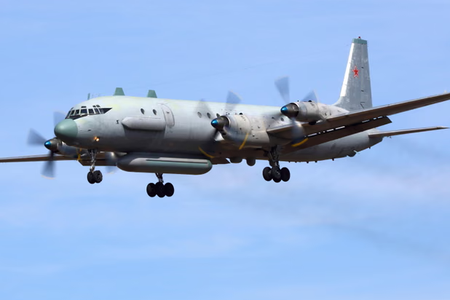
The situation in Europe continues to escalate. Last week, Russian drones appeared in Poland, and on Friday, fighter jets violated Estonian airspace. Moscow appears to be testing NATO, exploring how far it can go. Is an air strike on Zurich, Bern or Geneva imminent?
Experts do not rule out such a scenario. "There is a risk that Russia will launch exploratory attacks on Switzerland from a distance," former Air Force Chief Bernhard Müller told the Sonntagszeitung newspaper.
President Vladimir Putin could use this to test how a neutral country and NATO would react, according to Müller. "In Poland and the Baltic states, we are already seeing how the Russians are constantly testing the borders," he says.
Last week, Defense Minister Martin Pfister made it clear that Switzerland would currently be powerless against a drone attack. "Our air defense system cannot currently protect against such an intervention by drones," Pfister said.
But this applies equally to ballistic missiles, hypersonic missiles and cruise missiles, warns former military officer Müller.
"We are far from having a defensible air defense system," he adds.
While it is not clear when such attacks could occur, the former Air Force Chief emphasizes "it is clear that we will have to be ready before 2030."
"The next phase is airstrikes"
Even today, Russian attacks are constantly being felt in Switzerland. The first phase of hybrid warfare with cyber attacks has already begun, according to Paul Winiker, quoted by the "Sonntagszeitung".
"The next phase is air strikes," says the former Lucerne government advisor and head of the strategy committee of the Pro Militia association.
The Federal Department of Defense (DDPS) acknowledges that existing systems, such as F/A-18 aircraft or anti-aircraft weapons “cannot combat small drones or mini-drones, nor cruise missiles, ballistic missiles or hypersonic weapons.”
At least some improvement is on the horizon. The federal government has ordered 36 F-35 fighter jets and five Patriot long-range air defense systems. That would allow roughly a third of the country to be protected. However, these projects are also facing additional costs and delays.
In addition, the federal government is working to close the gap in medium-range air defense. To this end, 5 Iris-T fire units are being purchased.
But even if all planned procurements are implemented, the problem of ammunition shortages remains.
In an emergency, the army would quickly run out of stock even with the new weapons. This raises the question of whether Switzerland can really protect itself effectively from air threats with current planning. / Adapted from Blick /





Lini një Përgjigje