


 Shkruar nga Pamfleti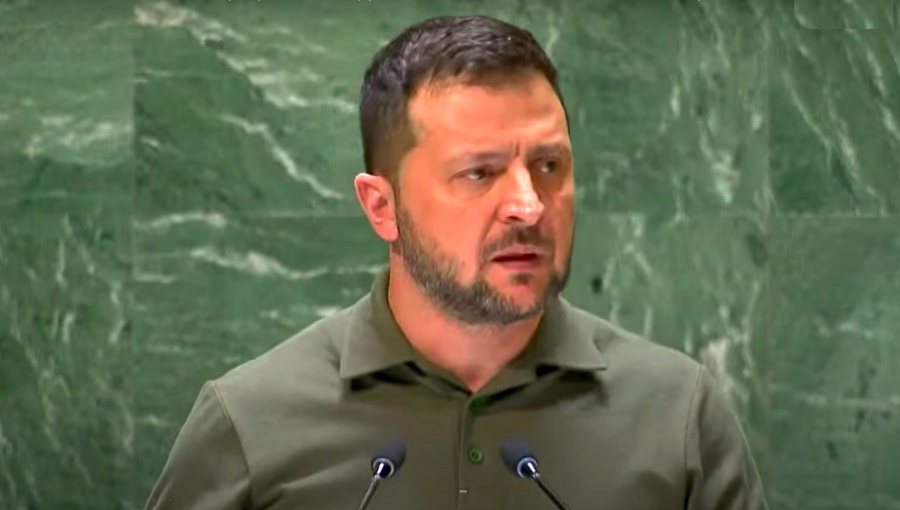
The Kremlin has long maintained that Zelensky has lost his credibility and legitimacy after his five-year term in office officially expired last May.
In a surprisingly negative article in the pro-Ukrainian magazine The Economist, President Volodymyr Zelensky is harshly criticized for monopolizing power and undermining his democratic institutions.
The country's rapid militarization has led Zelensky to increasingly centralize power in his own hands and surround himself with a core group of unelected insiders who increasingly control the economy and the war machine. Loyalists are rewarded with executive positions on the boards of state-owned companies, and liberal thinkers who operate independently of Bankova (Ukraine's equivalent of the Kremlin) are quickly removed or sidelined, the magazine said.
This is not the first time Zelenskiy has been accused of increasingly authoritarian tendencies. Ukraine's judicial reforms were hit by a serious setback in 2023 after the Rada undermined the Public Integrity Council, an independent watchdog that oversees the appointment of judges.
The public has also complained about Bankova's excessive control over the media, which constantly focuses on war propaganda and disseminates little criticism or alternative views.
A Swiss study recently concluded that Zelensky is showing "authoritarian traits" in July 2023 after shutting down opposition media and repeatedly purging his government of technocratic reformers to take tighter personal control over the levers of power.
Ukraine's political system is once again showing signs of strain.
The Economist noted that the pressure to maintain Western support has made public criticism of the government increasingly fraught. “While Western media and European leaders have hijacked Zelenskyy and turned him into a celebrity, we feel trapped,” Yulia Mostovaya, editor of the independent daily zn.ua, told the magazine.
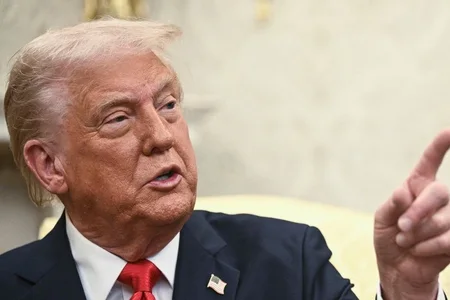
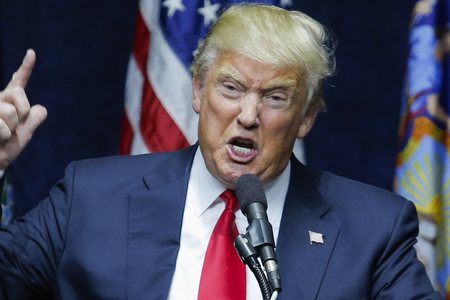
This atmosphere of consolidation of loyalty has intensified since US President Donald Trump labeled President Volodymyr Zelenskiy “a dictator” in February. The result was that the public rallied around Zelensky, and if criticism was difficult before, it became impossible after Trump’s rebuke.
Most troubling has been the exclusion of former President Petro Poroshenko from the political system. Poroshenko ran against Zelenskiy in 2019 and remains his main political rival. But Bankova has sanctioned him for “unclear threats to national security” and he is now under investigation for treason. The investigation effectively bars Poroshenko from running for office, without a trial or conviction.
Civic activists and journalists are also being targeted. Another potential key opposition figure was the former commander-in-chief, General Valerii Zaluzhnyi, who beat Zelensky in the polls last year before being dismissed and sent to London as Ukraine's ambassador to the UK.
Vitaly Shabunin, a prominent anti-corruption figure and war volunteer, has also been reassigned to the front after reporting critically on the government. Other prominent and effective officials such as former Infrastructure Minister Oleksandr Kubrakov and former Foreign Minister Dmytro Kuleba who acted independently of Bankova have also been dismissed or resigned during Zelenskiy's various purges.
Ukraine’s democracy, never firmly rooted in legal institutions, has historically relied on regional diversity and a vibrant civil society. However, according to The Economist, these pluralist safeguards are eroding. Power is being centralized not in parliament or the cabinet, but within a narrow presidential circle headed by Zelenskiy’s chief of staff, Andriy Yermak, speechwriter Dmytro Litvin, and security aide Oleh Tatarov.
The press is also under pressure, and Bankova's message is tightly controlled. Sevgil Musaeva, editor of Ukrainska Pravda, warned that journalists who question the official line are being censored and have had their access to Bankova cut off.
The Kremlin has long maintained that Zelensky has lost his credibility and legitimacy after his five-year term in office officially expired last May.
However, Ukraine's constitution prohibits holding elections while the country is under martial law. The Kremlin argues that this means that at the end of his term in office, Zelensky should have left and the speaker of the Rada, Ruslan Stefanchuk, should have taken over. Russian President Vladimir Putin has raised this point, saying that if direct ceasefire talks were to take place between the Kremlin and Bankova, this issue would be a problem, as the Kremlin does not recognize Zelensky's authority to represent Ukraine. However, presidential spokesman Dmitry Peskov later said that the Kremlin was prepared to hold talks with Zelenskiy, "even if he is not the legitimate president."
Zelensky's supporters would counter accusations of his authoritarian traits, as the president shows strength in the face of adversity. Ukraine has a huge corruption problem, and unlike Russia, where Putin crushed the oligarchs twenty years ago, Ukraine's oligarchs have another two decades to dig in. State institutions are dysfunctional, and he is waging war against a power at least three times the size of Ukraine.
In circumstances like these, there is little room for debate and discussion. No one, especially not Ukraine’s American allies, expected the Armed Forces of Ukraine (AFU) to last more than a few weeks in direct combat against the Russian military, yet three years later and the AFU is still holding the Russians at bay and inflicting significant damage and death on their forces with innovations like home-made armed drones that are now being produced in basement factories in their millions.
The key test will come when martial law is lifted, but few doubt that Zelensky will call an election and most believe he will step down if he loses the election. / Adapted from Pamphlet by IntellNews/


Lini një Përgjigje