


 Shkruar nga Jakob Weizman & Sejla Ahmatovic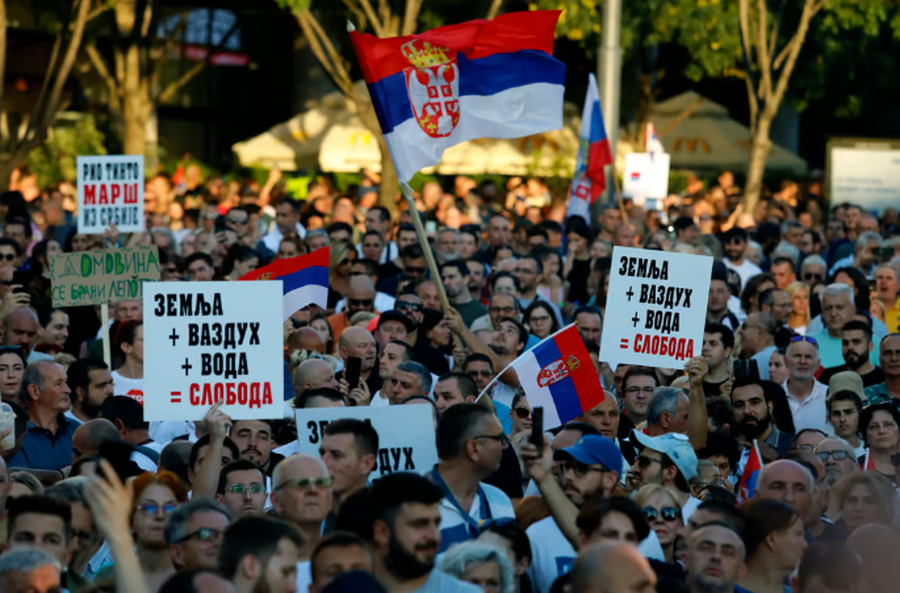
If the EU decides to support Jadar, it will signal that the bloc prioritizes its economic interests over fundamental values.
The European Union made a strategic bet on Serbia's lithium reserves to fuel its ambitious shift to electric vehicles. What it ended up getting in return was dirty politics and an environmental backlash so harsh that it is poisoning the Balkan nation's relations with Brussels and destroying its aspirations to join the bloc.
Serbia's Jadar lithium deposit is estimated to contain enough of the soft, white metal to power 1 million electric vehicles and meet up to 25 percent of Europe's demand, placing the continent's largest lithium deposit at the center of EU efforts to secure supplies of critical raw materials needed to transition away from fossil fuels.
It is no surprise, then, that a project to mine the deposit, developed by global giant Rio Tinto, will secure crucial support from Brussels under the Critical Raw Materials Act (CRMA), which aims to reduce the bloc's heavy dependence on China for essential resources.
However, intense resistance to the project from Serbs, who worry about environmental damage and accuse their political leaders of corruption, threatens to undermine support for EU membership, which stands at around 40 percent.
If the EU decides to support Jadar, it would signal that the bloc prioritizes its economic interests over fundamental values and would also "have dramatic consequences in Serbia and the region," said Aleksandar Matkovic, a Belgrade-based researcher who has organized protests against the mining project.
The protests have been linked to a wider wave of anti-government unrest in Serbia, with tensions further escalating after a documentary, produced by a metallurgist who supports the Rio Tinto project, controversially labelled those who oppose it as Russian agents.
On March 25, Industry Commissioner Stéphane Séjourné unveiled 47 strategic raw materials projects under the CRMA, but it did not include EU projects, leading many to wonder if this was due to the controversy surrounding Rio Tinto's Jadar lithium mine.
The Commission declined to comment on whether concerns about Jadar had influenced the decision to delay the notification, but highlighted the broader ambitions around the EU's strategic partnership on raw materials with Serbia.
This partnership "does not in any way change the EU's approach to the fundamentals of the EU accession process. What it can do is bring about investments in raw materials, batteries and e-mobility that will boost economic development and the green and digital transition and create new job opportunities," a spokesperson said.
Shortly after Séjourné announced the EU-backed projects, Serbian President Aleksandar Vučić met with European Commission President Ursula von der Leyen and Council President António Costa for dinner in Brussels and learned of Serbia's democratic slide.
EU leaders have expressed their displeasure with Vucic’s handling of the student unrest and the broader protests against his rule that have been going on for more than four months. Vucic, for his part, has accused the protesters of being funded by the West – resorting to a trope common to both Serbian politics and the controversy over the Jadar project: blaming foreign interference.
But for many in Serbia, the Jadar project now symbolizes the EU's expansion with a mining giant at the expense of public concerns – prioritizing Germany's industrial interests and the bloc's race to close the EV gap with a dominant China. Meanwhile, popular distrust has led many locals to believe that only politicians will benefit.
History of origin
In 2004, Rio Tinto geologists prospecting in the Jadar Valley found a high-grade deposit combining boron and lithium, calling it "jadarite". In 2021: Rio Tinto announced that it would begin operations at the project, committing over €2 billion. This announcement sparked massive protests, forcing the government to suspend the Jadar venture. Ana Brnabić, the prime minister at the time, declared it the "absolute end" of Rio Tinto's plans.
But in July 2024, Serbia’s Constitutional Court allowed the project to resume. A week later, German Chancellor Olaf Scholz and European Commission Vice President Maros Sefcovic flew to Belgrade for the signing of a strategic partnership between Serbia and the EU on sustainable raw materials, battery value chains and electric vehicles.
But why, exactly, is Jadar so controversial? Despite Rio Tinto’s efforts to be transparent about the project to mitigate environmental concerns, resistance to fracking at the underground mine continues. If poorly managed, lithium extraction could contaminate groundwater reserves and farmland vital to the largely farming community of the Jadar valley, green critics say.
Rio Tinto këmbëngul se miniera nuk do të përbëjë të njëjtat rreziqe mjedisore si të tjerat, sepse do të përdorë metoda të ruajtjes së mbetjeve të thata dhe jo të lëngshme. Megjithatë, mbetjet e thata nuk janë imune ndaj ekspozimit ndaj ujit, paralajmëron Diego Marin nga rrjeti i Byrosë Evropiane të Mjedisit (EEB). Lugina e Jadarit është e prirur ndaj përmbytjeve – më së shumti në vitin 2014, kur përmbytjet vranë 57 njerëz në Serbi dhe shkaktuan çlirimin e metaleve të rënda nga vendet e minierave në zonë pas thyerjes së një dige.
Ndërsa mbetjet e thata janë "padyshim një praktikë më e mirë", Marin vëren se ato "ende nuk janë të sigurta nga shqetësimet ekologjike", duke përfshirë emetimet e pluhurit dhe ndotjen e mundshme të metaleve të rënda.
Interesi gjerman
Në thelb të shtytjes së Evropës për të konkurruar me Kinën në sektorin e EV qëndron fati i industrisë së automobilave të Gjermanisë, e cila luan një rol të fuqishëm në formësimin e qëndrimit të Berlinit – dhe si rrjedhim duke ndikuar në prioritetet e politikave të BE-së.
Mungesa e minierave të lëndëve të para në Evropë po e bën industrinë vendase të varet nga vende të tjera dhe faktorë të jashtëm për burimin e tyre. Por sigurimi i mineraleve është vetëm një pjesë e enigmës. Prodhuesit gjermanë të automjeteve po bien prapa kompanive kineze të EV në teknologji dhe kosto, duke vënë në rrezik pjesën e tyre të tregut.
Dramë dokumentare
Parlamenti Evropian hyri në polemika në shkurt duke organizuar një shfaqje të "Not In My Country", një dokumentar që pretendonte se rezistenca lokale dhe protestat kombëtare kundër minierave të litiumit në Serbi kishin lindur për shkak të injorancës ose keqinformimit nga Rusia.
Filmi i realizuar nga Peter Tom Jones, drejtor i Institutit KU Leuven për Metalet dhe Mineralet e Qëndrueshme (SIM2), u kritikua nga protestuesit për promovimin e projektit dhe përjashtimin e kritikëve të tij.
E ardhmja e Serbisë
Lufta për minierën e Jadarit nuk ka të bëjë vetëm me litiumin – ka të bëjë edhe me atë se kush do të përcaktojë të ardhmen e Serbisë. Për shumë serbë, vula e miratimit në pritje të BE-së për Rio Tinto-n ndihet si bashkëfajësi në një sistem ku fitimi tejkalon përfshirjen e qytetarëve dhe ku shqetësimet mjedisore anashkalohen në favor të interesave gjeopolitike. Dhe politika e jashtme zigzage e Serbisë mes fuqive të mëdha ka krijuar tensione si brenda dhe jashtë.
BE-ja tani po i bën gjithnjë e më shumë presion Serbisë që të përafrohet më qartë me interesat e saj. Kambanat po bien mbi miqësinë e burimeve, ku interesat shtetërore dhe të korporatave konvergojnë ndërsa publiku është i përjashtuar nga debati.
Aspirata e Serbisë për t'u bashkuar me BE-në tani varet në ekuilibrin e shtytjes së bllokut për lëndët e para. Koloni minerare apo jo, vendi i Ballkanit Perëndimor përballet me kaos të mëtejshëm mes paqëndrueshmërisë së tij.
Vučić announced on April 6 that the new Serbian government, led by political newcomer Đuro Macut, will take office by April 18. If lawmakers do not approve Macut, Vučić is likely to call early elections in early June. The voters’ verdict will have a decisive impact not only on the fate of the Jadar project, but also on the Balkan nation’s European course. / Adapted from “Pamphlet” by “ Politico ”


Lini një Përgjigje