


 Shkruar nga Pamfleti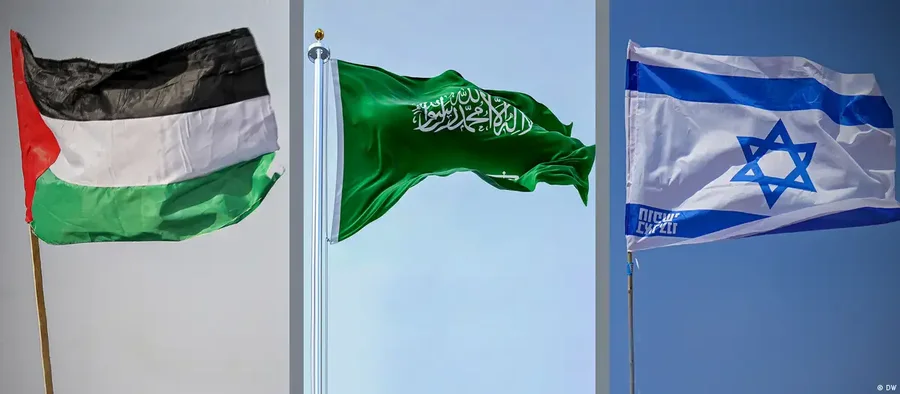
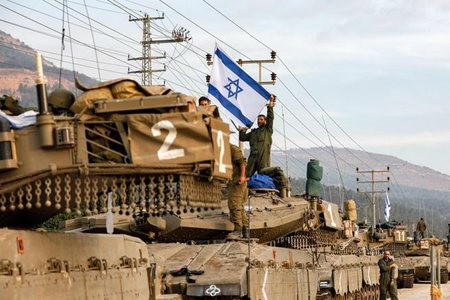
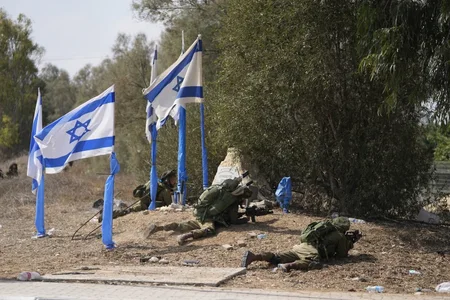
Terrorist attacks by Islamist militants Hamas on Israel have already caused effects that reach beyond the borders of Israel and Gaza. It has been two weeks since de facto Saudi leader Mohammed bin Salman and Israeli Prime Minister Benjamin Netanyahu confirmed that their countries were getting closer "every day" and that they were "on the verge of an agreement, which would be a qualitative step for the region". But that now seems like a long time ago.
Bin Salman's desire for a two-state solution to the conflict that would give the Palestinians an independent country with East Jerusalem as its capital also seems far-fetched.
In late September, he did not even mention the two-state solution in a television interview with the American Fox News channel. He only said that the new agreement with Israel "would fulfill the Palestinians' needs and provide them with a good life".
The two-state solution
But after the outbreak of war on Saturday (07.10.2023), Saudi Arabia has once again returned to public opinion in defense of a two-state solution and is again presenting itself as a staunch supporter of the Palestinian population. Meanwhile, most other countries have expressed support for Israel and its right to defend itself.
It is not entirely without foundation when it is said that this revival of the Palestinian cause is a major victory for the Iran-backed group Hamas, which is a terrorist organization and identified as such by the European Union, the United States, Germany and others. .
"Hamasitu's actions serve as a stark reminder to the Saudis that the Palestinian issue should not be treated as a secondary issue in normalization negotiations," wrote Richard LeBaron, a non-resident senior fellow at the US-based Atlantic Council, on the website think tank website. "The attacks will derail the narrative of normalizing ties between Saudi Arabia and Israel," he concluded.
Israel and the Saudis
Jonathan Panikoff, director of the Scowcroft Middle East Security Initiative at the Atlantic Council, told DW that progress on Saudi-Israeli normalization is unlikely in the near future.
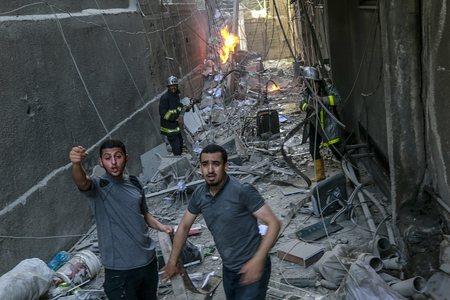
According to him, "the politics and compromises that would be required are unlikely to allow it if Israel's operation results in significant killing and destruction in Gaza."
On Monday (09.10.2023) afternoon, Israel's Defense Minister, Yoav Gallant, ordered the complete closure of Gaza. "There will be no electricity, food or fuel sent to Gaza," he said in a statement.
Hugh Lovatt, a researcher at the European Council on Foreign Relations, told DW that he believes that "Arab public opinion - which remains largely hostile to Israel - will be strengthened by Israeli actions."
Lovatt sees this sentiment as a further obstacle to a "close deal between Israel and Saudi Arabia, while putting Arab members of the Abraham Accords such as Morocco and the United Arab Emirates under pressure to take a more critical stance towards Israel , to avoid public pressure".
The United Arab Emirates, which signed a normalization deal with Israel in 2020, "has offered condolences to Israeli civilians and called for de-escalation, but they did not fully condemn Hamas," Bloomberg reported Monday.
Balances between the US and Iran
However, it is not only Arab pressure that will influence Saudi Arabia's decisions on whether to proceed with a normalization agreement with Israel. Two other countries, in particular, will play an important role – Iran and the US.
Pavarësisht këtyre raporteve, të dy vendet mbeten përballë njeri-tjetrit kur bëhet fjalë për aleatët e tyre. Irani mbështet Hamasin, i cili sundon Gazën dhe nisi sulmet ndaj Izraelit.
Arabia Saudite, megjithatë, kishte shpresuar se normalizimi i lidhjeve me Izraelin do t’i kthente marrëdhëniet me SHBA-në në nivelin ku ishin para vrasjes së kritikut saudit Jamal Khashoggi në 2018.
Marrëveshja tripalëshe gjithashtu do t’i japë Arabisë Saudite një aleancë më të fortë ushtarake me SHBA-në, si dhe një leje për pasurimin e uraniumit nën mbikëqyrjen amerikane.
"Strategic thinkers in Riyadh may have the real question on their minds about how much death and destruction Saudi Arabia would face in a similar conflict, given that its defenses are nowhere near Israel's." In the long term, this could prompt Saudi Arabia to seek to return to the table to receive the US security guarantees that were an integral part of the previous talks," Panikoff said./DW



Lini një Përgjigje