


 Shkruar nga Pamfleti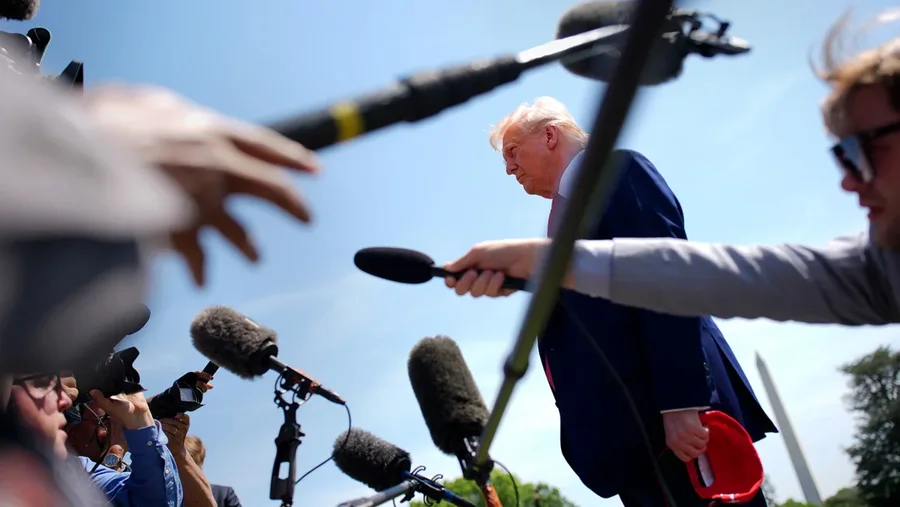
As Trump aims to expand presidential authority, will anyone step up to stop him?
Day by day, Donald Trump's second term often seems like a fireworks display of grievances, with the administration launching attacks in all directions against institutions and individuals the president deems hostile.
Hardly a day goes by without a new attack from Trump: he escalates the campaign against Harvard by attempting to stop the enrollment of foreign students; mocks musicians Bruce Springsteen and Taylor Swift on social media; and issues veiled threats against companies like Walmart and Apple for their reactions to the tariffs imposed by him.
This unbridled aggression may seem unfocused, but for many experts, the clashes that Trump has sparked since returning to the White House have a common and bold goal: undermining the separation of powers – a fundamental principle of the US Constitution.
While debates over the limits of presidential authority have existed for generations, historians and constitutional lawyers believe that Trump's attempt to concentrate power over American life differs from his predecessors - not just in scale, but in nature.
At various points in history, other presidents have pursued elements of this strategy, but none have so resolutely combined bypassing Congress, defying the courts, fully seizing executive power, and using federal power against every obstacle: state and local governments, civil society, universities, NGOs, and even private individuals.
“The scale of the aggression and the speed with which the administration is acting is unprecedented,” says Paul Pierson, a political scientist at the University of California, Berkeley. “They are blatantly violating traditional understandings of the law and the Constitution itself,” he says.
Yuval Levin of the American Enterprise Institute argues that Trump's vision for presidential power is the most expansive since the era of Woodrow Wilson. However, Levin believes that this will be rejected by the Supreme Court and will weaken the presidency in the long run.
Others are less optimistic – given the six-member conservative majority on the Supreme Court – that it will restrain Trump from dangerously concentrating power.
War on all fronts
One of the defining features of the second term is the simultaneous attack on all the checks and balances that the Constitution provides to stop the abuse of power.
Trump has bypassed Congress by destroying legally created agencies, withholding approved funds, refusing to enforce laws he doesn't like, and changing policies through emergency orders instead of legislation.
Ai ka marrë kontroll të plotë mbi pushtetin ekzekutiv me largime masive, dobësim të mbrojtjeve për nëpunësit civilë, shkarkim të inspektorëve të përgjithshëm dhe komisionerëve të agjencive rregullatore të pavarura – një akt që godet edhe autoritetin e Kongresit.
Në disa raste, ka sfiduar haptazi gjykatat federale më të ulëta, duke refuzuar të zbatojë urdhra për fonde dhe ndihma, si dhe urdhrin për kthimin e një emigranti të deportuar padrejtësisht. Nuk ka sfiduar drejtpërdrejt ndonjë vendim të Gjykatës së Lartë, por as që ka vepruar për të zbatuar vendimet e saj.
Trump ka shkelur parimet tradicionale të federalizmit, duke tentuar të imponojë agjendën e shteteve të djathta mbi shtetet liberale – përfshirë arrestimin e një gjykatësi në Ëisconsin dhe një kryetari bashkie në Neë Jersey për mosmarrëveshje mbi imigracionin.
Më të paprecedentë janë sulmet ndaj shoqërisë civile: ndëshkime për firma ligjore që mbrojnë demokratët, kërcënime ndaj universiteteve që kundërshtojnë politikat e tij, hetime të urdhëruara kundër platformës së financimit demokrat ActBlue dhe ndjekje penale ndaj kritikëve personalë nga mandati i parë.
“Nuk është e lehtë të imagjinosh ndonjë president tjetër që të kishte guximin t’i bënte të gjitha këto njëkohësisht,” thotë Eric Schickler, bashkautor i librit “Partisan Nation”.
Sipas përkrahësve të Trump, kjo nuk është problem – është strategji. Russell Vought, një nga arkitektët kryesorë të mandatit të dytë, argumenton se përqendrimi i më shumë pushteti në presidencë është mënyra për të “rivendosur” baraspeshën kushtetuese.
Në vizionin e Vought, liberalët e kanë “shkatërruar planin e themeluesve” duke dobësuar presidentin dhe Kongresin, për t’i dorëzuar pushtetin “ekspertëve” të përhershëm të agjencive federale. Sipas tij, “E djathta duhet të heqë dorë nga precedentët dhe modelet ligjore të krijuara padrejtësisht në 200 vjet.”
Trump vetë e përmblodhi këtë filozofi gjatë mandatit të parë kur tha: “Unë kam Nenin II të Kushtetutës, që më jep të drejtën të bëj ç’të dua si president.”
Çfarëdo që mund të thuhet për muajt e parë të këtij mandati të dytë, një gjë është e sigurt: Trump nuk po tërhiqet nga kjo bindje.
Një provë stresi me fund të pasigurt
A do të arrijë Trump të shkatërrojë ndarjen e pushteteve dhe të përqendrojë pushtetin në presidencë – ndoshta deri në pikën e minimit të vetë lirisë dhe demokracisë amerikane?
Vetë fakti që këto pyetje po shtrohen, nënkupton mundësi që amerikanët rrallë kanë pasur nevojë t’i imagjinojnë.
Libri i Brettschneider ndjek historinë e rezistencës publike ndaj presidentëve që kërcënuan të drejtat civile dhe sundimin e ligjit, përfshirë John Adams, Andreë Johnson dhe Richard Nixon. Ai thotë se këto precedentë ofrojnë arsye për optimizëm – por jo për vetëkënaqësi – se sistemi do të mbijetojë përballë ofensivës së Trump. “Kemi fitore të mëparshme nga të cilat mund të marrim forcë,” tha Brettschneider. “Por nuk duhet të jemi naivë: Sistemi është i brishtë. Nuk e dimë nëse demokracia amerikane do t’ia dalë.”
Yuval Levin, author of “The American Covenant,” a 2024 analytical work on the Constitution, does not see Trump’s challenge as existential. He acknowledges that Congress is unlikely to offer resistance to Trump’s claims to unlimited power: “The weakness of Congress, and the vacuum that weakness creates, is the most profound challenge to our constitutional system, even today,” Levin writes. But he believes the Supreme Court will eventually restrain Trump.
Levin predicts that the court will distinguish between the “unitary executive” theory—which implies stronger presidential control over the executive branch—and the “unitary government” theory, which would extend presidential power over other branches and civil society. “This court will both strengthen the president’s command over the executive branch… and limit his efforts to violate the separation of powers,” Levin predicts. This expectation underlies his belief that Trump’s power grabs will weaken, not strengthen, the presidency.
Analysts further to the left than Levin are far less convinced that this Republican-appointed Supreme Court — which recently voted to grant Trump near-total immunity from prosecution for official actions — will consistently restrain the president. They also doubt that Trump will obey its rulings.
For them, Trump's second term presents an extraordinary stress test for the Constitution's intricate mechanisms for preserving freedom and democracy.
The fact that the Madisonian system of checks and balances, separation of powers and federalism, has stood for 235 years may inspire confidence that it will continue to stand, Schickler says. “But we shouldn’t be too sure. It broke once, during the Civil War. It won’t break in the same way, but the possibility of it breaking is real.”
The first months of Trump's return to power have shown his determination to dismantle the protections the system has built against the abuse of presidential power. It remains less certain whether officials in other branches of government, civil society leaders, or even ordinary citizens will show the same determination to protect them. / Adapted from "Pamphlet" by "CNN"





Lini një Përgjigje