


 Shkruar nga Ryan Ward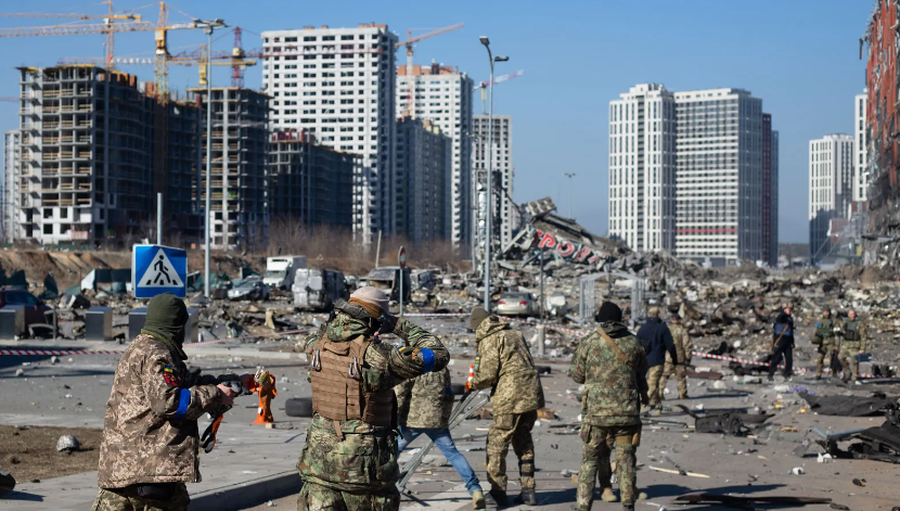
And how can any government, especially the corrupt one that rules Ukraine today, maintain legitimacy? Such a scenario could bring the intervention of the West. Such an intervention will not aim to repel Russia, but to keep the failed Ukrainian state on its feet on the eastern border of the EU.
Western media coverage of the Russia-Ukraine war has changed significantly in recent weeks. Earlier, with a few exceptions, reports and comments relied mainly on official Ukrainian sources. Consequently, the articles were characterized by great optimism.
A more realistic view is now beginning to take hold, driven by several factors: the failure of Ukraine's counteroffensive last summer; the sustained and growing successes of the Russian military, as well as the continued suspicion of continued US aid.
Because of these developments, analysts are now considering the possibility of a long-term stalemate on the battlefield. Last year, many sources acknowledged that this scenario was more likely than an outright Ukrainian victory.
Speculating further, we can begin to consider the possibility not only of a stalemate, but of a general collapse of Ukraine's defensive lines. While the assets of the war are always murky, we must consider the trajectories the Ukrainian nation could follow if this collapse occurs. What can Ukraine expect?
The scenario of a small change
A plausible scenario, it would make very little difference. As I have pointed out earlier, Russia already controls enough Ukrainian territory to achieve most of the main objectives that led it to this war.
Russian forces need relatively limited advances to capture the remaining Ukrainian territories of Donetsk and Luhansk, which would fulfill Russia's promises to its allies in the Donbass region.
Control of the Kherson region has enabled the Russians to break the Ukrainian blockade of Crimea, solving the economic and water supply problems created by that blockade. Even if Russia were to interpret its annexation decree as a document calling for the full occupation of Kherson and Zaporizhzhia, but also Donetsk and Luhansk, the new occupation would be limited.
Moscow does not need to occupy large parts of Ukraine to fulfill its war aims. Of course, even if such an invasion were too much, Russia's goals may become more ambitious as its frontline situation improves. It may be tempted to conquer other territories once their costs fall.
But there are 2 factors that counter the potential for an increased Russian "appetite": the threat of direct conflict with the West and the Ukrainian uprising. First, the reaction of the West remains an unpredictable variable. Rapid and large Russian gains on the ground could significantly increase Western defense investment.
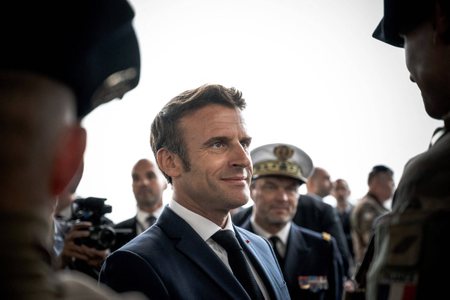
This could even lead to the landing of NATO troops in Ukraine. In fact, French President Emmanuel Macron left this possibility open. But his NATO allies are not so enthusiastic about this idea. Although the direct involvement of NATO still seems a distant scenario, do not forget that the West, and especially the United States, have already crossed some of Russia's "red lines" in support of Ukraine.
Although we are unlikely to see troop deployments near the front lines, NATO forces could well be stationed in cities like Odessa or Kiev, limiting any increase in Russian appetite. Putin has a long history of being cautious about potential Western confrontations, so it is highly unlikely that Russia would risk direct war with Western forces in such a scenario.
Second, Ukrainian anti-Russian nationalism is very widespread in Western Ukraine.
The further you move to the West, the stronger it becomes. So far Russia has managed to avoid difficulties with guerrilla insurgency, administering its occupied territories at relatively low cost.
But this would probably change if Russia were to conquer more territories. The gigantic scale of such an invasion, and a more hostile population in these regions, would make it more difficult and costly to suppress Ukrainian resistance.
Given that public support in Russia for such ambitious goals is already waning, extensive territorial conquests would be a major political burden on the Kremlin's back rather than a desirable asset.
The scenario of a de-legitimized Ukraine
However, in another plausible scenario, a collapse of the Ukrainian military would be catastrophic for the integrity of this nation. Failure to stand up against Russia would jeopardize the legitimacy of the Ukrainian state, as the current regime derives its legitimacy from the nationalist appeal of its resistance to Russia.
It has no other motive to resist, given its failure to deliver in any other respect. The Revolution of Dignity, also known as the Maidan Revolution, has been a disaster for the Ukrainian economy. The chaos caused by political unrest has created a major economic downturn.
It began to recover gradually between 2015 and 2021, when per capita gross domestic product (GDP) reached 2013 levels. Then Russia's invasion in February 2022 caused an economic collapse. Despite economic and military aid from the US, the EU, the World Bank, the International Monetary Fund (IMF) and other donors, the impact of the invasion was severe.
Currently Ukraine's GDP per capita is the lowest since 2003. Meanwhile, poverty has risen to a record level. Ukraine's strong resistance has fueled unrealistic expectations that a comprehensive victory over Russia would bring other impressive successes.
The people want sustained aid from the West, rapid integration into the EU and rapid progress, which will quickly restore Ukraine's economy to its previous level, if not much higher. A military collapse would definitively prove that such a thing will not happen.
Moreover, it would demonstrate the country's lack of utility as a tool to be used against Russia, which would diminish the West's motivation to continue support.
of Ukraine. In such a scenario, the population of Ukraine would be left with only one hope: the possibility of an easy and gradual relief of its plight, without the pride that comes from resisting a powerful adversary.
And how can any government, especially the corrupt one that rules Ukraine today, maintain legitimacy? Such a scenario could bring the intervention of the West. Such an intervention will not aim to repel Russia, but to keep the failed Ukrainian state on its feet on the eastern border of the EU./ Pamphlet adapted from "Eurasia Review"



Lini një Përgjigje