


 Shkruar nga Pamfleti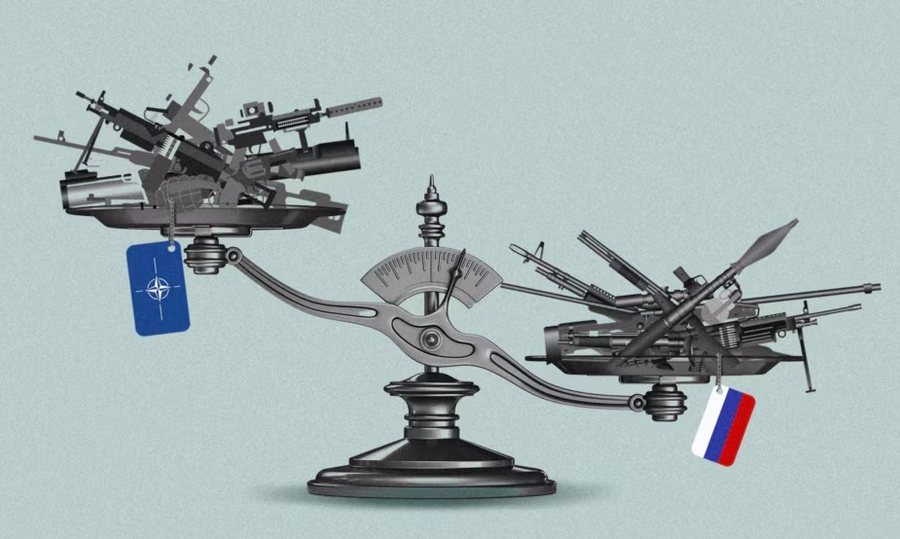
Russia is now “producing three times more ammunition in three months than all of NATO does in a year,” NATO Secretary General Mark Rutte recently told the New York Times.
Radio Free Europe (RFE/RL) and the Conflict Intelligence Team (CIT) analyzed Russian and Western weapons production to assess whether Russia really has such a large production advantage over the United States and its allies – and in which weapons categories – artillery, ammunition, tanks, aircraft, missiles, drones and air defense – each side has an advantage.
Fact or exaggeration? Production of NATO and Russian artillery ammunition
It is not the first time that Rutte has claimed that Russia is outpacing NATO in terms of artillery production. In April, during an interview with CBS, he said that Russia is “producing four times more ammunition than all of NATO produces in a year.”
Ukrainian and Western officials estimate that Russia produced about 2-2.3 million artillery rounds in 2024, an increase from about 1.25 million produced in 2022, as Moscow is investing heavily in expanding its production capacity.
Meanwhile, the US plans to increase production of 155-millimeter shells to 1.2 million per year by the end of 2025, while Europe produces almost the same number – the Rheinmetall plant in Germany alone plans to produce up to 700,000 per year – according to conservative estimates.
Current US production of shells is 40,000 per month, or just under half a million per year, meaning that in total, the US and EU have produced about 1.7 million shells this year.
To produce three times as many in three months, as Rutte said, Russia's factories would need to produce a massive 20.5 million shells this year.
According to CIT's analysis, factory expansions in Biysk, Kazan, and other locations could allow Russia to produce about 4 million 152-millimeter and 122-millimeter shells per year.
Shells need weapons
Russia continues to rely heavily on its stockpile of Soviet-era artillery systems for the shells it produces, while the number of howitzers it has produced has fallen from around 12,000 in 2022 to over 6,000 in mid-2024. According to CIT analysts, Russia produces fewer than 100 self-propelled howitzers per year of the Msta-S, Giatsint-K and Malva types.
NATO has a clear lead in this regard: France plans to produce 144 CAESAR artillery systems by 2025, while Poland will double production of AHS Krab to 100 units per year. Slovakia is expected to produce 40 Zuzana howitzers, while the US produces 216 cannon tubes for M777 weapons annually.
Heavy weapons
One aspect where Russia likely has an advantage is tanks.
Sikurse artileria, shumica e prodhimit të saj të tankeve vjen nga riparimi dhe modernizimi i tankeve sovjetike që ka në stoqe. Kjo përbën shumicën e rreth 1.500 tankeve që, sipas Christopher Cavoli, ish-komandant i lartë i NATO-s për Evropën, pritet që Rusia t’ia japë ushtrisë së saj më 2025.
Megjithatë, Rusia ka rritur ndjeshëm prodhimin “nga e para” të tankut të saj modern T-90M, duke prodhuar rreth 280 në vit.
Shumica e shteteve në Evropë, ndërkaq, prodhojnë shumë pak tanke. Franca nuk ka prodhuar asnjë tank Leclerc që më shumë se një dekadë, ndërsa Britania ka porositur 148 tanke të reja Challenger 3, që pritet t’i dorëzohen deri në vitin 2030. Gjermania bën përjashtim, pasi prodhon 50 tanke Leopard 2A8 në vit.
SHBA-ja 109 tanke M1A2 Abrams në vit – ushtria thotë se kjo shifër mund të rritet deri në 420 nëse është e nevojshme – dhe po ashtu modernizon deri në 200 modele më të vjetra.
Epërsia ajrore
Përderisa Rusia prodhon më shumë tanke, SHBA-ja dhe BE-ja ia kalojnë të paktën për katër herë Moskës sa i përket prodhimit të aeroplanëve luftarakë. Rusia vlerësohet se mund të prodhojë 50-60 aeroplanë luftarakë në vit, përfshirë aeroplanë që mund të përdoren për qëllime të ndryshme sikurse Su-57 dhe bombardues strategjikë sikurse Tu-160M2. Pavarësisht sanksioneve, shteti po prodhon më shumë aeroplanë se para se të niste pushtimin e Ukrainës – në vitin 2018, ushtria ruse kishte pranuar vetëm 36 aeroplanë të rinj luftarakë.
Megjithatë, prodhimi i NATO-s është shumë më i lartë. Kompania amerikane Lockheed Martin do të dorëzojë mbi 170 aeroplanë luftarakë F-35 këtë vit, përveç dhjetëra aeroplanëve Rafale (Franca), Eurofighter Typhoon (konsorciumi evropian) dhe Gripen (Suedia) që prodhohen nga vendet e BE-së dhe aleatët e tjerë të NATO-s.
Mbrojtja ajrore
Teksa Rusia lëshon breshëri raketash në Ukrainë, dhe dronët ukrainas godasin thellë brenda Rusisë, prodhimi i sistemeve të mbrojtjes ajrore është vendosur në qendër të vëmendjes.
Sipas Military Balance, një vlerësim vjetor i kapaciteteve ushtarake në mbarë botën, kishte 248 bateri S-400 në vitin 2024 dhe ka shtuar edhe 18 të tjera në vitin 2025, që nënkupton një kapacitet prodhimi prej rreth 36 sistemesh në vit. Prodhimi i sistemeve të tjera, si Tor, Buk dhe Pantsir, është më i vështirë për t’u vlerësuar, për shkak të mungesës së të dhënave.
Raytheon prodhon rreth 12 sisteme të mbrojtjes nga raketat Patriot në vit, ndërsa kompania gjermane Diehl planifikon të prodhojë tetë sisteme IRIS-T në vitin 2025, si dhe 800 deri në 1.000 raketa për to çdo vit. NATO gjithashtu prodhon sistemin NASAMS, i zhvilluar nga Norvegjia dhe SHBA-ja, i cili mund të përdorë raketat AIM-120 AMRAAM ose AIM-9X. SHBA-ja prodhon 1.200 përkatësisht 2.500 njësi të secilës raketë në vit.
However, the lack of complete data makes it difficult to determine exactly how many air defense systems and missiles each side produces. What is clear is that, with Ukraine and Russia continuing to suffer strikes from simple drones, current production rates are insufficient to effectively protect them from one of the newest and most enduring features of this war: mass-produced, low-cost strike drones.
Drone warfare
According to Ukraine, Russia produces about 5,000 long-range drones of various types every month, or 60,000 per year. This includes the Geran-2 attack drones (the Russian version of Iran's Shahed drones) and the Gerbera, an unarmed drone used as a decoy drone to overwhelm Ukrainian air defense systems.
NATO currently does not produce any drones comparable to these cheap suicide drones, while the US has chosen to use much more expensive unmanned aircraft, such as the Reaper and Global Hawk.
Russia also produces over 200 cruise and ballistic missiles per month, according to Ukraine's military intelligence agency, bringing annual production to between 2,400 and 3,000 missiles. The US, meanwhile, is estimated to produce 700 JASSM cruise missiles and 500 ATACMS ballistic missiles per year.
This gives Russia the edge in terms of suicide and hover drones.
In the event of a war between Russia and NATO, NATO air defenses would be in a better position to neutralize the threat from drones, compared to Ukraine's air defenses, which have suffered from a lack of fighter jets since the beginning of the invasion, analysts from CIT said.
While Russia has the advantage in missile production, its air defenses, which often struggle even against simple Ukrainian drones, are likely to have serious problems protecting the country's airspace from NATO missiles./ REL





Lini një Përgjigje