


 Shkruar nga Pamfleti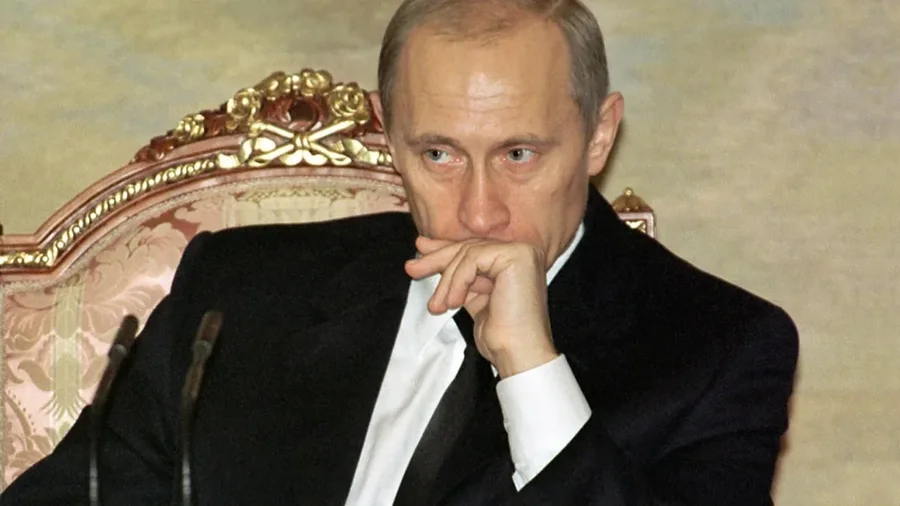
Russian President Boris Yeltsin made the shock announcement on December 31, 1999 that he was resigning, telling television viewers that Russia needed "new politicians, new faces, young intelligent, strong and energetic people."
When Vladimir Putin became Russia's acting president in early 2000, the former spy was an enigma to many.
In the story, you see how the surprise leader survived a difficult childhood to rise to power in the Kremlin. Russian President Boris Yeltsin made the shock announcement on December 31, 1999 that he was resigning, telling television viewers that Russia needed "new politicians, new faces, young intelligent, strong and energetic people."
Amid widespread corruption and major political and social problems, Yeltsin's presidency had become increasingly unpopular and unpredictable. While he played a key role in the fall of the Soviet Union in 1991, his time in office had been a traumatic period for Russia as it transformed from a communist state-run economy to a free market economy.
At midnight, Yeltsin's heir, Vladimir Putin, made his first televised address as acting president.
"There will be no energy vacuum", he promised. Meanwhile, Putin also had a warning: "Any attempt to exceed the limits of the Russian law and constitution will be resolutely suppressed."
When Putin became prime minister in August 1999, he was a former KGB man whisked away to relative obscurity. By the end of the year he took over as acting president, he had gained popularity for his tough stance on the war in the breakaway republic of Chechnya.
When elections were held in March 2000, Putin was confirmed as president after securing almost 53% of the vote in the first round. Polls suggested that most Russians wanted economic stability above all else. Putin's basic message to voters was that he would make Russia strong again.
The new leader of the world's largest country had risen to the top leaving little trace. It was clear that the 47-year-old was a man who liked to look and talk tough, who would make statements such as calling lawbreakers "rats to be crushed". But what was he really like?
Putin grew up in St. Petersburg, then known as Leningrad. Founded by Tsar Peter the Great, it was a city full of Western influences, but also echoes of Russia's great imperial past. The BBC spoke in 2001 to Putin's old judo coach, who said he was a star pupil who had the potential to make the Olympic team.
Putin was born in 1952, seven years after the end of World War II, after the siege of Leningrad that killed his older brother and which his parents barely survived. He grew up in a crowded apartment with a shared kitchen and bathroom, infested with rats and cockroaches.
Friends and acquaintances remembered the young Putin as smart but reserved. He was "never in the limelight", schoolmate Sergei Kudrov told the BBC in 2001.
Putin never wavered from his childhood ambition to become an intelligence officer, precisely through university and KGB training. When he was 16, he walked into the local KGB headquarters and asked for a job. They told him to study law and then wait. Six years later he was recruited by the agency. For more than 16 years, Putin would live the double life of an intelligence agent. When the Berlin Wall fell, he was serving in East Germany. He returned to a Russia where all the old certainties were collapsing.
Putin has been in power for a quarter of a century, longer than any Kremlin leader since Soviet dictator Joseph Stalin. Now that he is 72 and in his fifth term as president, the BBC's Paul Kirby wrote earlier this year, "all semblance of opposition to his rule has disappeared and there is little to stop him staying , if you want, until 2036". /Taken from "BBC", adapted from "Pamphlet"



Lini një Përgjigje