


 Shkruar nga Diplomatico | Pamfleti.net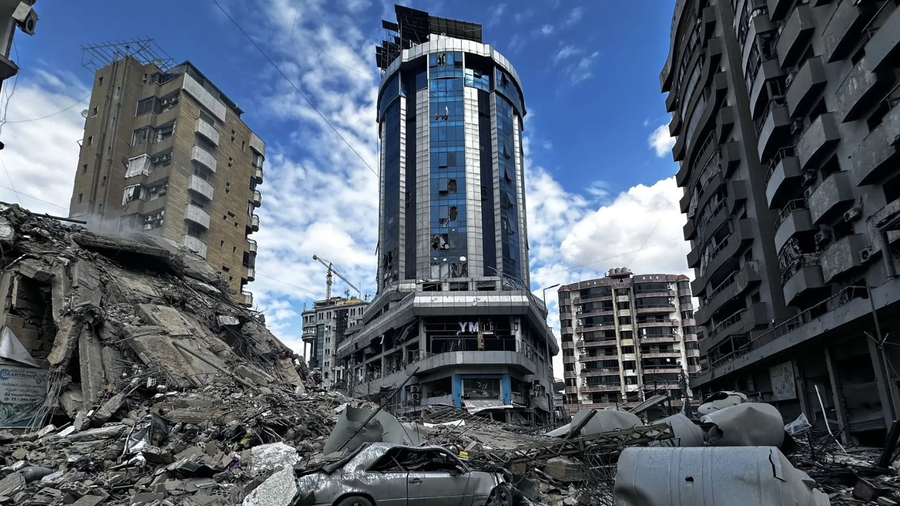
Israeli attacks on Lebanon and Iranian missiles in the Persian Gulf show that the conflict is turning into a regional war with global consequences for energy and security...
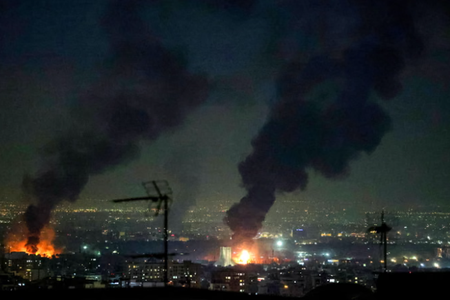
Tensions in the Middle East are entering a new phase of escalation, after Iran declared that it is prepared to face a long war against Israel and its allies, while the Israeli army launched a strong attack on the center of Beirut. Tehran's statement, that the country could fight for months, is seen by analysts as a clear signal that the conflict is not expected to end soon and that the clash could turn into a regional war with far-reaching consequences.
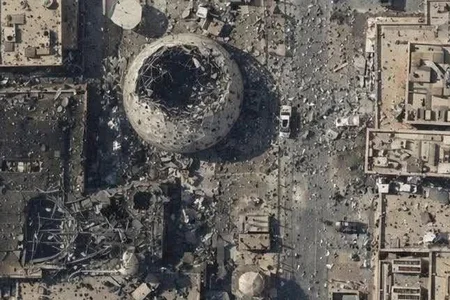
The Israeli attack hit a hotel in the Lebanese capital, which according to Israeli military sources was used by elements linked to Iran's Revolutionary Guard and its operational network in the region.
This action is considered a direct message to Tehran and to the Hezbollah organization, Iran's most important ally in Lebanon, that Israel is ready to strike Iranian targets wherever they operate.
On the other hand, Iranian officials are trying to project an image of resistance and strategic strength.
According to their statements, the arsenal that has been used so far constitutes only a small part of Iran's military capabilities. Tehran claims that it has more advanced and longer-range missiles at its disposal, which could be used in the future stages of the conflict if the escalation continues.
This rhetoric is not just political propaganda. International analysts estimate that Iran is trying to maintain strategic capabilities for a long war, avoiding the immediate use of its entire missile arsenal. Such a strategy would allow Tehran to maintain constant pressure on Israel and its allies, turning the conflict into a war of attrition.
Meanwhile, the conflict is no longer limited to Israel and Lebanon. In recent weeks, missile and drone attacks have been reported in several Gulf countries, including Saudi Arabia, Qatar and the United Arab Emirates. Some of these countries have reported missile interceptions or incidents near energy and airport infrastructure, raising fears that the conflict could spread throughout the region.
The involvement of the United States makes the situation even more complicated. Washington has supported military operations against Iranian targets and has warned that military action could last for a considerable period. For the US administration, the strategic objective remains to weaken Iran's missile capabilities and limit its influence in the Middle East.
Against this backdrop, the conflict is increasingly perceived as a clash over the region's new balances. For Israel and its allies, the goal is to contain the web of Iranian influence that stretches from Lebanon and Syria to Iraq and Yemen. For Iran, the battle is presented as an existential confrontation against US and Israeli pressure.
As the rhetoric on both sides becomes increasingly harsh and the attacks are expanding in geographical space, one thing seems increasingly clear to analysts: The Middle East could be on the brink of a long and dangerous conflict, which will affect not only the region, but also global stability and energy markets around the world./ Pamphlet




Duhet urgjentisht që Donald Tramp të ftoi në bisedime shtetarët Iranianë. Pushimi i menjëhershëm i luftimeve. Takimi në Turqi. Mbikqyrësi Erdogan. SHBA të dalin garant që sovraniteti territorial i Izraelit ka për garant SHBA. Irani të pranoi që vëndet e gjirit kanë juridiksion që të vendosin se me kë , e se kujt, do ja besojnë mbikqyrjen. Izraeli të pranoi që integriteti dhe sovraniteti i Iranit dhe vëndeve të tjera nuk do kërcënohet nga Izraeli. Garant SHBA dhe Turqia. Për problemat e tjera të lidhura të bisedohet dhe dakortësohet 'Bordi i Paqes'(Plani Tramp). Kryekushti nga Irani duhet të jetë që Irani nuk do lidh asnjë marrëveshje dy palëshe me Izraelin ,sa kohë që atë shtet do ta drejtoi një kriminel si Netanjahu.