


 Shkruar nga Jason Israel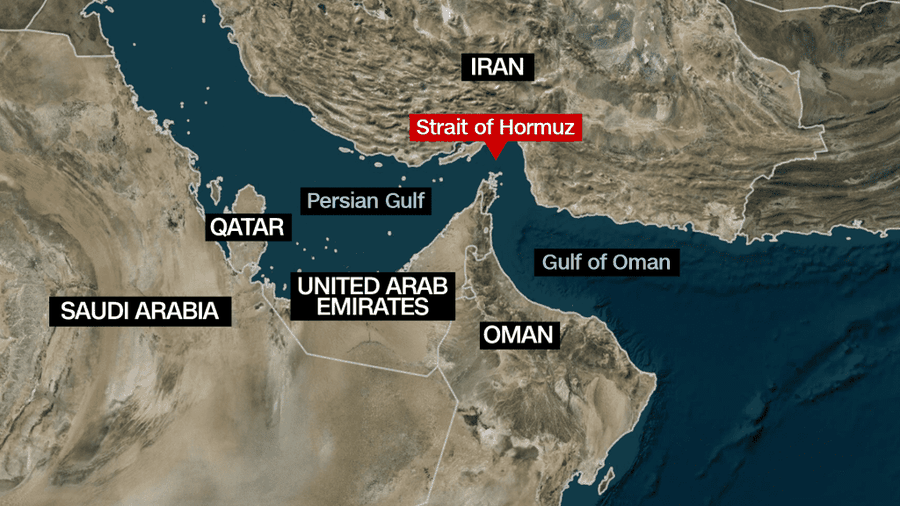
About a dozen European and regional partners have joined forces in a joint mission to protect merchant ships under threat...
The United States and its allies have recent experience working together on maritime checkpoints, which should be considered in any operation near Iran. In normal times, the Strait of Hormuz, a 24-mile-wide sea channel that encircles the Persian Gulf, helps keep the global economy a well-oiled machine. Without it, past and present show that panic sets in.
Despite significant losses, Iran’s reborn theocratic regime continues to exercise command over this critical maritime corridor. And while views on Operation Epic Fury differ in the United States, Europe, and beyond, there remains broad agreement on one point: the world’s vital shipping corridors cannot be left vulnerable to those willing to exploit them for coercive advantage.
As nations begin to unite around a possible approach, recent history offers valuable perspective and some reasons for considerable caution.
A little over two years ago, in response to an escalating campaign of drone and missile attacks by Houthi rebels targeting merchant ships transiting or heading towards the narrow Bab el-Mandeb Strait in the Red Sea, the United States led the creation of Operation Prosperity Protector (OPP), bringing together about a dozen other European and regional partners in a joint mission to protect merchant shipping under threat. In practice, however, there is a wide variation in the commitment of participants, from those closely integrated, such as the United Kingdom, to those like France operating in parallel under national missions, to others, including Australia, providing personnel in staff roles.
Today, as many nations once again signal their intention to contribute to appropriate efforts to ensure safe passage through the Strait of Hormuz, it is worth reflecting on what could be replicated from the OPG model.
Overall, the OPG can be considered a relative success; by tactical measures, it was effective. Coalition forces captured dozens of drones and missiles and enabled hundreds of merchant ships to continue transiting the Red Sea.
However, these achievements masked a complex strategic reality. Shipping volumes fell sharply during the worst of the disruption, insurance risk premiums rose sharply, and a steady stream of successful attacks on the Houthis, while rarely catastrophic, with great credit to the expertise of the militaries involved, supported doubts about the viability of the Red Sea route and proved that the adversary remained steadfast.
After a careful review of the OPG manual, four critical considerations for a mission to protect ships in the midst of Epic Fury emerge: two structural challenges, brutal geography and partner reluctance, that make the previous model difficult to imitate, and two characteristics, speed of adaptation and software-driven unmanned systems, that could be viable, even decisive.
First, the map. Unlike the wider operational space and more flexible routing options available around the Bab el-Mandeb, Hormuz compresses traffic into a narrow transit corridor. There are fewer alternative routes, limited maneuverability, high traffic density, and much greater exposure to shore-based threats. The relative lack of large-scale naval mining during Prosperity Guardian also contrasts with the Persian Gulf, where mines have historically proven to be an effective and scalable threat that can disrupt shipping despite naval escorts.
Second, the coalition. Prosperity Guardian benefited from a level of multinational participation that, while uneven, was still able to spread the operational burden and provide political legitimacy. Even then, contributions varied widely, with key allies choosing different command structures or limited roles. With the risk of escalation of any operation to reopen the Strait of Hormuz, that coalition is likely to remain thinner, more fragmented, and more politically limited, as nations hesitate to commit high-value assets to a more risky and economically consequential theater.
This is the case if the fighting continues, a very high-risk scenario, or if the ceasefire holds, a lower-risk but still dangerous situation. In fact, on March 20, France, Germany, and Italy said that while they might engage in operations after a ceasefire, they would not take action before then. Each operation could learn useful lessons from Prosperity Guardian. There were two that offer glimpses of a radically innovative future with the potential to transform the escort and protection mission.
The first is speed of adaptation. The Operations Intervention Group (OPG) demonstrated that modern maritime defense is no longer defined by platforms alone, but by the ability to rapidly integrate sensor data, iterate tactics, and adapt in near real-time to evolving threats. This shift from platform-centric to network-centric operations has allowed coalition forces to respond effectively to complex drone and missile attacks. In a Hormuz scenario, where threats are likely to be more diverse and coordinated, this ability to learn and adapt quickly is likely to matter more than the number of ships deployed.
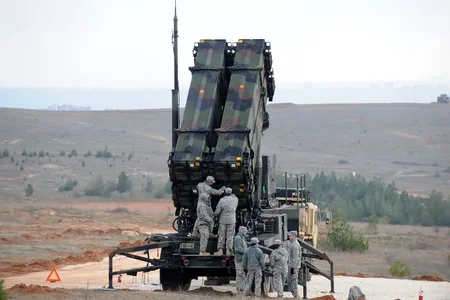
The second is an early glimpse of a different cost and risk model, as Prosperity Guardian exposed the unsustainable economics of using high-end interceptors against low-cost threats, while also highlighting the growing role of unmanned and uncontrollable systems and the software that brings them together.
Distributed sensor networks, electronic warfare capabilities, and unmanned platforms offer the potential to scale defenses, reduce the burden on individual escorts, and reduce the risk to service personnel. Equally important, they can enable broader participation: a nation unwilling to risk a frigate can still contribute data, autonomous systems, or integration capabilities to a shared network.
Back to the present. The coming days and weeks will reveal new complexities associated with any operation in the Strait of Hormuz, and it is clear that the lessons from Prosperity Guardian offer more caution than confidence. Indeed, the future of maritime security will require something different: distributed networks, faster adaptation, and a host of unmanned and unsustainable systems that remove risk from high-value platforms and the precious lives they support. For nations moving forward now, the lesson is not to repeat the Prosperity Guardian program, but to build on it for what comes next. / Adapted from “Pamphlet” by “TheGeopost”





Lini një Përgjigje