


 Shkruar nga Pamfleti
Iran's state news agency, IRNA, reported that the American and Iranian delegations left the residence of the Omani ambassador in Geneva after about three hours of talks.
IRNA added that observers and experts were skeptical about the success of the talks, with the Iranian side reporting contradictory positions from the US negotiating team.
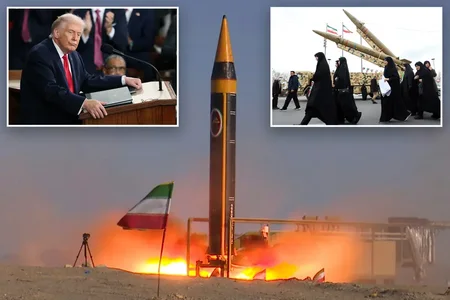
The fact that there was a period of intense talks lasting three hours, followed by a break and resumption of talks, is considered a signal that the United States takes diplomacy seriously. The US President recently emphasized in his State of the Union address that diplomacy remains his preferred option.
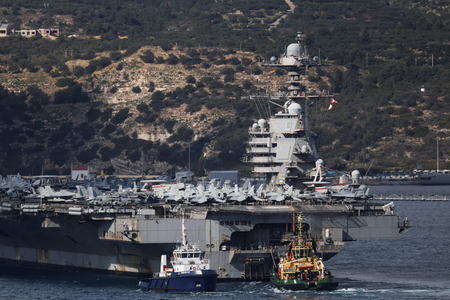
However, the US military buildup and the presence of two aircraft carrier strike groups in the region indicate that Washington is pursuing a dual maximum pressure approach in an attempt to reach a solution with Iran.
According to information so far, efforts are focused on reaching an agreement to limit and stop uranium enrichment and to assess whether this can be done indefinitely. If such an agreement is reached, follow-up talks are expected to be held to reach an agreement on limiting Iran's ballistic missile program, as well as on the issue of support for regional representatives in Tehran.
The Omani Foreign Minister stated that the atmosphere was positive and that there was a constructive exchange of ideas, expressing the hope that the process will resume after a short break. The mediation teams left with the expectation of returning, while communication between the parties has continued through the Omani Foreign Minister.
According to reports, the Iranian side submitted its proposal to the Omanis the night before. Oman discussed it with the US delegation, which raised several questions and made observations. Consultations are currently believed to be taking place within the Iranian delegation to assess how they can move further towards reaching an agreement.
A spokesman for Iran's Foreign Ministry said important suggestions were raised on both the nuclear program and the lifting of sanctions during the nearly three-hour talks held today. He described the talks as "very serious" in a statement on Iranian state television.
"Initiatives have been raised about the need for consultations with capitals. We will resume negotiations in Geneva at around 18:00 local time (17:00 GMT). There are contradictory statements from some US officials, which raise doubts about their seriousness ," the spokesman said, suggesting the need for the talks to progress beyond this third round.
Ali Vaez, director of the Iran Project at the International Crisis Group think tank, said there are three possible paths to diplomatic progress in the US-Iran talks.
The first would involve the US signaling that Iran's proposal is "essentially feasible," with more work to be done to close the gaps.
" This would not be a final agreement. But it would be an outline to reach a 'yes', followed by a meeting within days to clarify the remaining technical details ," he explained.
The second path would see Iran and the US agree to a "detailed technical agreement", which would require several more days of what Vaez described as "laborious drafting".
The third path would involve "a triumphant but vague announcement" that would proclaim the securing of a breakthrough without specifically explaining the content of the agreement.
" If these talks end with the familiar choreography, 'constructive atmosphere', 'good progress', 'consultations with capitals', without a clear political decision to overcome the remaining divisions, the risks will not disappear. They will increase. In this file, ambiguity is not good. It is flammable ," Vaez warned.
Former Iranian Vice President for Strategic Affairs, Sasan Karimi, stated that Iran has "some influence" regarding uranium enrichment and that Tehran and Washington have in common the fact that Iran does not possess nuclear weapons.
"Iran could offer a kind of pause on its high-level uranium enrichment for a while, to build trust and take further steps. But this is not free, and in return there should be various concessions, especially regarding the lifting of sanctions ," he told Al Jazeera.
Regarding Iran's missile programs, Karimi stressed that they cannot be on the table, especially in the midst of a buildup of American weapons in the region.
"Like any other normal country in the world, Iran should have sufficient resources of conventional military options to retaliate ," he added.


Lini një Përgjigje