


 Shkruar nga Pamfleti
Trilateral talks between Russia, Ukraine and the United States, held in Geneva with the aim of ending the four-year war in Ukraine, ended without any visible progress, but with signals that the dialogue will continue.
The meetings, according to international media reports, lasted until late Tuesday, while on Wednesday they were held for about two hours. Although no concrete agreement was reached, US representative Steve Witkoff expressed optimism about the spirit of the discussions.
On the other hand, Russian and Ukrainian representatives described the negotiations as "difficult," reflecting the deep gap that remains between the parties on key issues such as territory and the terms of a possible ceasefire.
Kremlin negotiator Vladimir Medinsky described the talks as "businesslike" and announced that another meeting would take place "soon," signaling the continuation of the diplomatic process. Ukrainian President Volodymyr Zelensky also acknowledged that the discussions are complicated by the large differences in positions.
However, Ukrainian negotiator Rustem Umerov struck a more positive tone, describing the discussions as "substantial and intensive" and suggesting that there had been elements of progress, although without providing details at this stage.
" This is a complex task that requires coordination between all parties and sufficient time," he stated.
Issues that divide the parties
Moscow and Kiev remain far apart on the territory and architecture of a peace deal. Russia has demanded full control over the eastern Donbas region, including Donetsk and Luhansk, a demand that Ukraine rejects as a surrender of sovereign territory.
Zelensky has warned that any plan that envisages the surrender of Donbas would be rejected by Ukrainian citizens if put to a referendum. According to US media, he stressed that a "just peace" cannot mean forced territorial losses.
Another complicated point remains the status of the Zaporizhia Nuclear Power Plant, the largest in Europe, which has been under Russian control since March 2022. Ukraine seeks its return, while it has floated the idea of a form of joint administration with American involvement, a proposal that Moscow views with reservations.
The US role and expectations
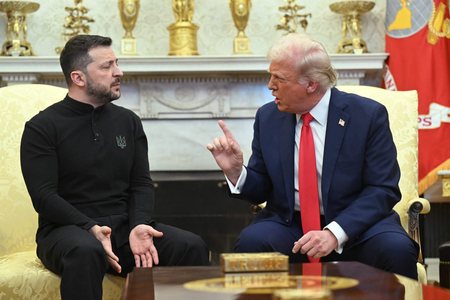
US President Donald Trump, who has been engaged in diplomatic efforts to end the war, has publicly expressed dissatisfaction with the lack of progress. He has said that Ukraine "must come to the table as soon as possible," a stance that Zelensky has rejected, stressing that the responsibility for compromise cannot be one-sided.
The last direct meeting between Russian and Ukrainian delegations took place in January in Abu Dhabi, under US mediation, leading to a prisoner swap, the first in months. Recently, Zelensky has hinted that a new swap could happen soon, which is seen as a possible confidence-building step.
Although without tangible results, the Geneva round confirms that diplomatic channels remain open. International analysts assess that the very continuation of the dialogue, in a tense climate with deep differences, constitutes a positive element in efforts to reduce the conflict.



Lini një Përgjigje