


 Shkruar nga Pamfleti
Shocking data shows that the climate crisis and invasive mosquitoes mean chikungunya could spread to 29 countries.
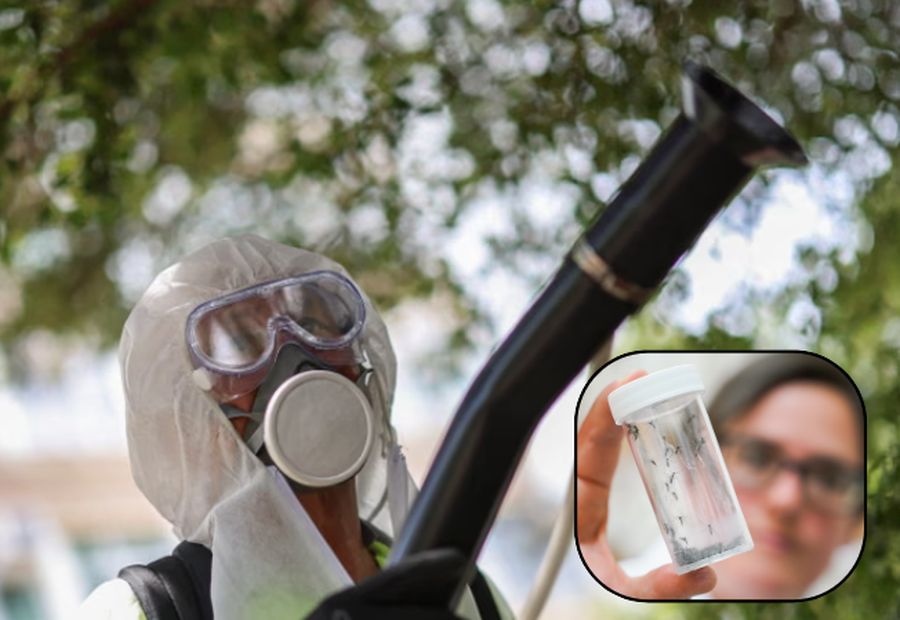
A very painful tropical disease, called chikungunya, can now be transmitted by mosquitoes across much of Europe, according to a new study cited by the British newspaper The Guardian .
Rising temperatures due to the climate crisis have made infections possible for more than six months of the year in Spain, Greece and other southern European countries, and for about two months of the year in southeast England. Scientists warn that, as global warming continues, the spread northwards is only a matter of time.
The study is the first to fully analyze the impact of temperature on the incubation time of the virus in the Asian tiger mosquito, which has spread to Europe in recent decades. According to the data, the minimum temperature at which transmission can occur is 2.5°C lower than previously estimated. The researchers describe this difference as “quite shocking.”
The chikungunya virus was first identified in 1952 in Tanzania and for decades remained confined to tropical areas, where millions of infections are recorded each year. The disease causes severe and prolonged joint pain that can be debilitating and, in some cases, fatal for young children and the elderly.
Cases have been reported in more than 10 European countries in recent years. In 2025, France and Italy faced major outbreaks with hundreds of cases. According to the report, over 800 cases were recorded in France in one year, while in the previous decade the total number was around 30 cases.
Sandeep Tegar, from the UK Centre for Ecology and Hydrology (UKCEH) and lead author of the study, said the rate of warming in Europe is about twice as fast as the global average and that the lower temperature limit for the spread of the virus is of great importance. According to him, the northward expansion is inevitable.
Dr. Steven White, from the same center, also emphasized that two decades ago the presence of tropical diseases such as chikungunya and dengue in Europe would have seemed impossible, but the situation has changed due to the spread of invasive mosquitoes and climate change.
The Asian tiger mosquito (Aedes albopictus), which bites during the day, is gradually moving northwards across the continent as temperatures rise. It has also been detected in the United Kingdom but is not yet firmly established. Vaccines against chikungunya are available, but they are expensive; the most effective protection remains avoiding bites.
Dr. Diana Rojas Alvarez, head of the World Health Organization's team on insect- and tick-borne viruses, said the study showed that transmission in Europe could become more evident over time. She added that up to 40% of those infected may still experience arthritis or severe pain five years later.
The study, published in the scientific journal Journal of the Royal Society Interface, analyzed data from 49 previous studies to determine the incubation time of the virus depending on temperature. The results show that the minimum threshold for transmission is 13–14°C, lower than previous estimates of 16–18°C.
This means that infections can occur for more than six months a year in Spain, Portugal, Italy and Greece, as well as for three to five months a year in Belgium, France, Germany, Switzerland and a number of other European countries.
Outbreaks in Europe usually start when infected travelers return from tropical regions and are bitten by local mosquitoes, which then spread the virus. Until now, cold winters have limited mosquito activity and interrupted the chain of transmission from one year to the next. However, scientists are seeing year-round activity in some areas of southern Europe.
No local transmission of the virus has yet been reported in the United Kingdom, but in the first half of 2025, 73 cases were recorded in people who were infected abroad, almost three times the same period in 2024.








E paskan shpik nji pandemi te re.