


 Shkruar nga Janan Ganesh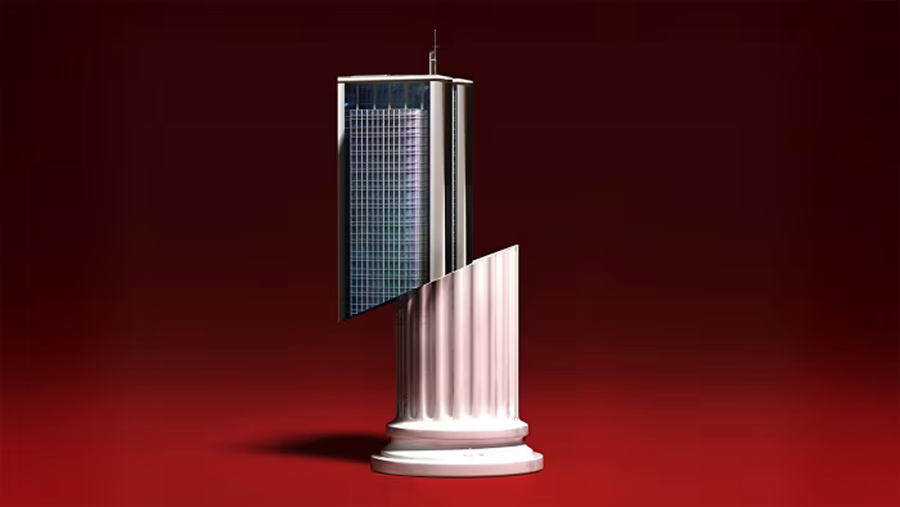
The idea that people would fight for principles is foreign to homo economicus...
A year isn’t a good year if you haven’t changed your mind about something important. If the US now seems to prefer Russia to democratic Europe, it’s important to understand exactly why. One theory is that American conservatives are drawn to Russia’s Christian nationalism. But that’s more true of the broader MAGA movement than of Donald Trump himself, who is not fond of abstract ideas, let alone spiritual ones. Another conjecture is geopolitical: that he wants to separate Russia from China. But Trump is far from being consistently anti-China. He has allowed Nvidia to export its H200 chip to China.
He is more uncertain about defending Taiwan than Joe Biden ever was. In all the noise about the Europe part of his strategy, the softness of his national security strategy’s approach to China has been overshadowed. Trump has a tight-lipped fixation on the trade relationship between the two countries, which irritates his colleagues, who see the rivalry as strategic and even civilizational.
Consider a more prosaic explanation. Trump is a “business animal.” So is his envoy, Steve Witkoff. By “business animal,” I don’t mean just someone from the private sector, like Mitt Romney, but someone who sees the whole world through a business lens. Once you understand that, the bias toward Russia becomes understandable. First, a quick and friendly peace with the Kremlin would open the door to profit opportunities in a resource-rich Russia.
More than that, the war itself should confuse the mindset of a “commercial animal.” The idea that people would fight for principles is foreign to homo economicus. A phrase I have heard often from business people since 2022 is “this stupid war,” as if everything were an accident or a misunderstanding, rather than the conscious choice of a ruthless state.
This explains Trump's approach. He sincerely believes that the war is an absurdity, which a third party with a clear vision can fix. If he places the burden on Ukraine, it is because its support costs the US something, while Russia does not, another commercial calculation.
A political commentator should associate with business people: for their original perspective, for their international experiences, for their (often) more pleasant company. But in doing so, their intellectual blind spot also becomes apparent: their inability to understand fanaticism. By this I mean a genuine refusal to accept that such a thing actually exists. There are exceptions, but people who must be pragmatic in order to survive tend to assume that the whole world works the same and that ideology is simply a cover for reasonable material interests.
In this context, someone who exalts a Greater Russia either doesn’t mean it seriously, or even if they do, what’s the problem, as long as there’s “a positive side for everyone”? On the surface, this stance seems clever and cynical. In reality, it’s the height of naivety.
For all the talk about Trump being a fan of “strongmen,” it’s not clear that he, let alone Witkoff, has any idea how deep and almost mystical the beliefs that motivate a Putin or a Xi Jinping are. He could hardly be less suited to confronting them.
Therefore, the commercial mindset should be kept at a distance from the state. This sounds like a kind of liberal heresy. Economic and political freedom are meant to go hand in hand. Markets depend on certain rules, such as the prohibition of arbitrary confiscation of property, which are protected by democratic constitutions. On the other hand, democracy is more stable when there is a middle class of property owners, which well-regulated markets tend to create.
Almost all of the world's high-income countries are democratic, unless they are very small (Singapore), blessed with natural resources (Russia), or both (Qatar). South Korea and Taiwan became high-income countries after democratization, not before it.
At some point, however, these two ideas collide. My shift in thinking in 2025 is that democracy, far from being capitalism’s natural twin, should be a hawkish observer of it. The problem is not just that individuals with vast private fortunes can bend public life to their own interests, as John Pierpont Morgan did in the Gilded Age and as tech barons do today. This has been clear before, though what is troubling now is how much the US government identifies Silicon Valley’s interests with its own.
The biggest problem is the attitude that business instills in people: that everything is negotiable, that a so-called extremist is just bluffing. One can hardly imagine a more flawed framework for understanding the modern world, with so many ideological opponents of the West. Germany’s enthusiasm for a second gas pipeline with Russia on the eve of the war in Ukraine, despite repeated warnings, was a pure example of commercial naivety at the highest level.
In its proper place, the commercial instinct works wonders. When it penetrates the government of a state, and especially its foreign policy, that state becomes vulnerable to enemies who act out of deep convictions. Thomas Jefferson spoke of a “wall of separation” between church and state. Two centuries later, in a secular age, it is not religion against which the state needs a protective wall./ Adapted from “Pamphlet” by “FinancialTimes”





Në fakt gjithçka është e negociueshme. Financial times nuk na ka dhënë asnjë shembull në këtë artikull se çfarë nuk negociohet.