


 Shkruar nga Paul R. Pillar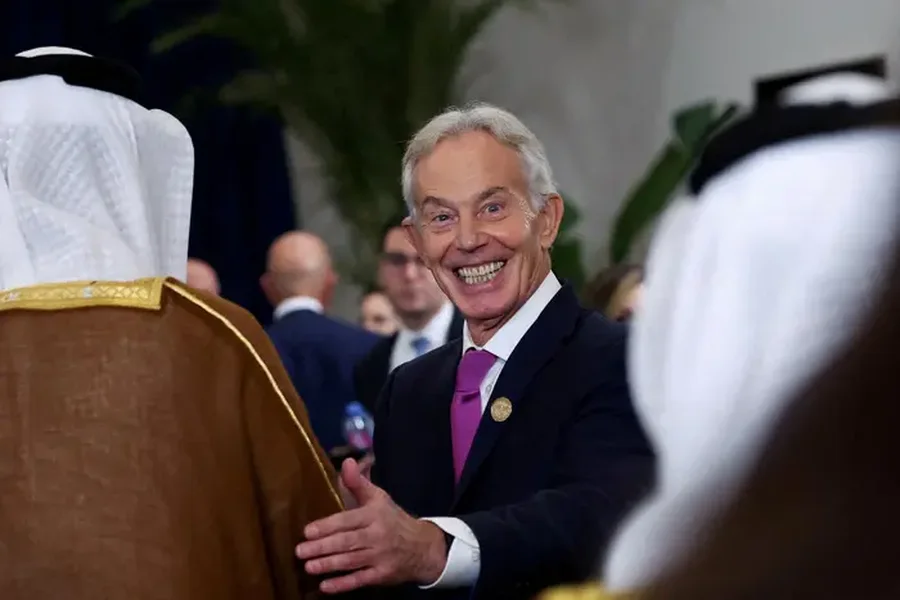
Former CIA official analyzes the Peace Board: Neither Trump's plan nor any other plan can bring peace, security or prosperity to Gaza
The Trump administration's statements on the Gaza Strip may give the impression that the implementation of the 20-point peace plan, part of which was later included in a UN Security Council resolution, is moving forward smoothly. But in reality, many of the official statements seem disconnected from the actual situation on the ground.
President Trump’s special envoy, Steve Witkoff, recently announced on social media the start of “Phase Two” of the plan: moving from a ceasefire to Hamas disarmament, technocratic rule, and reconstruction. But such statements seem deeply disconnected from reality. Witkoff claimed that “Phase One” has preserved the ceasefire — but Israeli attacks on Gaza have continued daily since last October, when the ceasefire was supposed to take effect. Both sides accuse each other of violations, but the numbers speak for themselves: at least 451 Palestinians have been killed and more than 1,200 wounded by the Israeli military since then, according to the Palestinian Ministry of Health.
Another claim by Witkoff was that “Phase One” brought historic humanitarian aid. But he failed to mention that many requests for aid were rejected by Israel, and as a result, only 24,611 aid trucks entered Gaza, less than half of the 57,000 agreed upon under the ceasefire agreement. In these circumstances, Phase Two was announced without the minimum conditions of Phase One being met.
Despite these obstacles, the Trump administration has officially launched the “Peace Board,” envisioned as an “international steering committee” that will oversee the implementation of the rest of the plan. But the selection and recruitment of board members is facing major difficulties. Some states have been reluctant to accept participation, due to uncertainties about the board’s role and the fact that it is a project built in close cooperation with Israel. The situation is further complicated by the requirement that any state that wants an expanded role on the board must contribute $1 billion in cash.
Several names have been announced so far to be part of the Peace Board, including Steve Witkoff, Trump's son-in-law Jared Kushner and former British Prime Minister Tony Blair. Blair's inclusion has caused distrust in Arab countries because of his role in the Iraq war and the perception that he holds a biased pro-Israel stance.
The White House has also announced an “Executive Board for Gaza,” which will have an unclear role in relation to the other structures. This board includes, in addition to Blair, Kushner and Witkoff, the Turkish foreign minister and a senior official from Qatar. The office of Israeli Prime Minister Netanyahu reacted immediately, calling the board “contrary to Israeli policy.” Negative reactions have also come from the Israeli opposition: leader Yair Lapid called Turkey’s involvement a “grave diplomatic failure,” while far-right minister Itamar Ben Gvir demanded that “the Israeli army resume the war in full force in the Gaza Strip.”
At the same time, the National Committee for the Administration of Gaza (NCAG), a group of 15 Palestinian technocrats that will function as an interim government under the supervision of the Peace Board, met for the first time in Cairo. Bulgarian diplomat Nickolay Mladenov has been appointed as the director general of this board. The head of the committee is Ali Shaath, an engineer and former deputy minister of transport in the Palestinian Authority. But the other names have not been made public.
Symbolically for the difficulties of the process, Shaath himself was detained for six hours by Israeli authorities at the Allenby border crossing as he traveled from the West Bank to Jordan to attend the Cairo meeting. Palestinian officials called the incident “a deliberate attempt to sabotage the committee’s work.”
Arab observers have expressed doubts whether a 15-person committee can realistically govern the Gaza Strip, especially when Israel does not allow the inclusion of employees affiliated with Hamas, nor those of the Palestinian Authority.
Shaath, in his first public comments as head of the NCAG, has stated that just clearing the rubble in Gaza could take up to three years, while full reconstruction will require at least seven years. Meanwhile, Israel continues to demolish buildings in the part of Gaza it still controls, worsening the situation.
In this context, neither Trump's plan nor any other plan can bring peace, security, or prosperity to Gaza as long as Israel controls the territory and opposes any form of Palestinian self-government. /Adapted from “Responsible Statecraft”
* Paul R. Pillar is an academic and veteran with 28 years of experience at the Central Intelligence Agency (CIA), serving from 1977 to 2005.


Së pari, ky bord nuk ka asnjë legjitimitet institucional ndërkombëtar si OKB, OSBE apo BE. Nuk është pjesë e OKB-së, NATO-s apo ndonjë strukture tjetër zyrtare që ka mandat për ndërmjetësim apo zbatim vendimesh. Pa mandat dhe pa mekanizma, ai mbetet një forum simbolik pa ndikim real. Është instrument personal i Trumpit, jo politikë shtetërore amerikane. Trumpi përdor shpesh iniciativa personale për kapital politik. Pra, ky bord nuk garanton vazhdimësi, dhe varet nga humori dhe interesi personal i Trumpit. Nëse flitet për pagesë 1 miliard $, nuk ka transparencë, nuk ka kthim investimi, nuk ka rezultate të matshme. Për Shqipërinë, ky është ose shpenzim i pajustifikuar publik ose akt PR për interesa të huaja. Rama ka thënë që nuk do e paguajë këtë shumë parash. Pra, Shqipëria nuk do jetë anëtare e përhershme. Atëherë, për çfarë po vemë atje? Thjeshtë për pjesëmarrje simbolike? Paqja kërkon institucione, jo spektakël. Paqja vjen nga marrëveshje të detyruara, jo nga “klube paqeje”. Ky bord është më afër marketingut politik sesa ndërtimit real të paqes. Për Shqipërinë, “Bordi i Paqes i Trumpit” nuk sjell as siguri, as ndikim, as përfitim ekonomik apo diplomatik. Është një iniciativë simbolike, e politizuar dhe potencialisht e dëmshme për orientimin strategjik të vendit. Së dyti, përfshirja (qoftë edhe si ide), e figurave si Vladimir Putin, Aleksandër Lukashenko apo Kim Jong-un e bën konceptin e “paqes” thellësisht kontradiktor. Këta janë liderë të lidhur drejtpërdrejt me luftëra, represion dhe kërcënime globale. Një bord që u jep hapësirë aktorëve të tillë nuk ndërton paqe, por normalizon autoritarizmin. Së treti, për Shqipërinë si vend anëtar i NATO-s dhe me orientim të qartë euro-atlantik, ky bord nuk sjell as siguri, as ndikim diplomatik dhe as përfitim ekonomik. Politika e jashtme shqiptare ka më shumë interes të forcojë marrëdhëniet me BE-në dhe SHBA-në institucionale, jo me iniciativa personale. Shqipëria nuk ka nevojë për borde simbolike të paqes, por për aleanca reale sigurie.
Ky qelbesira , burre è grua, hajdute, të korruptuar qe vjedhin leket è shqiptareve , duhen zhdukur me gjithe atë qe I ka miq
Te pakten mos u tallni se u bete gazi i botes o Ameriqene me palacot qe kini vene ne krye qe jane jo vetem turpi i Amerikes por i gjithe botes. Pse shoqeria njerezore ka denigruar ne gelboqe e peshtyre ne trotuar!?