


 Shkruar nga Pamfleti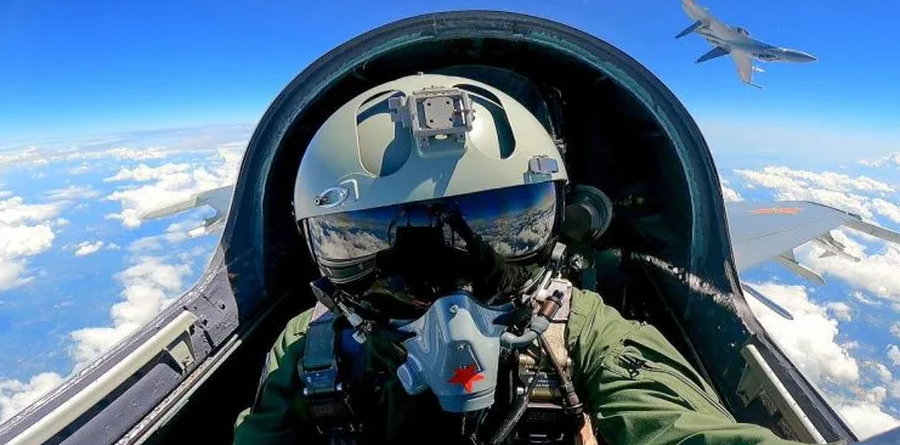
It's not just Maduro's oil: China aims to preserve the normative framework of international relations. It is with this card that it will "protect" Taiwan...
The capture of Maduro by the United States and the revolt in Iran against the ayatollahs' regime represent a stress test for the credibility of Chinese leadership within the system of international relations.
These are events characterized by a complex combination of energy, financial, and geopolitical factors, the management of which requires a strategy articulated over time.
The operation that led to the arrest of the Venezuelan president, in addition to representing a demonstration of military and technological superiority by the US military, occurred just hours after the meeting with a Chinese delegation, before which an enthusiastic Maduro had praised the relations between the two countries.
A real blow for Beijing, which was strengthening a privileged relationship with Venezuela. In addition to losing its fifth largest oil supplier, China is seeing the financial architecture based on loans-for-oil, which has fueled its debt to Beijing, worth around $13-15 billion, shake.
It goes without saying that cutting off the Venezuelan government's credit lines with the China Development Bank would constitute an important geo-economic issue, because the moment the US government takes control of Venezuelan oil production, as Trump has publicly stated, it could use the Chinese loan as a negotiating lever, but also as a weapon in economic warfare.
A case that could represent a worrying precedent, as Beijing has established financial relationships with other raw material supplier countries, building a model based on commodities.
The potential collapse of the Tehran regime could be an even more complex problem. In addition to being the largest exporter of oil to China, Iran is a fundamental link in the circuit that has allowed Beijing to become an alternative financial and logistical center to the West, capitalizing on the side effects of the sanctions imposed on the regime.
The essentially cautious stance adopted by Beijing after the events in Venezuela and Iran is explained by the importance of the game in question, which at this stage sees the main levers of Chinese geopolitical projection on a global scale at risk.
While the Chinese economy is celebrating the spectacular results of the trade balance that this year, according to Tingting Ge, an economist at JPMorgan, reached $116 billion, while the current account balance totaled $75.6 billion, Beijing cannot risk the stability of the system that has provided it with markets for its exports and continuous financial flows.
Therefore, for the time being, it is vital to keep the risk of escalation with the US under control and to dynamically protect material interests. This perspective also explains the call for respect for international law that Xi Jinping made during his meeting with Irish Prime Minister Micheál Martin, stating that “every country must respect the principles of international law.”
A brief statement summarizing the meaning of Chinese strategy both in the short term and for the future. In Beijing's vision, the normative framework that should govern international relations should be based on the principles of sovereignty, territorial integrity, and non-interference in the internal affairs of a nation.
These are principles reaffirmed by Chinese diplomacy during the uprisings in Iran. Chinese caution and the decision not to engage directly in defending Maduro and the ayatollahs are not simply a sign of defensive withdrawal.
These are elements of a strategy that combines securing the economic system, achieving national self-sufficiency, technological and energy autonomy, and strong protection of the principle of non-interference in internal affairs.
These principles have a strategic value for the Taiwan issue, which Beijing considers a national issue, while reunification is seen as a reunification with the motherland. In the name of international law, the Chinese government could launch a naval blockade around Taiwan, perhaps to prevent the island from receiving the large order of weapons worth 11 billion dollars that Taipei recently purchased from Washington. A position that would paradoxically see a military intervention as a measure taken in the name of self-determination and national sovereignty. Although the event of the arrest of Maduro and the revolt in Iran represent a serious problem for Beijing, they do not imply a change of strategy or a resizing of the objectives, which, although tested by the turbulence of the conjuncture, remain unchanged.
But to achieve national self-sufficiency, secure the economic system, and reunify with Taiwan, the Chinese must rise up as defenders of what remains of the system of international relations and the status quo shaken since the time of Trump.
However, the strategy of "controlled chaos" caused by the unpredictable American presidency could hide other unpleasant surprises for Beijing./ Adapted from "Pamphlet", from "Il Sussidiario"



Lini një Përgjigje