


 Shkruar nga Pamfleti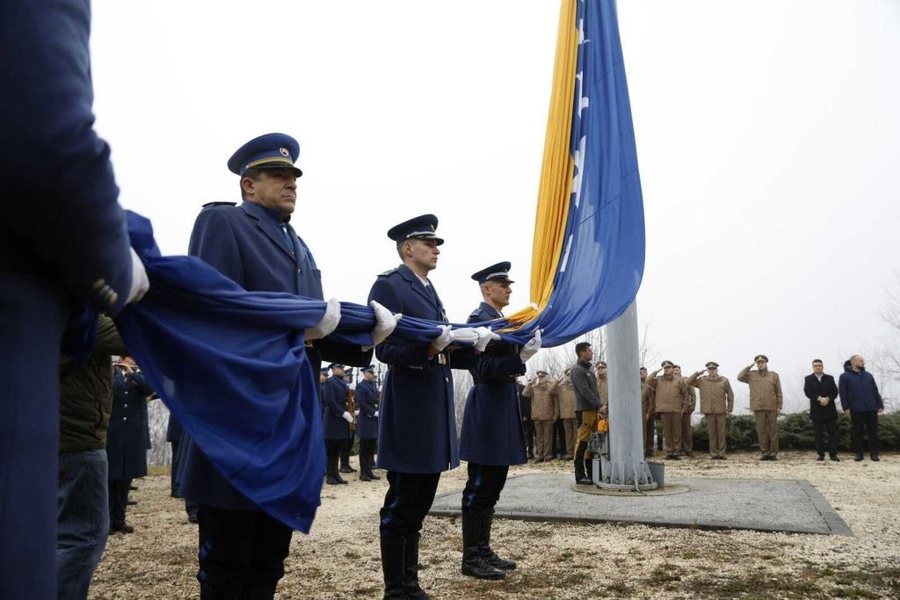
The US has changed its strategy to seek local solutions, which increases the influence of nationalists and leaves the European Union alone in maintaining constitutional order there. But with a shortage of troops and without American logistical support, Brussels is finding it very difficult to guarantee security…
When the Trump administration lifted sanctions on Bosnian Serb separatist leader Milorad Dodik in late October 2025, it marked a dramatic new alignment in the Western Balkans. The decision has sparked serious concerns in Europe that the fragile post-war order in Bosnia and Herzegovina could be shaken.
In this country of 3 million, where the sparks of World War I were first ignited, a tense stalemate has prevailed since the end of the genocidal fighting of the 1990s.
The complex framework created by the Dayton Agreement, which includes 15 parliaments and three members of the collective presidency, has kept the country stable but stagnant. Since 2004, peace on the ground has been maintained by the European Union military mission, Operation Althea. However, with Donald Trump at the helm of the US, this delicate balance risks being overturned.
For the first time since 1995, Washington and Moscow are now on the same side when it comes to Dodik, the politician who has spent two decades undermining the peace deal brokered by the Americans themselves. As a result, Europe faces a crucial test: can it maintain security in the heart of the Balkans without the support of the Pentagon?
Strong lobbying bore fruit
The Office of Foreign Assets Control (OFAC) removed Dodik and his associates from the “blacklist” on October 29, 2025. This decision canceled previously imposed sanctions for undermining the territorial integrity of Bosnia.
Dodik, the leader of Republika Srpska, has repeatedly threatened secession, passing laws that weakened Sarajevo’s control, many of which were declared illegal.
This change in American course did not come by chance, but after an intensive lobbying campaign. The Republika Srpska authorities hired firms with strong ties to the Republican Party, such as Becker & Poliakoff and Tactic Global. Among the names pushing for sanctions relief were figures such as former governor Rod Blagojevich, Michael Flynn, and Rudy Giuliani.
Although the State Department described the move as a response to “constructive actions,” critics note that Dodik has not changed his stance. Just months after the sanctions were lifted, he staged an unconstitutional military parade on January 9 of this year, using harsh rhetoric against Bosniaks and the international community.
Russia is refraining from threatening a veto
Another surprising development was the unanimous vote in the UN Security Council to extend the mandate of EUFOR Althea. Russia, which had been expected to block the mission, allowed its renewal. Analysts, such as Kurt Bassuener, believe that Moscow is counting on the EU not to reinforce the mission sufficiently to be a credible deterrent.
With its military in Ukraine, Russia appears to be relying on its partnership with Dodik to continue destabilizing the region through political means. The European Union's foreign policy chief, Kaja Kallas, visited the region, stressing that stability in the Balkans is a priority for the EU. However, the question remains: what will happen in a year if Russia decides to use its veto?
The Bosnian “hot potato” has been left to the Europeans
The shift in rhetoric in Washington is very noticeable. US Ambassador Nicole McGraw stated that the US is no longer pursuing a “nation-building” strategy in Bosnia, but is seeking local solutions.
This paves the way for nationalists and leaves the European Union as the only actor trying to preserve constitutional order. During a visit to Sarajevo, Kallas assured that “history will not be allowed to repeat itself,” but the EU’s resources are limited.
The EUFOR mission currently has 1,600 troops, far below the recommended level of 4,800 troops to ensure full security. Without US logistical and political support, Brussels is operating in a strategic “dead end.”
Strategic consequences
The instability in Bosnia directly hits the EU's ambitions to be a major geopolitical player. According to Bassuener, this is the only region where Europe can be decisive, but it often refuses to use all its tools, making do with promises of the enlargement process and financial assistance.
In this game of chess, Dodik has made two bets: that the international community will not be united to resist him and that the Bosnian side will remain divided. So far, developments in Washington and Brussels' reluctance are proving him right. Now Europe must prove whether it is brave enough to reinforce its presence and protect the security architecture in the Balkans, even without its "big brother" across the Atlantic. /Adapted from "Pamphlet", from "Defense News"



Ushtria climate shqiperise ne serbi ushtria shqiperise ish republika jugosllave ushtria climate shqiperise ballkan perdimore ushtria climate shqiperi per pavarsi 1912